TSMC Sales Surge 30% on AI Demand
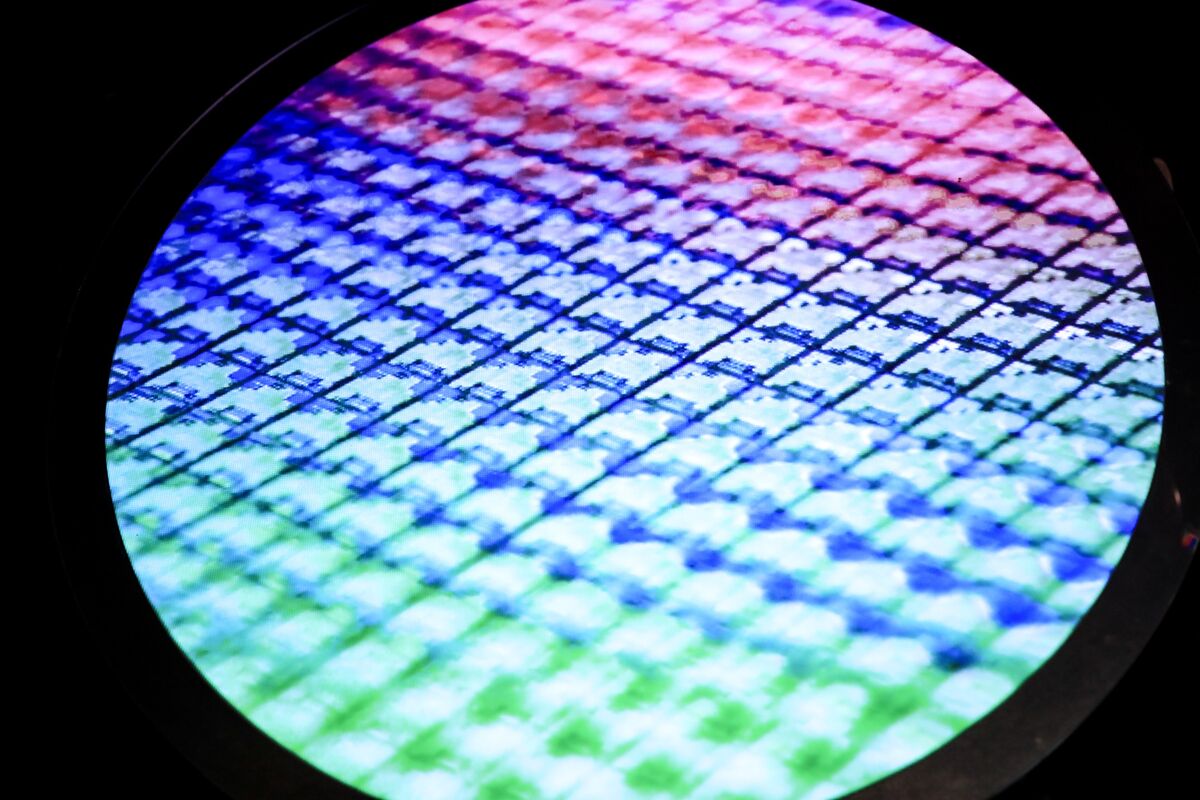
💡TSMC 30% sales boom shows AI hardware demand exploding—plan supply chain now
⚡ 30-Second TL;DR
What Changed
Sales rose 30% in January-February
Why It Matters
Strong TSMC sales signal sustained AI chip demand, potentially tightening supply for AI deployments. AI practitioners may face longer lead times for hardware. This underscores the critical role of semiconductor supply in AI scaling.
What To Do Next
Review TSMC's Q1 earnings for updated AI chip production forecasts
Key Points
- •Sales rose 30% in January-February
- •Driven by AI infrastructure construction demand
- •Growth precedes Middle East conflict outbreak
🧠 Deep Insight
Background and context from public sources — not the original article. 4 sources cited.
🔑 Enhanced Key Takeaways
- •TSMC's market share expanded to 71% in Q3 2025, with competitors losing ground as the company scales 2nm mass production and advances 3nm fabrication in Japan, reinforcing technological leadership in advanced nodes[1].
- •Q1 2026 gross margins reached 63-65% with over 10% of revenue now derived from high-margin advanced packaging services, indicating a shift toward more profitable business segments beyond traditional wafer manufacturing[1].
- •TSMC projects AI chip revenue will grow at a 60% compound annual growth rate (CAGR) through 2029, significantly outpacing the company's overall 30% 2026 growth rate and indicating sustained structural demand for AI-specific manufacturing capacity[3].
- •Capital expenditure is projected to reach $52-56 billion in 2026 (a 37% increase), strategically targeting advanced nodes to support capacity expansion and long-term AI infrastructure buildout[1].
📊 Competitor Analysis▸ Show
| Metric | TSMC | Industry Average |
|---|---|---|
| 2026 Projected Sales Growth | 30% | 14% |
| Market Share (Q3 2025) | 71% | N/A |
| Q1 2026 Gross Margin | 63-65% | N/A |
| Primary Growth Driver | AI demand | Diversified |
TSMC significantly outpaces the broader pure-play wafer foundry market, capturing a disproportionate share of AI-driven expansion[1]. Emerging competitive threats include Intel's foundry operations, though TSMC maintains dominant positioning in advanced node manufacturing[1].
🛠️ Technical Deep Dive
- Advanced Node Leadership: 2nm mass production scaling and 3nm fabrication expansion in Japan represent cutting-edge process technology[1]
- Manufacturing Capacity: Elevated 2026 capex ($52-56B) targets advanced nodes to support AI workload scaling and compute-intensive applications[1]
- Product Mix Optimization: Advanced packaging services now represent 10%+ of revenue, indicating integration of chiplet and heterogeneous integration technologies[1]
- Supply Chain Position: TSMC serves as primary manufacturing partner for leading AI silicon designers, positioning it at the center of the AI chip supply chain[2]
🔮 Future ImplicationsAI analysis grounded in cited sources
⏳ Timeline
📎 Sources (4)
Factual claims are grounded in the sources below. Forward-looking analysis is AI-generated interpretation.
Weekly AI Recap
Read this week's curated digest of top AI events →
👉Related Updates

AI-curated news aggregator. All content rights belong to original publishers.
Original source: Bloomberg Technology ↗
This is a summary, not the original. Read the source, or get the weekly briefing.
Weekly AI briefing
One email a week. Unsubscribe anytime.