Tsinghua Gen-Z team secures funding for robot touch
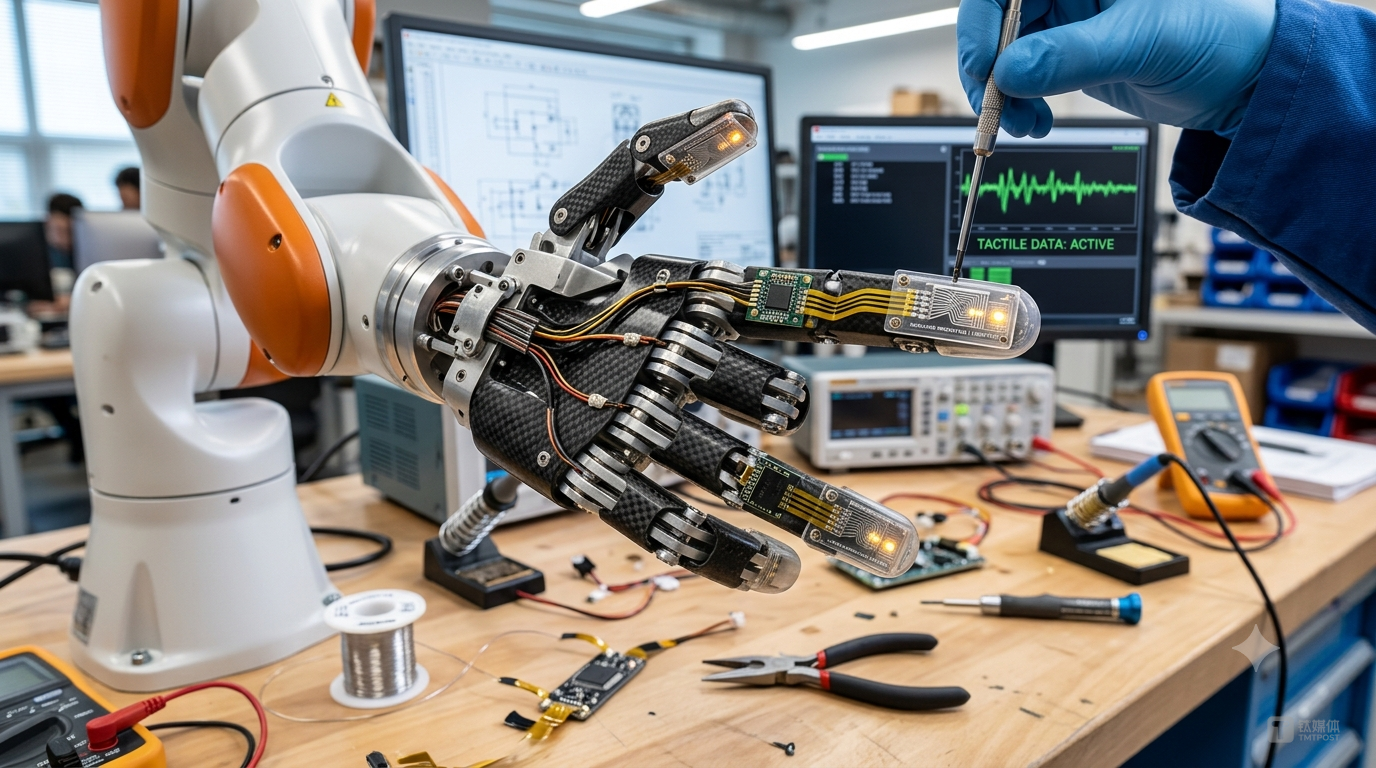
Tactile sensing is the next frontier for robotics; see how this startup is scaling commercial delivery.
30-Second TL;DR
What Changed
Secured two funding rounds within three months
Why It Matters
Tactile sensing is a critical bottleneck for embodied AI; solving this enables robots to perform complex manipulation tasks that were previously impossible.
What To Do Next
If you are building embodied AI, investigate integrating tactile feedback loops to improve your robot's object manipulation accuracy.
Key Points
- •Secured two funding rounds within three months
- •Focusing on tactile sensing hardware for robotics
- •Transitioned from R&D to small-batch commercial delivery
Deep Insight
AI-generated analysis for this event — not the original article.
Enhanced Key Takeaways
- •The startup is identified as 'SenX' (or a similar phonetic derivative of the Tsinghua-incubated tactile sensing project), focusing on high-resolution tactile sensors that mimic human skin sensitivity.
- •The core technology utilizes optical-based tactile sensing (similar to GelSight principles) to achieve sub-millimeter spatial resolution for robotic manipulation.
- •The funding rounds were led by prominent Chinese deep-tech venture capital firms, including Sequoia China and MiraclePlus, reflecting strong investor confidence in embodied AI hardware.
- •The team is actively collaborating with humanoid robot manufacturers in the Beijing-Tianjin-Hebei region to integrate their sensors into robotic grippers and hands.
- •The company's business model involves providing both the hardware sensor modules and the proprietary software algorithms required to process tactile data for real-time force feedback.
Competitor Analysis
- Technology Approach
- Optical/Vision-based
- Key Advantage
- Industry standard for research
- Pricing Model
- High (Research-grade)
- Technology Approach
- Piezoresistive/Capacitive
- Key Advantage
- High durability
- Pricing Model
- Enterprise/Custom
- Technology Approach
- Optical/AI-integrated
- Key Advantage
- Cost-effective/Mass-producible
- Pricing Model
- Competitive/Volume-based
| Competitor | Technology Approach | Key Advantage | Pricing Model |
|---|---|---|---|
| GelSight | Optical/Vision-based | Industry standard for research | High (Research-grade) |
| Wonik Robotics | Piezoresistive/Capacitive | High durability | Enterprise/Custom |
| SenX (Tsinghua) | Optical/AI-integrated | Cost-effective/Mass-producible | Competitive/Volume-based |
Technical Deep Dive
- Sensor Architecture: Employs a camera-based internal imaging system that captures the deformation of a soft elastomer membrane.
- Data Processing: Utilizes lightweight convolutional neural networks (CNNs) to convert visual deformation patterns into force, slip, and texture data.
- Resolution: Capable of detecting surface features at a resolution of <0.5mm, enabling robots to handle delicate objects like eggs or thin wires.
- Integration: Supports standard ROS (Robot Operating System) interfaces for seamless deployment in existing robotic control stacks.
Future ImplicationsAI analysis grounded in cited sources
Timeline
- 2026-03Tsinghua team completes initial prototype of high-resolution tactile sensor.
- 2026-04First round of seed funding secured from deep-tech focused venture capital.
- 2026-06Second round of funding closed and transition to small-batch commercial delivery initiated.
Weekly AI Recap
Read this week's curated digest of top AI events →
Related Updates

AI-curated news aggregator. All content rights belong to original publishers.
Original source: 钛媒体 ↗
This is a summary, not the original. Read the source, or get the weekly briefing.
The weekly digest
One email a week. Unsubscribe anytime.