Top Law Schools Tighten AI Classroom Controls
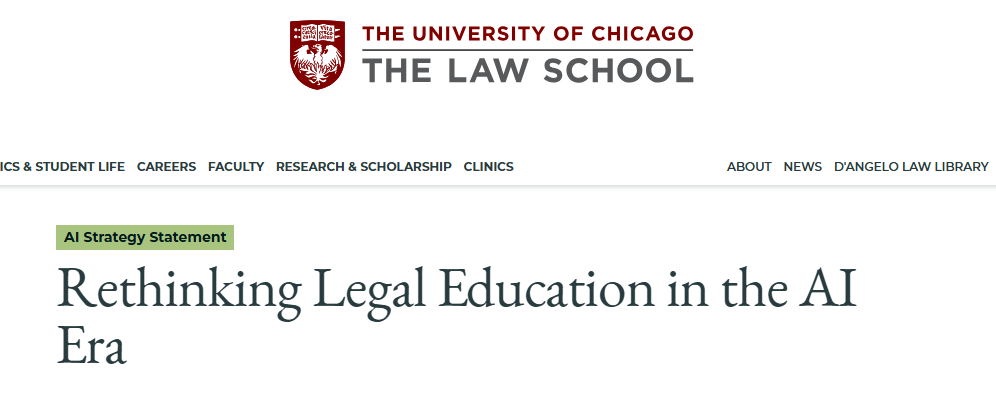
💡See how elite universities are redesigning curricula to prevent AI-driven skill atrophy in professional training.
⚡ 30-Second TL;DR
What Changed
University of Chicago Law School bans electronic devices for 1L students starting 2026-2027.
Why It Matters
Educational institutions are shifting from 'AI integration' to 'AI-resilient pedagogy,' prioritizing foundational skills over tool-assisted output.
What To Do Next
Review your internal training programs to ensure they balance AI tool usage with core critical thinking exercises.
Key Points
- •University of Chicago Law School bans electronic devices for 1L students starting 2026-2027.
- •Focuses on developing 'fundamental human' skills like independent analysis and strategic judgment.
- •Berkeley Law prohibits AI use in coursework and exams to ensure mastery of legal basics.
- •Princeton ends 133-year tradition of unproctored exams due to AI cheating risks.
🧠 Deep Insight
AI-generated analysis for this event — not the original article.
🔑 Enhanced Key Takeaways
- •The University of Chicago Law School's policy specifically targets the Socratic method, aiming to prevent students from using AI-generated summaries to bypass the rigorous, real-time verbal engagement required in 1L classrooms.
- •Legal education experts note that the 'analog' shift is driven by the American Bar Association's (ABA) evolving guidance on professional responsibility, which emphasizes that lawyers must personally verify the accuracy of AI-generated legal research.
- •Berkeley Law's policy includes a 'transparency requirement' where students must disclose if and how AI tools were used in the drafting process, even for assignments where AI is permitted.
- •Princeton University's decision to end its Honor Code tradition for exams is part of a broader Ivy League trend where institutions are shifting toward 'AI-resistant' assessment designs, such as oral exams and in-class blue book testing.
- •Several elite law schools are simultaneously investing in 'AI literacy' courses, creating a bifurcated curriculum that restricts AI in foundational courses while mandating it in advanced legal technology seminars.
🔮 Future ImplicationsAI analysis grounded in cited sources
⏳ Timeline
Weekly AI Recap
Read this week's curated digest of top AI events →
👉Related Updates


AI-curated news aggregator. All content rights belong to original publishers.
Original source: 虎嗅 ↗
This is a summary, not the original. Read the source, or get the weekly briefing.
The weekly digest
One email a week. Unsubscribe anytime.