Retail Consumption Polarizes in 2026
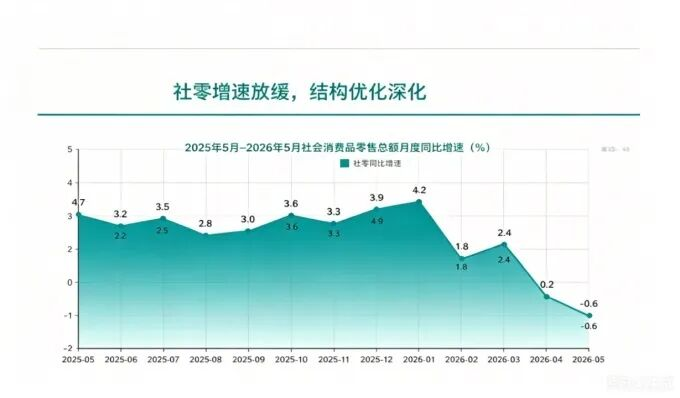
💡Strategic analysis of retail shifts that impact how AI-driven logistics and personalized services are deployed.
⚡ 30-Second TL;DR
What Changed
Retail consumption shows K-shaped polarization between high-end and discount segments.
Why It Matters
Retailers must pivot to either premium experiences or extreme efficiency to survive, as the 'middle-ground' retail model becomes increasingly unsustainable.
What To Do Next
Evaluate the integration of local delivery APIs into your retail platform to capitalize on the instant retail trend.
Key Points
- •Retail consumption shows K-shaped polarization between high-end and discount segments.
- •Instant retail market size is expected to exceed 1.2 trillion RMB in 2026.
- •Traditional department stores and large hypermarkets are in decline, with over 17,000 store closures.
- •Service consumption is growing faster than physical goods consumption.
🧠 Deep Insight
AI-generated analysis for this event — not the original article.
🔑 Enhanced Key Takeaways
- •The rise of 'rational consumption' (理性消费) in China has led to a surge in private-label brands (PB) and discount retailers like Pinduoduo and Miniso, which are capturing market share from mid-tier international brands.
- •Instant retail (即时零售) is increasingly powered by AI-driven demand forecasting and micro-fulfillment centers (MFCs) that reduce delivery times to under 30 minutes.
- •The decline of hypermarkets is being accelerated by the 'community group buying' (社区团购) model, which has shifted consumer habits toward high-frequency, small-batch purchasing.
- •Luxury brands are pivoting toward 'experience-based retail' in China, integrating digital art installations and exclusive membership events to maintain premium pricing power despite broader economic headwinds.
- •Government policy in 2026 has shifted toward 'consumption promotion' (促消费) initiatives, focusing on digital vouchers and trade-in programs for home appliances to stimulate the stagnant middle-market segment.
📊 Competitor Analysis▸ Show
| Feature | Instant Retail Platforms (e.g., Meituan/Ele.me) | Traditional Hypermarkets (e.g., Walmart/Carrefour) | Discount Retailers (e.g., Pinduoduo/Miniso) |
|---|---|---|---|
| Delivery Speed | < 30 Minutes | 1-3 Days (or In-store) | 2-5 Days |
| Pricing Strategy | Premium (Convenience-based) | Mid-range (Volume-based) | Low-cost (Value-based) |
| Inventory Model | Distributed (MFCs) | Centralized (Large Warehouses) | Lean/Direct-to-Consumer |
| Market Trend | Rapid Growth | Structural Decline | Rapid Growth |
🛠️ Technical Deep Dive
- Instant retail platforms utilize real-time geospatial optimization algorithms to dynamically route delivery riders based on traffic, weather, and order density.
- Demand forecasting models have transitioned from historical batch processing to streaming analytics, allowing for inventory replenishment at the SKU level within hours.
- Automated storage and retrieval systems (AS/RS) in micro-fulfillment centers are being deployed to reduce picking errors and labor costs in high-density urban areas.
- Computer vision systems are increasingly used in physical retail to track shelf stock levels and automate checkout processes, reducing the need for manual inventory audits.
🔮 Future ImplicationsAI analysis grounded in cited sources
⏳ Timeline
Weekly AI Recap
Read this week's curated digest of top AI events →
👉Related Updates

AI-curated news aggregator. All content rights belong to original publishers.
Original source: 虎嗅 ↗
This is a summary, not the original. Read the source, or get the weekly briefing.
The weekly digest
One email a week. Unsubscribe anytime.