Thermodynamics Sets the Humanoid Robot Ceiling
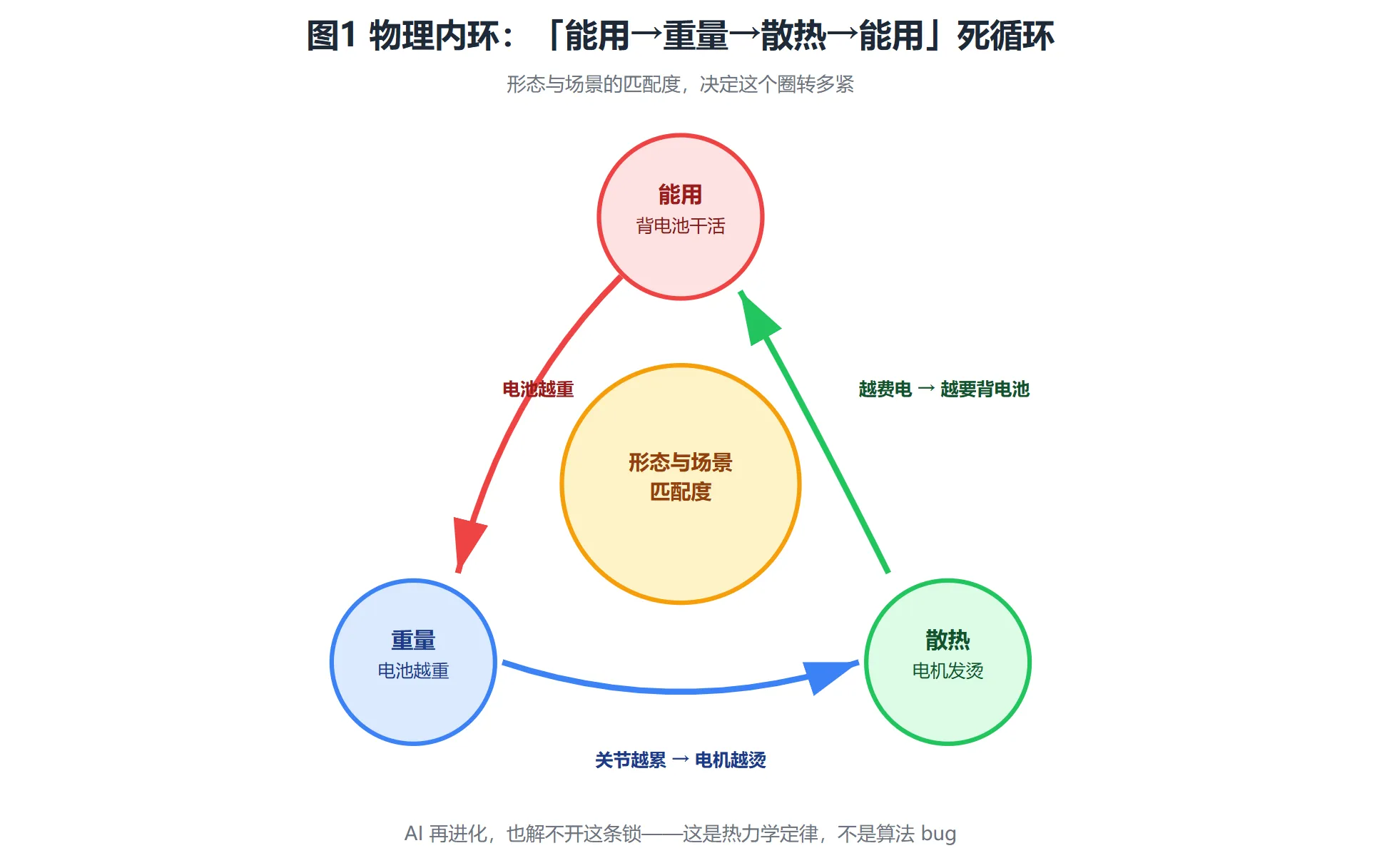
💡The biggest humanoid-robot bottleneck may be watts and heat—not smarter models.
⚡ 30-Second TL;DR
What Changed
On-device large-model inference is estimated at 35–40W.
Why It Matters
The analysis shifts humanoid-robot competition from model intelligence alone toward system-level energy efficiency and thermal design. Teams may gain more by narrowing the task environment or changing the platform than by adding larger models.
What To Do Next
Measure your robot prototype's inference, actuation, battery, and thermal budgets separately before choosing a humanoid platform for deployment.
Key Points
- •On-device large-model inference is estimated at 35–40W.
- •Smooth robot control may require more than 200W, creating a major power gap.
- •Heavier batteries increase energy consumption, reinforcing a weight-power-thermal feedback loop.
- •Factory workstations can often eliminate bipedal locomotion, while uneven environments preserve the need for legs.
Weekly AI Recap
Read this week's curated digest of top AI events →
👉Related Updates


AI-curated news aggregator. All content rights belong to original publishers.
Original source: 钛媒体 ↗
This is a summary, not the original. Read the source, or get the weekly briefing.
Weekly AI briefing
One email a week. Unsubscribe anytime.