Modular Robots Learn Their New Bodies
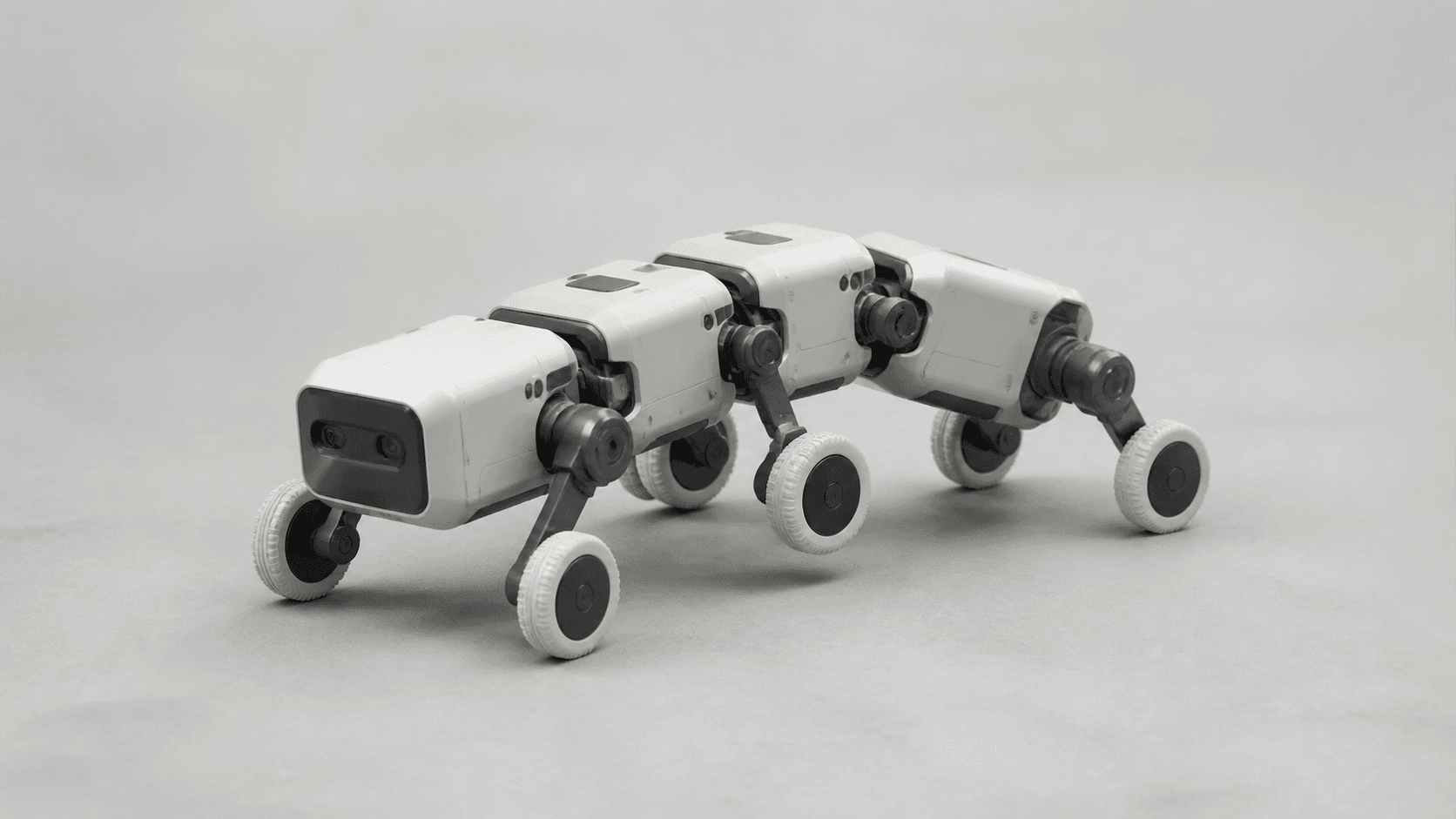
💡See how self-recognizing robot bodies could make modular embodied AI more adaptable.
⚡ 30-Second TL;DR
What Changed
Multiple D1 units can physically join into a single robot configuration.
Why It Matters
This approach could make robots more adaptable across tasks without requiring a completely new platform for every configuration. For AI robotics developers, it highlights the importance of self-modeling and automatic system identification in embodied AI.
What To Do Next
Prototype a configuration-detection and dynamics-recalibration pipeline for your modular robot using joint-state and load-sensor data.
Key Points
- •Multiple D1 units can physically join into a single robot configuration.
- •The system automatically identifies the robot’s post-assembly body structure.
- •It rebuilds the dynamics model for new loads and terrain conditions.
🧠 Deep Insight
Background and context from public sources — not the original article. 9 sources cited.
🔑 Enhanced Key Takeaways
- •The industry is shifting toward 'component digital twins' to standardize how modular robotic parts communicate their physical properties to a central controller.
- •Modular robotics is increasingly being deployed in microfactories to address construction labor shortages by enabling rapid reconfiguration of production lines.
- •Physical AI platforms are now utilizing workload-native modular architectures to allow developers to swap hardware modules while maintaining software compatibility.
- •Modular surgical platforms, such as the eCential Robotics Op.n system, have moved beyond research to achieve FDA 510(k) clearance for clinical use.
- •Consumer-facing modular robotics, exemplified by the Yarbo M Series, are transitioning from single-purpose tools to multi-application ecosystems for yard maintenance.
🛠️ Technical Deep Dive
- Implementation of component digital twins allows for real-time synchronization between physical modular hardware and virtual simulation models.
- Utilization of workload-native platforms (e.g., MIPS Acies, Actus, Aegis) to manage heterogeneous modular hardware through a unified software abstraction layer.
- Integration of active robotics and surgical navigation into a single modular architecture to reduce latency in real-time positioning.
- Use of modular microfactory frameworks to enable scalable, robotics-enabled assembly lines for multifamily housing construction.
🔮 Future ImplicationsAI analysis grounded in cited sources
📎 Sources (9)
Factual claims are grounded in the sources below. Forward-looking analysis is AI-generated interpretation.
Weekly AI Recap
Read this week's curated digest of top AI events →
👉Related Updates


AI-curated news aggregator. All content rights belong to original publishers.
Original source: Pandaily ↗
This is a summary, not the original. Read the source, or get the weekly briefing.
Weekly AI briefing
One email a week. Unsubscribe anytime.