The trend of 'Toy-ification' in AI hardware products
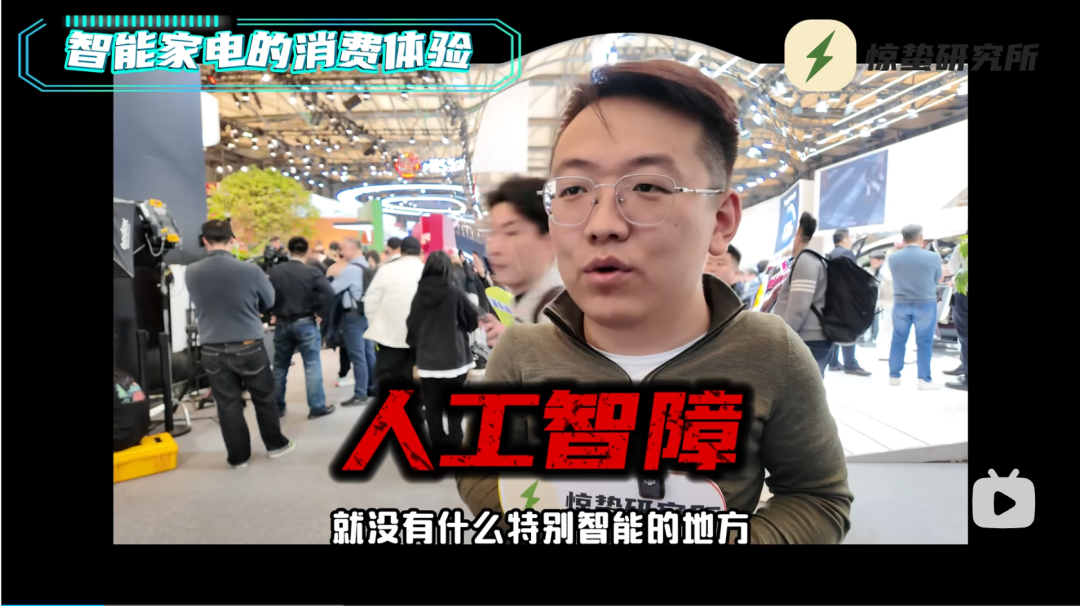
Understand the market risks and opportunities of 'toy-like' AI products and the role of emotional design.
30-Second TL;DR
What Changed
AI integration is leading to the 'toy-ification' of smart products
Why It Matters
For AI builders, this highlights a market tension between functional utility and consumer entertainment value. It suggests that successful products must balance AI capability with emotional resonance.
What To Do Next
When designing AI consumer products, prioritize solving a specific user pain point rather than relying solely on 'AI' as a marketing buzzword.
Key Points
- •AI integration is leading to the 'toy-ification' of smart products
- •Distinction between value-add features and 'smart waste'
- •Emotional premium is becoming a core selling point for AI gadgets
Deep Insight
Background and context from public sources — not the original article. 34 sources cited.
Enhanced Key Takeaways
- •The 'toy-ification' trend is significantly driven by the burgeoning market for AI companion devices, projected to reach up to $972.16 billion by 2035, fueled by increasing demand for personalized digital interaction, emotional support, and addressing issues like loneliness and mental health.
- •Generative AI models, particularly large language models (LLMs), serve as a core technological engine enabling this 'toy-ification,' allowing products to evolve from simple preset commands to natural conversational interactions with contextual understanding and multi-turn dialogue capabilities.
- •The integration of AI into consumer electronics increasingly leverages 'Edge AI,' which processes data directly on devices like smartphones, wearables, and home assistants without constant cloud access, enabling faster decisions, improved privacy, reduced bandwidth, and real-time functionality, despite challenges related to hardware limitations and security.
- •The concept of 'smart waste' is underscored by recent product failures such as the Humane AI Pin and Rabbit R1, which, despite significant hype, delivered limited functionality, poor battery life, and quickly became unusable, contributing to electronic waste and highlighting the risks of releasing AI gadgets that promise future capabilities rather than current utility.
- •The design philosophy for these AI gadgets is shifting towards creating emotional connections through personalization and empathy, often leveraging AI to understand user moods, adapt personalities, and provide companionship, which also raises ethical considerations regarding potential emotional reliance and the flattening of human vulnerability.
Technical Deep Dive
- Edge AI Processing: AI algorithms are executed directly on consumer devices using specialized hardware like microprocessors, neural processing units (NPUs), digital signal processors (DSPs), and AI-enhanced microcontrollers, reducing latency and reliance on cloud connectivity.
- AI Model Optimization: Techniques such as sparsity, model pruning, and quantization are employed to reduce the size and computational complexity of AI models, making them suitable for devices with limited memory and processing power.
- Generative AI Integration: Large Language Models (LLMs) and other generative AI models are integrated into devices, often via APIs, to facilitate natural language understanding, multi-turn dialogues, and dynamic content generation.
- Multi-modal Sensing for Emotional Intelligence: Devices incorporate various sensors, including cameras for facial recognition, microphones for voice tone detection, motion sensors for body language interpretation, and biometric sensors (e.g., pulse rate, temperature, skin changes) or even electroencephalography (EEG) sensors, to detect and interpret human emotional cues.
- Connectivity: Wi-Fi is a prevalent technology for enabling cloud-connected experiences, real-time content updates, and adaptive learning functionalities in smart toys and companion devices.
Future ImplicationsAI analysis grounded in cited sources
Timeline
- 1990sAI begins to enter mass-market consumer products.
- 2000Cynthia Breazeal develops Kismet, a robot capable of recognizing and simulating emotions.
- Early 2010sConversational AI gains traction with the launch of Siri (2010/2011) and Amazon Echo (2014), integrating AI into daily life.
- 2022-2023Breakthroughs in foundation models and generative AI (e.g., ChatGPT) significantly influence AI integration in consumer products.
- 2024-2025The launch of products like the Humane AI Pin and Rabbit R1 sparks discussions on AI gadget utility and 'smart waste,' while the global AI companion market is valued at USD 37.12 billion with strong growth projections.
- 2026AI toys embedding generative models debut at CES, raising new concerns about child safety and privacy.
Sources (34)
Factual claims are grounded in the sources below. Forward-looking analysis is AI-generated interpretation.
Weekly AI Recap
Read this week's curated digest of top AI events →
AI-curated news aggregator. All content rights belong to original publishers.
Original source: 钛媒体 ↗
This is a summary, not the original. Read the source, or get the weekly briefing.
The weekly digest
One email a week. Unsubscribe anytime.