The skeptic’s guide to viral humanoid robot demonstrations
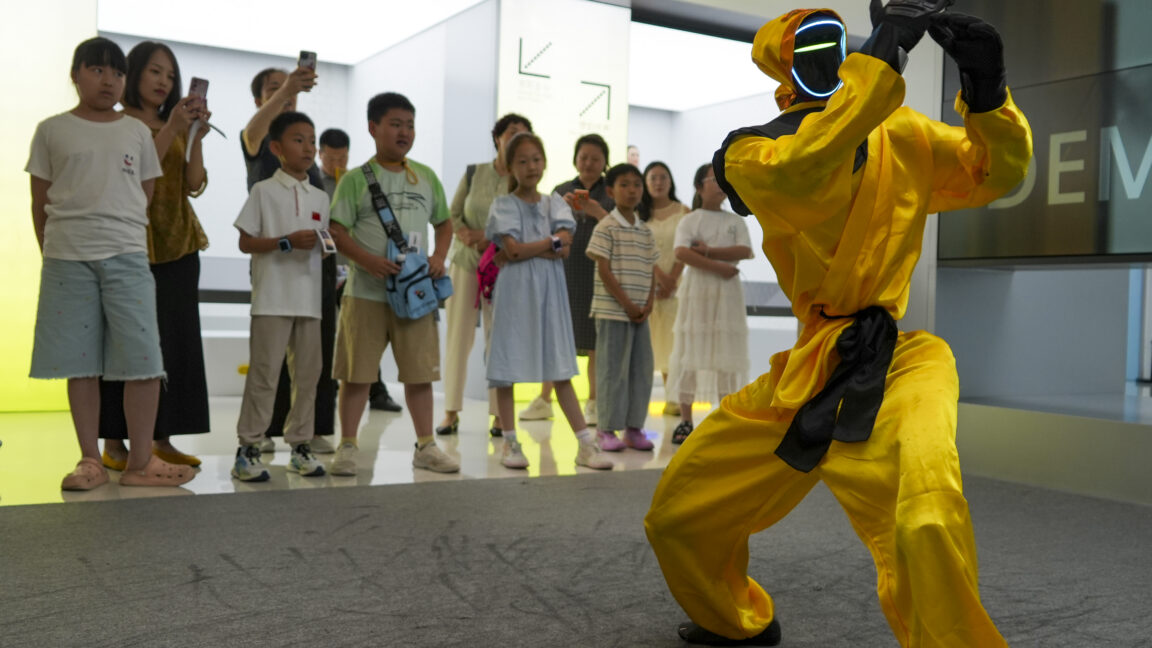
💡Learn to distinguish between staged marketing demos and actual autonomous capabilities in humanoid robotics.
⚡ 30-Second TL;DR
What Changed
Viral robot videos often rely on scripted environments rather than real-world autonomy.
Why It Matters
Practitioners must learn to look past marketing hype to evaluate the actual reliability and safety of embodied AI systems. Misunderstanding these limitations can lead to poor investment or development decisions.
What To Do Next
When evaluating new robotics demos, ask for raw, unedited footage of the robot performing tasks in an unstructured environment.
Key Points
- •Viral robot videos often rely on scripted environments rather than real-world autonomy.
- •Public perception of robotic progress is frequently skewed by selective editing.
- •Distinguishing between hardware capability and AI-driven decision-making is critical for practitioners.
🧠 Deep Insight
Background and context from public sources — not the original article. 24 sources cited.
🔑 Enhanced Key Takeaways
- •Industrial deployment of humanoid robots is significantly hampered by reliability issues, with most current models offering only 1-4 hours of active use before requiring recharging or intervention, far below the 95-99% uptime expected by industrial customers.
- •A critical barrier to widespread humanoid robot adoption is the absence of clear regulatory frameworks and specific safety standards for general-purpose, mobile, AI-driven robots operating in commercial or public spaces.
- •The 'sim-to-real gap' remains a major technical hurdle, as policies learned in highly controlled simulations often fail catastrophically when transferred to real-world robots due to unmodeled physics, sensor noise, and environmental variability.
- •Public perception of AI-generated content, including robot videos, is increasingly skeptical, with consumers often identifying 'robotic gestures,' 'unnatural voices,' and a 'lack of emotional tone' as giveaways, which can negatively impact brand trust.
- •Many impressive robot demonstrations, both historically and recently, have relied on teleoperation or heavily scripted environments, even when presented as fully autonomous, contributing to the distorted public perception of their actual capabilities.
🛠️ Technical Deep Dive
- Mechanical Complexity: Humanoid robots possess hundreds of joints, actuators, and sensors, each representing a potential point of failure, in stark contrast to traditional industrial arms that typically have only six joints.
- AI Robustness: Current AI systems struggle with the 'long-tail problem,' encountering numerous unforeseen edge cases, novel environments, and the vast spectrum of physical tasks inherent in unpredictable real-world settings.
- Battery Limitations: Standard lithium-ion battery technology generally restricts humanoid robots to 1-4 hours of active operation, making continuous 24/7 industrial deployment impractical without robust charging infrastructure and swap strategies.
- Sim-to-Real Bridging Techniques:
- Domain Randomization: Training policies in simulation with diverse system dynamics and environmental variations to enhance their robustness for real-world transfer.
- Learning from Demonstration (LfD): A pipeline that integrates traditional control methods, teleoperated demonstrations, policy training, and refinement through reinforcement learning and simulation to develop new skills.
- Vision-Language-Action Models: Utilizing natural language descriptions of images as a unifying signal across simulated and real-world domains to foster the learning of domain-invariant image representations.
- Hybrid Control Architectures: Combining model-based control (e.g., admittance control for compliant manipulation) with learning-based methods (e.g., reinforcement learning for robust locomotion) to achieve safe and reliable whole-body control.
- Whole-Body Control: Advanced control systems are essential for coordinating simultaneous locomotion and manipulation, ensuring stability, safety, and compliance during physical interactions with the environment.
- Perception and SLAM: Visual sensors are crucial for real-time object tracking and Simultaneous Localization and Mapping (SLAM) in dynamic and unstructured environments.
🔮 Future ImplicationsAI analysis grounded in cited sources
⏳ Timeline
📎 Sources (24)
Factual claims are grounded in the sources below. Forward-looking analysis is AI-generated interpretation.
Weekly AI Recap
Read this week's curated digest of top AI events →
👉Related Updates


AI-curated news aggregator. All content rights belong to original publishers.
Original source: Ars Technica AI ↗
This is a summary, not the original. Read the source, or get the weekly briefing.
The weekly digest
One email a week. Unsubscribe anytime.