The Rise of Underwater Robotics: Capital Flows and Debates
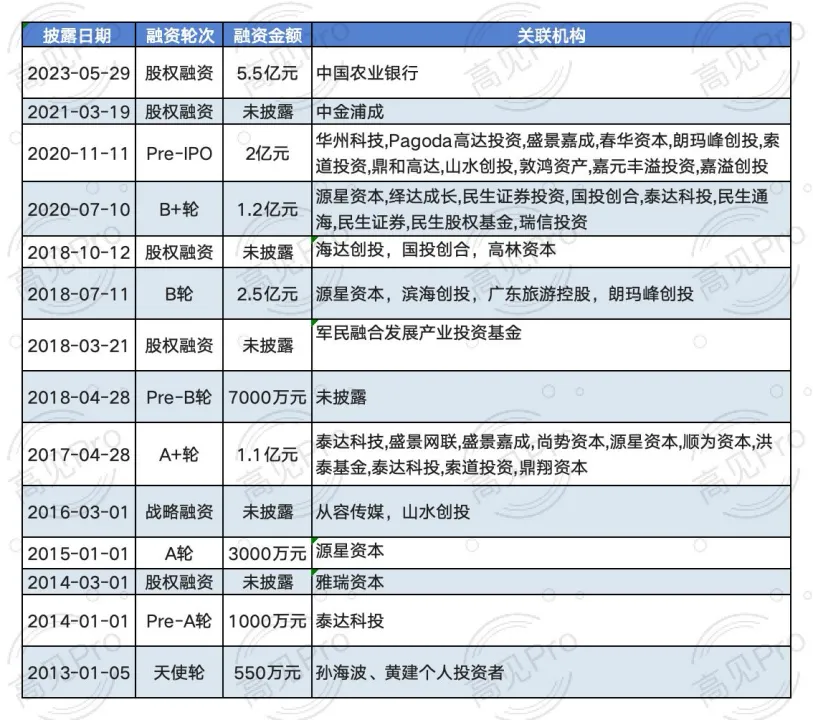
💡Explore the emerging investment trends in specialized robotics and embodied AI.
⚡ 30-Second TL;DR
What Changed
Increased interest in underwater robotics for industrial applications
Why It Matters
Highlights the growing importance of specialized robotics in the broader AI and automation ecosystem.
What To Do Next
Evaluate the potential for integrating AI-driven computer vision into underwater sensor arrays for autonomous navigation.
Key Points
- •Increased interest in underwater robotics for industrial applications
- •Disagreements exist on the most viable commercialization paths
- •Capital is flowing into specialized robotics, signaling a shift in hardware investment
🧠 Deep Insight
AI-generated analysis for this event — not the original article.
🔑 Enhanced Key Takeaways
- •The surge in underwater robotics is heavily driven by the 'Blue Economy' initiative, specifically focusing on offshore wind farm maintenance and subsea cable inspection.
- •Advancements in acoustic communication and SLAM (Simultaneous Localization and Mapping) algorithms are overcoming the traditional limitations of GPS-denied underwater environments.
- •Regulatory frameworks in the South China Sea and Arctic regions are increasingly mandating autonomous monitoring, creating a forced market for underwater robotics.
- •Energy efficiency remains the primary technical bottleneck, with current battery density limiting AUV (Autonomous Underwater Vehicle) mission duration to less than 48 hours for most commercial models.
- •Strategic investment is shifting from general-purpose ROVs (Remotely Operated Vehicles) toward swarm-capable, AI-integrated AUVs that require minimal human intervention.
📊 Competitor Analysis▸ Show
| Feature | BlueRobotics (BlueROV2) | Saab Seaeye (Sabertooth) | Ocean Infinity (Armada) |
|---|---|---|---|
| Target Market | Research/Education | Oil & Gas/Defense | Large-scale Survey/Logistics |
| Autonomy Level | Low (Tethered) | High (Hybrid) | Very High (Uncrewed Surface Vessels) |
| Pricing Model | Affordable/Modular | Premium/Enterprise | Service-based/Contractual |
| Key Benchmark | Ease of use/Community | Depth rating/Reliability | Fleet scalability/Range |
🛠️ Technical Deep Dive
- Acoustic Modem Integration: Utilization of high-frequency acoustic modems for data transmission in environments where radio waves are absorbed.
- SLAM Implementation: Use of DVL (Doppler Velocity Log) combined with IMU (Inertial Measurement Unit) and pressure sensors to maintain positioning accuracy without GPS.
- Edge AI Processing: Deployment of NVIDIA Jetson-class modules within pressure-resistant housings to enable real-time object detection and obstacle avoidance.
- Communication Protocols: Adoption of underwater-specific protocols like JANUS for interoperability between heterogeneous robotic systems.
🔮 Future ImplicationsAI analysis grounded in cited sources
⏳ Timeline
Weekly AI Recap
Read this week's curated digest of top AI events →
👉Related Updates



AI-curated news aggregator. All content rights belong to original publishers.
Original source: 钛媒体 ↗
This is a summary, not the original. Read the source, or get the weekly briefing.
The weekly digest
One email a week. Unsubscribe anytime.