The Rise of Robot Doctors
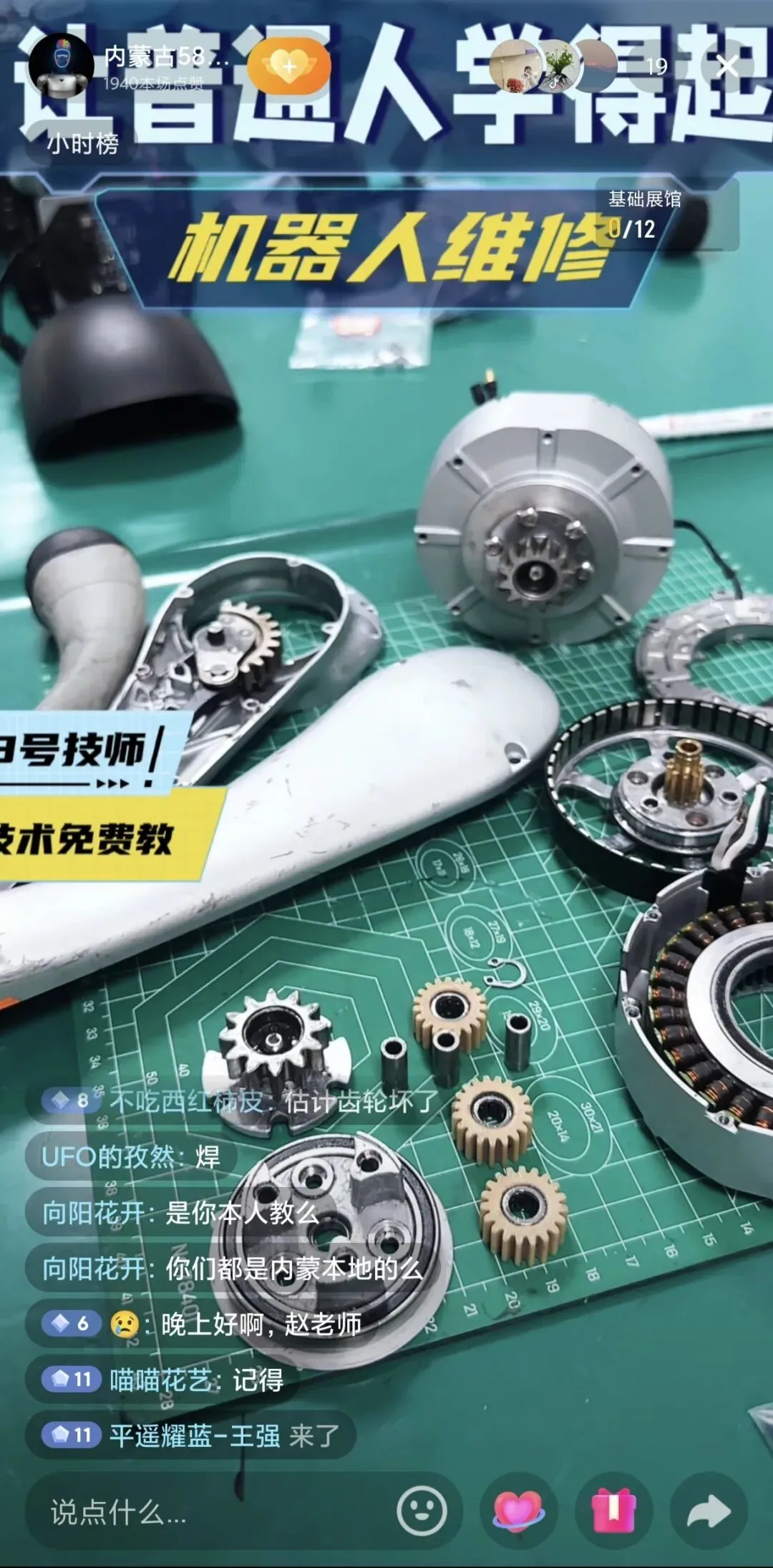
Robot repair is becoming a new AI-adjacent service layer, with acoustic diagnostics at its core.
30-Second TL;DR
What Changed
A technician earns about 6,000 yuan per month providing robot diagnosis and repair services.
Why It Matters
As robot adoption grows, after-sales diagnostics may become a meaningful part of the robotics ecosystem. Standardized repair data and remote-support workflows could improve uptime for consumer and commercial robots.
What To Do Next
Prototype an audio-classification tool that labels robot-actuator sounds and maps them to likely faults before sending a robot to a technician.
Key Points
- •A technician earns about 6,000 yuan per month providing robot diagnosis and repair services.
- •Robot-dog knee-joint sounds are used as diagnostic clues for lubrication, gear, or circuit-board problems.
- •Livestreaming combines repair education, remote troubleshooting, and customer support.
Deep Insight
AI-generated analysis for this event — not the original article.
Enhanced Key Takeaways
- •The emergence of 'robot doctors' is largely driven by the rapid proliferation of affordable quadrupedal robots in the Chinese consumer market, such as those from Unitree and Xiaomi.
- •Repair technicians are increasingly utilizing specialized diagnostic software that interfaces with the robot's onboard diagnostic port to pull error logs, supplementing the manual auditory diagnosis mentioned.
- •The rise of this profession has created a secondary market for 'salvage' robots, where technicians purchase broken units to harvest proprietary actuators and sensors for resale.
- •Platform-specific regulations on livestreaming repair content are evolving, with some platforms now requiring 'technical certification' tags for creators performing live hardware disassembly.
- •The 6,000 yuan monthly income is often supplemented by 'repair-as-a-service' (RaaS) contracts, where technicians provide recurring maintenance for small businesses using robots for delivery or reception.
Technical Deep Dive
- Diagnostic methodology involves analyzing high-frequency acoustic signatures from BLDC (Brushless DC) motor controllers to identify bearing wear or gear backlash.
- Remote troubleshooting often relies on real-time telemetry streaming via 5G/Wi-Fi 6, allowing technicians to view IMU (Inertial Measurement Unit) data and joint torque feedback remotely.
- Common failure points identified in consumer quadrupedal robots include thermal degradation of plastic gear housings and fatigue-induced fractures in carbon-fiber or reinforced-polymer leg linkages.
- Firmware-level diagnostics often involve reading CAN bus traffic between the central processing unit and individual joint modules to isolate communication timeouts or voltage drops.
Future ImplicationsAI analysis grounded in cited sources
Timeline
- 2021-06Unitree releases the Go1, marking the beginning of accessible, low-cost quadrupedal robots for the consumer market.
- 2022-08Xiaomi launches the CyberDog, significantly increasing public interest and the installed base of consumer robots in China.
- 2024-03Initial reports emerge of independent repair shops and hobbyist communities forming to address out-of-warranty robot failures.
- 2025-11Livestreaming platforms begin categorizing 'Robot Repair' as a distinct niche, formalizing the role of the remote technician.
Weekly AI Recap
Read this week's curated digest of top AI events →
Related Updates


AI-curated news aggregator. All content rights belong to original publishers.
Original source: cnBeta (Full RSS) ↗
This is a summary, not the original. Read the source, or get the weekly briefing.
The weekly digest
One email a week. Unsubscribe anytime.