The Race to Build Data Centers in Space
💡Discover how orbital AI infrastructure is becoming the next frontier for tech giants and space startups.
⚡ 30-Second TL;DR
What Changed
Tech companies are investigating orbital infrastructure for AI processing.
Why It Matters
Establishing data centers in space could revolutionize real-time satellite data processing and autonomous navigation. It represents a significant shift toward decentralized, high-latency-sensitive AI infrastructure.
What To Do Next
Research current radiation-hardened hardware specifications to understand the limitations of deploying AI models in space environments.
Key Points
- •Tech companies are investigating orbital infrastructure for AI processing.
- •The SpaceX IPO is catalyzing investment in space-based tech frontiers.
- •Orbital AI aims to solve latency and data processing challenges for space missions.
🧠 Deep Insight
Background and context from public sources — not the original article. 29 sources cited.
🔑 Enhanced Key Takeaways
- •Terrestrial constraints like power grid capacity, water scarcity for cooling, land availability, and community resistance are significant drivers pushing the development of orbital data centers.
- •Several companies, including Starcloud and Axiom Space, have already launched prototype orbital data centers or satellites equipped with powerful GPUs (e.g., Nvidia H100) and successfully demonstrated AI model training in space.
- •Orbital data centers are emerging as a complementary infrastructure tier, best suited for energy-intensive, latency-tolerant workloads such as large-scale AI model training, batch processing, and sensor-proximal data analysis, rather than replacing all terrestrial data centers.
- •Key technical challenges being addressed include developing efficient thermal management systems for the vacuum of space, radiation hardening for computing hardware, achieving high-bandwidth inter-satellite communication via optical links, and managing hardware obsolescence in orbit.
- •Major tech players like Google (Project Suncatcher), Microsoft (Azure Orbital), and Amazon (AWS for Aerospace and Satellite) are actively investing in or partnering to build foundational infrastructure and explore the feasibility of space-based computing.
📊 Competitor Analysis▸ Show
| Feature/Company | Starcloud | Google (Project Suncatcher) | Axiom Space | Orbital |
|---|---|---|---|---|
| Primary Focus | Hyperscale AI training, GPU compute for satellites | Scalable AI infrastructure, ML compute in space | Cloud computing, AI/ML, data fusion, cybersecurity in space | Commercial AI compute infrastructure in LEO |
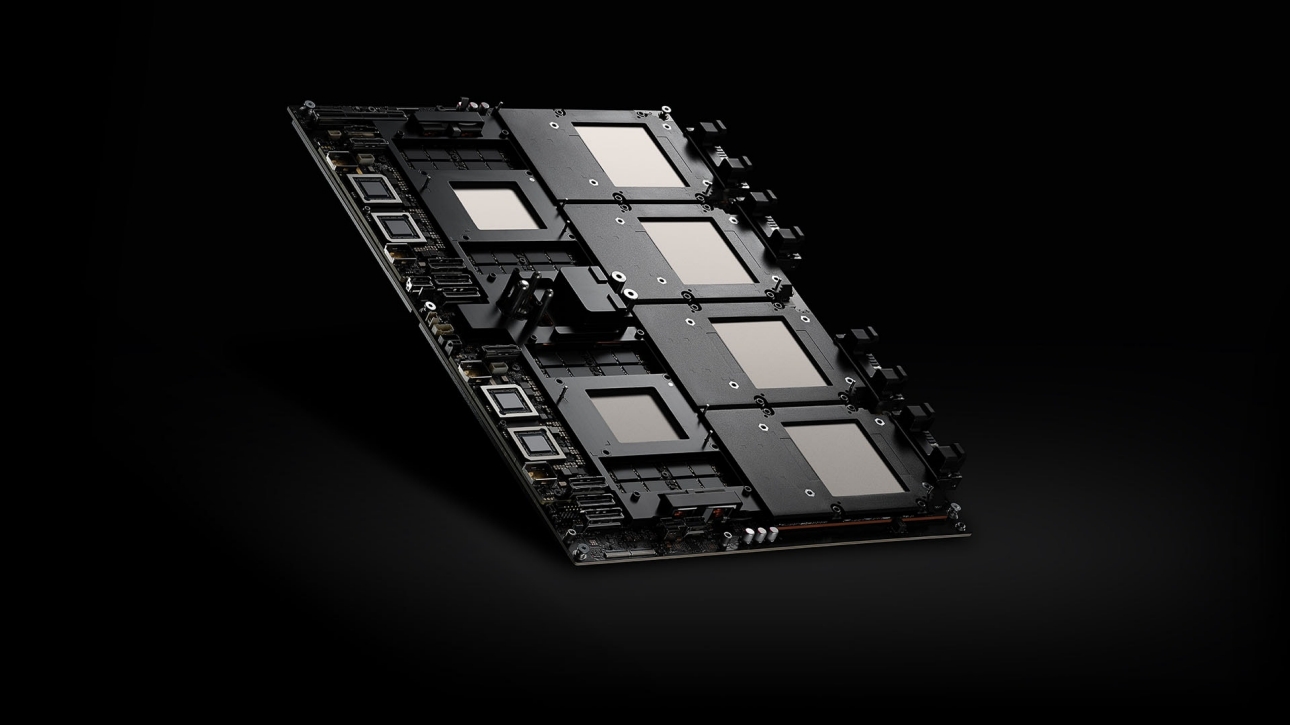
| Key Hardware | Nvidia H100/Blackwell GPUs | Google TPUs | Red Hat Device Edge, quantum-secure links | Nvidia Space-1 Vera Rubin GPU (Blackwell chip) |
| Cooling Approach | Passive radiative cooling | Radiative cooling (implied by space environment) | Radiative cooling (implied by space environment) | Radiative cooling, thermal management tech |
| Communication | Optical inter-satellite links, data relay | Free-space optical links (tens of Tbps) | Optical Intersatellite Links (OISLs) | Optical intersatellite links |
| Launch Status | Starcloud-1 launched Nov 2025 (Nvidia H100, LLM trained) | Learning mission with Planet (2 prototype satellites) by early 2027 | AxDCU-1 prototype to ISS Fall 2025; first two ODC nodes launched Jan 2026 | First demo mission (Nvidia Blackwell chip) in 2027; Orbital-1 in 2028 |
| Funding/Backing | $170M Series A (March 2026), Y Combinator, Nvidia Inception | Google Research moonshot | Axiom Space (commercial space station developer) | $5M pre-seed (June 2026), a16z Speedrun |
🛠️ Technical Deep Dive
- Power Generation: Orbital data centers leverage continuous solar power in Low Earth Orbit (LEO), where solar panels can be up to eight times more productive than on Earth due to uninterrupted exposure and lack of atmospheric interference. Some designs, like Sophia Space, aim to direct up to 92% of generated energy towards data processing.
- Thermal Management: Cooling in the vacuum of space relies solely on passive radiative cooling, as convection (air/liquid) is absent. This presents a significant engineering challenge, with estimates suggesting a 20°C radiator might emit only about 633 watts per square meter, over 1,000 times slower than terrestrial water cooling. Solutions involve large deployable radiator panels, heat pumps to raise temperatures for more efficient radiation, and distributing compute across spacecraft surface area.
- Compute Hardware: Specialized hardware like Nvidia H100 and Blackwell GPUs are being deployed, with companies like Starcloud launching H100s and planning for Blackwell. Google's Project Suncatcher envisions using Google TPUs. Radiation hardening, redundancy, and autonomous operation are critical requirements due to space radiation.
- Communication Infrastructure: High-bandwidth, low-latency inter-satellite links (ISLs) are crucial for distributing large-scale machine learning workloads across constellations. Free-space optical links are being developed to achieve tens of terabits per second between satellites in close formation (kilometers or less). Downlinking data to Earth, particularly via optical links, faces challenges from atmospheric interference.
- Architectural Design: Concepts include modular designs of smaller, interconnected satellites (e.g., Google's Project Suncatcher, Orbital) and architectures that allow compute modules to scale in 3D rather than 2D to ensure low latency within the cluster.
- Environmental Factors: Space radiation can corrupt data and degrade hardware, necessitating robust design and shielding. Orbital debris also poses a collision risk, especially with increasing satellite numbers.
🔮 Future ImplicationsAI analysis grounded in cited sources
⏳ Timeline
📎 Sources (29)
Factual claims are grounded in the sources below. Forward-looking analysis is AI-generated interpretation.
- jll.com
- webuildvalue.com
- lviassociates.com
- weforum.org
- adlittle.com
- space-startups.org
- ycombinator.com
- enkiai.com
- nvidia.com
- axiomspace.com
- medium.com
- adlittle.com
- research.google
- gao.gov
- arxiv.org
- rdw.com
- datacenterfrontier.com
- amazon.com
- universetoday.com
- orbital.inc
- payloadspace.com
- nvidia.com
- github.io
- virginia.edu
- leodatacenters.com
- star-catcher.com
- nasa.gov
- rbcsignals.com
- arxiv.org
Weekly AI Recap
Read this week's curated digest of top AI events →
👉Related Updates
AI-curated news aggregator. All content rights belong to original publishers.
Original source: Bloomberg Technology ↗
This is a summary, not the original. Read the source, or get the weekly briefing.
Weekly AI briefing
One email a week. Unsubscribe anytime.