The Pentagon’s AI-Driven Debt Strategy
💡A massive Pentagon AI budget could reshape demand for chips, cloud, robotics, autonomy, and secure AI.
⚡ 30-Second TL;DR
What Changed
The Pentagon partnered with SpaceX, OpenAI, Google, Nvidia, Microsoft, Amazon AWS, Oracle, and Reflection to build an AI-led military.
Why It Matters
For AI companies, defense procurement could create large, long-duration opportunities in secure cloud infrastructure, autonomous systems, AI chips, robotics, and mission-critical software. However, suppliers will face stringent security, compliance, domestic-sourcing, and geopolitical requirements.
What To Do Next
Map your AI product against FedRAMP, CMMC, and U.S. defense-sourcing requirements before pursuing Pentagon or prime-contractor opportunities.
Key Points
- •The Pentagon partnered with SpaceX, OpenAI, Google, Nvidia, Microsoft, Amazon AWS, Oracle, and Reflection to build an AI-led military.
- •Two core Pentagon AI programs reportedly saw proposed 2027 funding rise from $226 million to $54 billion.
- •A proposed 2027 U.S. defense budget of about $1.5 trillion could stimulate demand across semiconductors, rare earths, shipbuilding, energy, robotics, and AI.
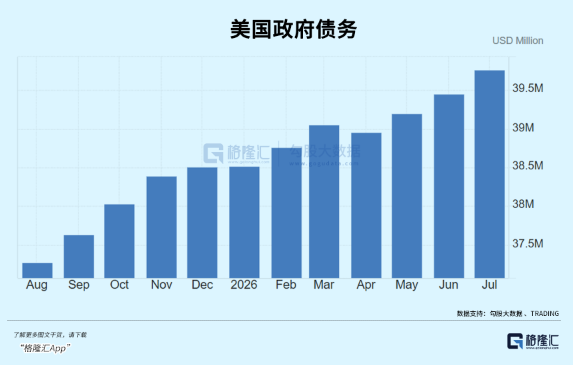
- •The article frames defense-led industrial policy as a new form of military Keynesianism that could reinforce dollar and Treasury demand.
- •The strategy carries execution risks if military spending fails to translate into productivity, civilian technology, manufacturing renewal, or export growth.
🧠 Deep Insight
Background and context from public sources — not the original article. 7 sources cited.
🔑 Enhanced Key Takeaways
- •The Pentagon's strategy is formally codified under Section 1503 of the FY2026 National Defense Authorization Act, which mandates a standardized 'technical debt classification' framework for all programmatic decisions.
- •Pentagon CIO Kirstjen Davies has prioritized the reduction of legacy technical debt as a prerequisite for digital transformation, moving beyond mere AI procurement to infrastructure modernization.
- •The DoD launched a 'Barrier Removal Board' specifically designed to bypass non-statutory bureaucratic hurdles that historically delayed Authorizations to Operate (ATOs) for AI software.
- •The strategy enforces Modular Open Systems Approach (MOSA) standards, ensuring that all new AI integrations are interoperable by design to prevent future vendor lock-in and technical stagnation.
- •National Security Presidential Memorandum 11, issued in June 2026, established the four pillars of AI adoption: adoption, adaptation, assurance, and accountability, providing the legal framework for the current spending surge.
🛠️ Technical Deep Dive
- •
- Implementation of Modular Open Systems Approach (MOSA) to ensure hardware-agnostic AI software deployment.
- •
- Risk-based governance models for technical debt classification to prioritize software refactoring over new feature development.
- •
- Automated Authorization to Operate (ATO) pipelines designed to reduce the time-to-field for AI-enabled mission systems.
- •
- Integration of data-centric architectures to replace siloed legacy databases, facilitating real-time AI training and inference at the tactical edge.
🔮 Future ImplicationsAI analysis grounded in cited sources
⏳ Timeline
📎 Sources (7)
Factual claims are grounded in the sources below. Forward-looking analysis is AI-generated interpretation.
Weekly AI Recap
Read this week's curated digest of top AI events →
👉Related Updates



AI-curated news aggregator. All content rights belong to original publishers.
Original source: 虎嗅 ↗
This is a summary, not the original. Read the source, or get the weekly briefing.
Weekly AI briefing
One email a week. Unsubscribe anytime.