Tesla, Waymo, and NVIDIA's Physical AI Strategies Compared
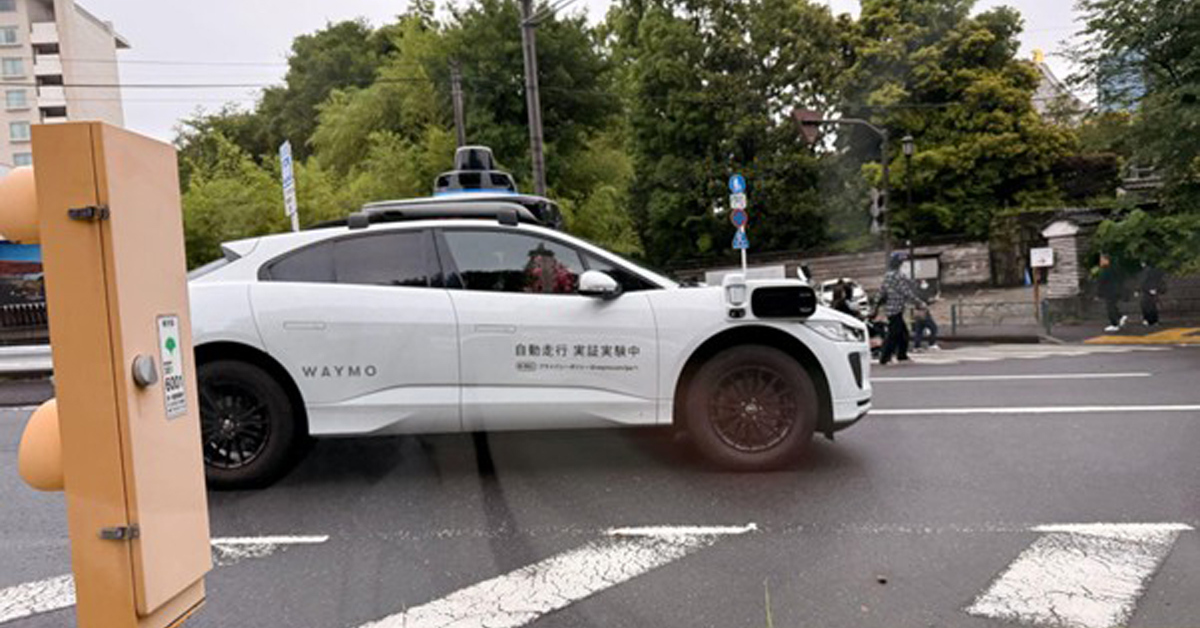
💡Understand the architectural divide between Tesla, Waymo, and NVIDIA in the race for autonomous Physical AI.
⚡ 30-Second TL;DR
What Changed
Physical AI is a strategic priority for the Japanese government in autonomous systems.
Why It Matters
Understanding these diverse approaches helps practitioners identify whether to focus on vision-only models, sensor-heavy architectures, or simulation-first development pipelines.
What To Do Next
Evaluate your current robotics stack to see if generative AI can replace manual rule-based logic with end-to-end learned behaviors.
Key Points
- •Physical AI is a strategic priority for the Japanese government in autonomous systems.
- •Tesla focuses on end-to-end neural networks for vision-based driving.
- •Waymo emphasizes sensor fusion and safety-critical reliability.
- •NVIDIA provides the hardware and simulation infrastructure (Omniverse) for training physical AI.
🧠 Deep Insight
Background and context from public sources — not the original article. 29 sources cited.
🔑 Enhanced Key Takeaways
- •Japan's government has set an ambitious target to capture 30% of the global Physical AI market by 2040, backed by a 502.7 billion yen FY2026 budget, primarily focusing on physical AI and multimodal infrastructure rather than just model development or cloud services.
- •Generative AI is increasingly critical across all three companies, particularly for creating realistic virtual environments and synthetic datasets to train and validate autonomous driving systems, enabling the simulation of millions of miles and rare edge cases that are difficult to encounter in real-world testing.
- •Tesla's Full Self-Driving (FSD) system, particularly from version 12 onwards, has undergone a radical architectural shift, completely replacing traditional rules-based programming with a purely neural network-driven, end-to-end AI system that learns directly from raw camera inputs and human driving data.
- •Waymo has evolved its AI architecture to include a 'Think Fast and Think Slow' (System 1 and System 2) approach within its Waymo Foundation Model, and has developed a 'Waymo World Model' – a generative AI architecture built on Google DeepMind's Genie 3 – for hyper-realistic simulation and synthetic data generation to achieve 'Data Sovereignty'.
- •NVIDIA's Omniverse platform, along with its World Foundation Models (WFMs) like Cosmos, provides a comprehensive ecosystem for physically accurate simulation, 3D neural reconstruction, and synthetic data generation, trained on vast datasets (e.g., 20 million hours of robotics and driving data, nine quadrillion tokens) to accelerate autonomous vehicle development and safety validation.
📊 Competitor Analysis▸ Show
While a direct pricing comparison for the core AI systems is not readily available, the approaches and sensor suites of Tesla and Waymo highlight distinct strategies:
| Feature / Aspect | Tesla (Full Self-Driving) | Waymo (Waymo Driver) |
|---|---|---|
| Core Approach | Vision-only, end-to-end neural networks, 'generalized AI' | Sensor fusion, modular architecture, 'demonstrably safe AI' |
| Primary Sensors | 8+ cameras (vision-only, no radar/LiDAR in recent versions) | 5 LiDARs, 6 radars, 29 cameras |
| Mapping Strategy | Relies on neural networks to build 3D understanding in real-time, less dependent on high-definition (HD) maps | Utilizes high-definition (HD) maps for precise localization within geofenced areas |
| Training Data | Millions of hours of human driving data from global fleet (1.5 petabytes from 4M+ vehicles) | Extensive real-world miles (nearly 200 million fully autonomous miles) and billions of simulated miles |
| Operational Domain | Aims for a 'universal' operational design domain (ODD), capable of navigating unmapped roads | Operates within 'high-resolution' geofenced urban centers |
| Safety Philosophy | Focus on continuous learning and improvement through fleet data, aiming for human-like driving | Prioritizes demonstrably safe AI, with rigorous validation and redundancy |
| Cost Implications | Lower hardware cost per vehicle, scalable for consumer market | Higher hardware cost per vehicle, often cited for robotaxi services |
| Recent Performance | Demonstrated impressive highway driving, but has shown critical errors (e.g., running red lights) in some tests | Generally provides a smoother, more reliable experience within its operational design domain |
🛠️ Technical Deep Dive
-
Tesla's Full Self-Driving (FSD) Architecture:
- End-to-End Neural Network: FSD v12 and later versions have transitioned from a modular, rules-based C++ codebase to a purely neural network-driven system, directly outputting control commands (steering, acceleration, braking) from raw camera inputs.
- Neural Network Structure: Comprises 48 distinct neural networks working in concert, processing inputs from 8 cameras providing 360-degree coverage.
- 3D Spatial Understanding: Utilizes Bird's Eye View (BEV) transformations and occupancy networks to predict occupied vs. free 3D space, enhancing depth estimation and handling occlusions without LiDAR.
- Video-Based Processing: Employs video-based neural networks (e.g., RegNets, HydraNets) to analyze temporal continuity across continuous frames, understanding motion, velocity, and object persistence.
- Training Scale: Requires 70,000 GPU hours per complete training cycle, processing over 1.5 petabytes of driving data collected from Tesla's global fleet of over 4 million vehicles.
- Hardware: Leverages Tesla's Hardware 4 (HW4) computer, offering 3-8x more computational power than its predecessor for running larger neural networks.
-
Waymo's Waymo Driver Architecture:
- Foundation Model: Employs a Waymo Foundation Model with a 'Think Fast and Think Slow' (System 1 and System 2) architecture.
- Sensor Fusion Encoder: A perceptual component that fuses camera, LiDAR, and radar inputs over time for rapid reactions, producing objects, semantics, and rich embeddings.
- Driving VLM: A Vision-Language Model component that uses rich camera data, fine-tuned on Waymo's driving data for complex semantic reasoning.
- Waymo World Model: A generative AI architecture built on Google DeepMind's Genie 3, functioning as a hyper-realistic simulator to generate synthetic data and simulate rare, dangerous scenarios ('Long Tail' events).
- Teacher-Student Distillation: A massive Waymo Foundation Model (Teacher) distills its knowledge into compact, efficient Student models for real-time onboard deployment, ensuring operational sovereignty.
- Sensor Suite (6th-generation): Custom multi-modal sensing suite including high-resolution cameras, advanced imaging radar, and LiDAR, designed for redundancy and all-weather performance.
- Custom Silicon: Pushes more processing complexity into Waymo's custom silicon chips for superior efficiency.
-
NVIDIA's Physical AI Infrastructure:
- Omniverse Platform: An open platform for virtual collaboration and real-time, physically accurate simulation, built on a modular microservices architecture using OpenUSD (Universal Scene Description).
- DRIVE Sim: A powerful simulation application built on Omniverse specifically for testing and validating autonomous vehicles, integrating physics solvers for various sensors (camera, LiDAR, radar).
- World Foundation Models (WFMs): NVIDIA Cosmos platform features WFMs (neural networks that understand physics and real-world properties) for scenario generation, trained on 20 million hours of robotics and driving data (nine quadrillion tokens).
- Neural Reconstruction: Omniverse NuRec provides open APIs, libraries, and datasets for 3D Gaussian-based neural reconstruction of full-scale driving environments from recorded sensor data.
- Closed-Loop Simulation: NVIDIA AlpaSim is an open-source AV simulation framework for closed-loop testing of driving decisions, integrating NuRec scenes and generative worlds from OmniDreams.
- DRIVE AGX Thor: A Blackwell-based GPU platform announced in 2022 (Blackwell GPU in 2024) for in-vehicle AI computing, delivering 1000 Sparse INT8 TOPS.
🔮 Future ImplicationsAI analysis grounded in cited sources
⏳ Timeline
📎 Sources (29)
Factual claims are grounded in the sources below. Forward-looking analysis is AI-generated interpretation.
- binance.com
- techjacksolutions.com
- microsoft.com
- imerit.ai
- weforum.org
- forbes.com
- nvidia.com
- nvidia.com
- fredpope.com
- teslaacessories.com
- waymo.com
- medium.com
- waymo.com
- introl.com
- medium.com
- businessinsider.com
- thinkautonomous.ai
- medium.com
- waymo.com
- youtube.com
- reddit.com
- ctfassets.net
- eeworld.com.cn
- promwad.com
- waymo.com
- leadtek.com
- ansys.com
- wikipedia.org
- basenor.com
Weekly AI Recap
Read this week's curated digest of top AI events →
👉Related Updates
AI-curated news aggregator. All content rights belong to original publishers.
Original source: ITmedia AI+ (日本) ↗
This is a summary, not the original. Read the source, or get the weekly briefing.
Weekly AI briefing
One email a week. Unsubscribe anytime.