Tesla Model Y First in NHTSA Safety Tests Amid Probes
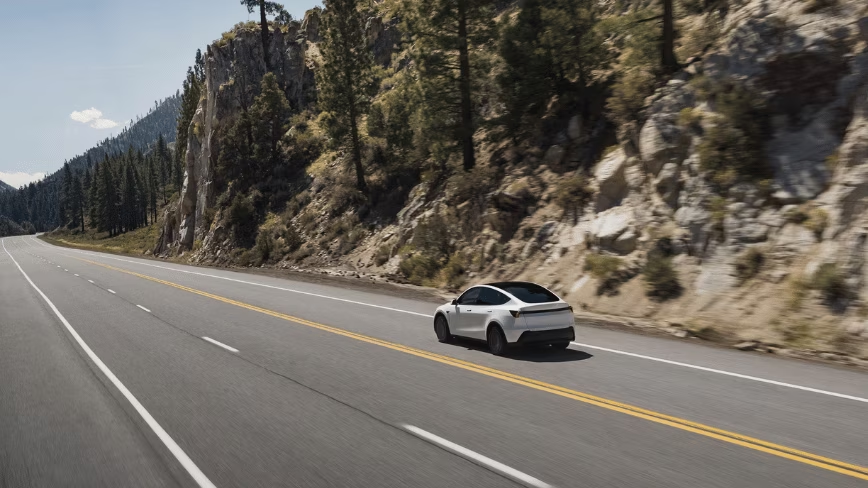
Tesla AV safety win vs massive probe—critical for autonomy builders
30-Second TL;DR
What Changed
Model Y first to pass NHTSA's new ADAS safety tests
Why It Matters
Signals progress in AV safety validation but underscores persistent risks in Tesla's Full Self-Driving, influencing regulatory scrutiny on AI-driven autonomy.
What To Do Next
Benchmark your ADAS against NHTSA's new test protocols for compliance.
Key Points
- •Model Y first to pass NHTSA's new ADAS safety tests
- •3.2 million Teslas probed for self-driving crashes
- •Trump administration highlighted the safety achievement
Deep Insight
AI-generated analysis for this event — not the original article.
Enhanced Key Takeaways
- •The new NHTSA testing protocol, implemented in early 2026, specifically evaluates the performance of Level 2 ADAS systems in edge-case scenarios, such as detecting stationary emergency vehicles and pedestrians in low-visibility conditions.
- •The ongoing investigation into the 3.2 million Tesla vehicles focuses on the 'Autopilot' and 'Full Self-Driving' (FSD) software stacks, specifically examining whether the system's 'driver monitoring' features are sufficient to prevent misuse.
- •Industry analysts suggest the NHTSA's dual approach—simultaneously certifying safety while conducting massive investigations—reflects a regulatory strategy aimed at forcing Tesla to decouple its software updates from its hardware safety performance.
Competitor Analysis
- Tesla Model Y
- Level 2 (FSD/Autopilot)
- Ford Mustang Mach-E
- Level 2 (BlueCruise)
- Hyundai Ioniq 5
- Level 2 (Highway Driving Assist)
- Tesla Model Y
- NHTSA 5-Star (New Protocol)
- Ford Mustang Mach-E
- NHTSA 5-Star
- Hyundai Ioniq 5
- NHTSA 5-Star
- Tesla Model Y
- ~$42,990
- Ford Mustang Mach-E
- ~$40,000
- Hyundai Ioniq 5
- ~$41,800
- Tesla Model Y
- Vision-only (Tesla Vision)
- Ford Mustang Mach-E
- Camera/Radar/LiDAR
- Hyundai Ioniq 5
- Camera/Radar/Ultrasonic
| Feature | Tesla Model Y | Ford Mustang Mach-E | Hyundai Ioniq 5 |
|---|---|---|---|
| ADAS Level | Level 2 (FSD/Autopilot) | Level 2 (BlueCruise) | Level 2 (Highway Driving Assist) |
| Safety Rating | NHTSA 5-Star (New Protocol) | NHTSA 5-Star | NHTSA 5-Star |
| Pricing (Base) | ~$42,990 | ~$40,000 | ~$41,800 |
| Sensor Suite | Vision-only (Tesla Vision) | Camera/Radar/LiDAR | Camera/Radar/Ultrasonic |
Technical Deep Dive
- The new NHTSA testing protocol utilizes a 'Dynamic Scenario Simulator' that subjects vehicles to 15 distinct crash-avoidance maneuvers, including high-speed phantom braking tests and intersection collision avoidance.
- Tesla's compliance was achieved using the v13.x FSD software stack, which utilizes a neural network architecture trained on end-to-end video inputs rather than traditional hard-coded logic.
- The investigation into the 3.2 million vehicles centers on the 'Cabin Camera' data logs, with NHTSA seeking to determine if the system's 'Torque-based' steering wheel monitoring is easily bypassed by aftermarket 'defeat devices'.
Future ImplicationsAI analysis grounded in cited sources
Timeline
- 2020-03Tesla Model Y deliveries officially commence in the United States.
- 2023-02NHTSA issues a recall for 362,758 Tesla vehicles equipped with FSD Beta software.
- 2024-12NHTSA expands its investigation into Tesla's Autopilot system following reports of crashes in low-visibility conditions.
- 2026-01NHTSA officially adopts the new advanced driver assistance safety testing protocols.
- 2026-05Tesla Model Y becomes the first vehicle to pass the new NHTSA ADAS safety tests.
Weekly AI Recap
Read this week's curated digest of top AI events →
Related Updates
AI-curated news aggregator. All content rights belong to original publishers.
Original source: The Next Web (TNW) ↗
This is a summary, not the original. Read the source, or get the weekly briefing.
The weekly digest
One email a week. Unsubscribe anytime.