Music Labels Sue Suno Over 60,202 Recordings
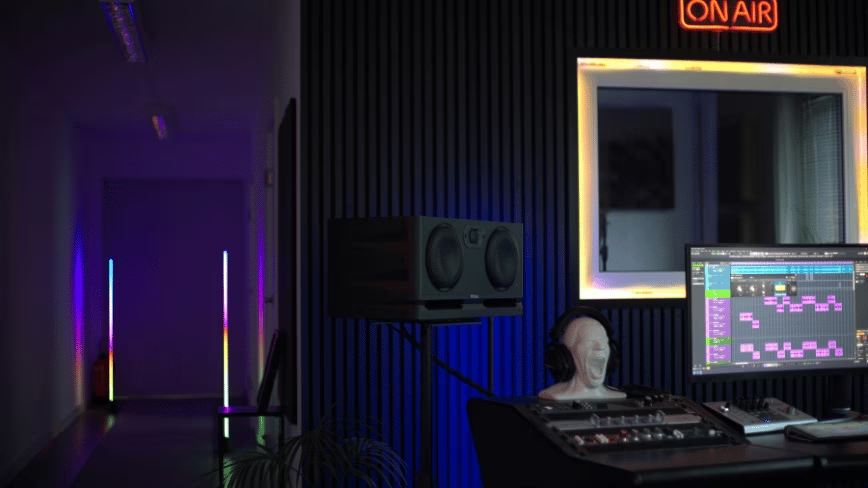
A second lawsuit names 60,202 recordings, raising the stakes for generative music training data.
30-Second TL;DR
What Changed
Universal and Sony are plaintiffs in the second lawsuit.
Why It Matters
The case could influence licensing expectations and training-data practices across generative music companies. A large-scale judgment or settlement may materially affect Suno's product roadmap and costs.
What To Do Next
Audit your generative-audio training corpus and document licenses, opt-outs, and provenance before scaling model training.
Key Points
- •Universal and Sony are plaintiffs in the second lawsuit.
- •The complaint identifies 60,202 allegedly infringed sound recordings.
- •The case was filed in the District of Massachusetts.
Deep Insight
Background and context from public sources — not the original article. 9 sources cited.
Enhanced Key Takeaways
- •The new action was initiated because the presiding judge in the original June 2024 litigation denied the labels' request to amend their complaint with newly discovered tracks to avoid disrupting the trial calendar.
- •Suno faces potential statutory copyright damages surpassing $9 billion under the statutory ceiling of up to $150,000 per willfully infringed work across the 60,202 cited tracks.
- •The lawsuit targets Suno's v6 model under a 'fruit of the poisoned tree' argument, alleging it laundered prior infringement by training on synthetic outputs and user preference data generated from earlier models.
- •Warner Music Group did not participate in the lawsuit after breaking ranks from the RIAA coalition in November 2025 to settle and establish an authorized commercial licensing deal with Suno.
- •Plaintiffs are using Suno's existing licensing partnerships with Warner Music Group, BMG, and Believe as evidence of a functioning commercial market to defeat Suno's fair use defense.
Technical Deep Dive
- Training Data Ingestion: Suno disclosed in court filings that training audio was ripped directly from YouTube using the open-source downloader tool
yt-dlp, circumventing YouTube's technical anti-download measures. - Synthetic Data Laundering: For the v6 model, Suno utilized synthetic audio outputs and user interaction/preference telemetry generated by earlier models to train downstream checkpoints.
- Guardrail Architecture: Prompt-level safeguard layers were altered, rolling back inference-time restrictions that previously prevented users from querying explicit artist names.
Future ImplicationsAI analysis grounded in cited sources
Timeline
- 2024-06Major music labels launch initial coordinated copyright infringement lawsuit against Suno
- 2025-11Warner Music Group settles with Suno and signs commercial training license agreement
- 2026-08Federal court denies labels' motion to amend initial complaint with 61,000 new songs
- 2026-09Suno releases v6 model and admits to using yt-dlp to scrape YouTube audio
- 2026-09Universal and Sony file second federal complaint against Suno identifying 60,202 recordings
Sources (9)
Factual claims are grounded in the sources below. Forward-looking analysis is AI-generated interpretation.
Weekly AI Recap
Read this week's curated digest of top AI events →
Related Updates
AI-curated news aggregator. All content rights belong to original publishers.
Original source: The Next Web (TNW) ↗
This is a summary, not the original. Read the source, or get the weekly briefing.
The weekly digest
One email a week. Unsubscribe anytime.