TE's Dual Role in Robot Ecosystem
💡Essential interconnect tech for reliable embodied AI robots at scale
⚡ 30-Second TL;DR
What Changed
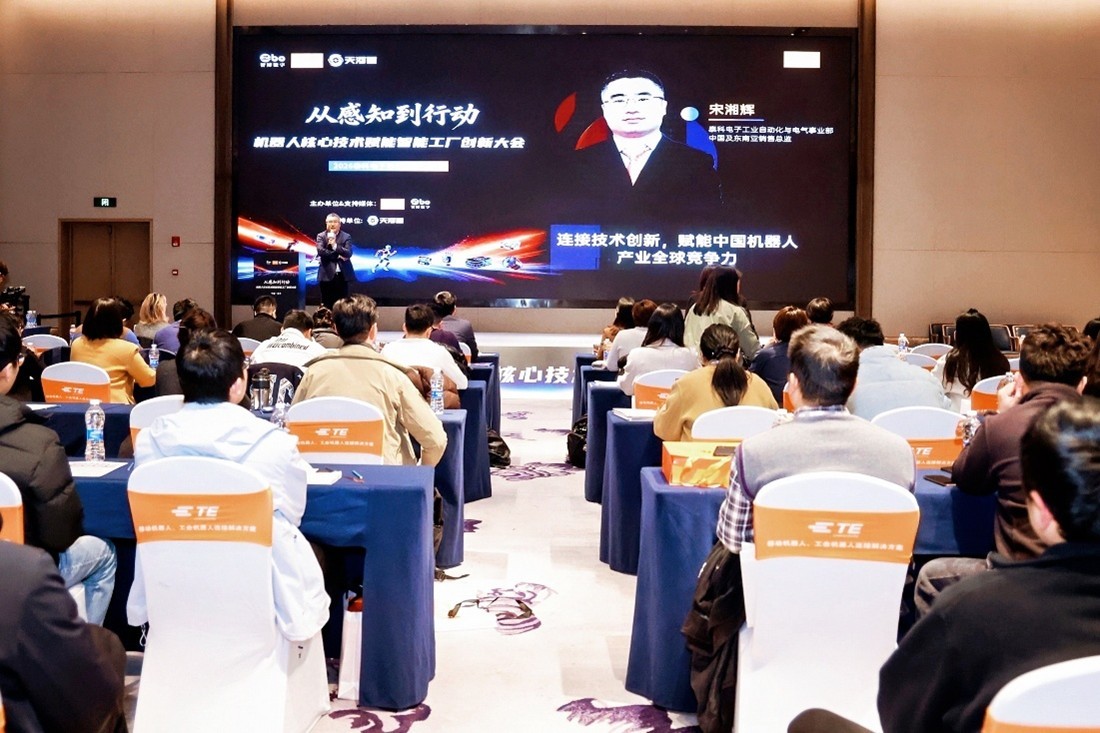
Hosted 'Robot Core Tech Empowering Smart Factory' conference on March 20 in Suzhou.
Why It Matters
TE's solutions address key bottlenecks in robot scaling, enabling stable operation in real-world conditions and faster industry alignment for commercialization.
What To Do Next
Test TE's MINI I/O connectors in your robot prototype for vibration-prone data links.
Key Points
- •Hosted 'Robot Core Tech Empowering Smart Factory' conference on March 20 in Suzhou.
- •MINI I/O: 75% smaller than RJ45, 3x vibration resistance for Ethernet in robots.
- •Miniaturized lockable Type-C for humanoid robot heads/joints, resists vibration and pull.
- •Suzhou factory enables fast R&D-manufacturing loop for scalable delivery.
🧠 Deep Insight
AI-generated analysis for this event — not the original article.
🔑 Enhanced Key Takeaways
- •TE Connectivity is strategically pivoting its portfolio to address the specific power density and signal integrity challenges posed by the rapid proliferation of humanoid robot 'joints' and 'neck' actuators, which require higher cycle counts than traditional industrial robots.
- •The company is leveraging its 'Local for Local' strategy in China to integrate its Suzhou engineering center directly into the supply chains of emerging Chinese humanoid robot OEMs, reducing lead times for custom connector prototyping.
- •TE's focus on 'vibration resistance' is a direct response to the high-frequency, non-linear motion profiles of humanoid robots, which differ significantly from the predictable, repetitive motion of traditional 6-axis industrial robotic arms.
📊 Competitor Analysis▸ Show
| Feature | TE Connectivity | Molex | Hirose Electric |
|---|---|---|---|
| Miniature Ethernet | MINI I/O (High vibration) | Micro-Fit / Brad | IX Industrial |
| Humanoid Focus | High (Lockable Type-C) | Medium (Custom Flex) | High (High-speed I/O) |
| Market Strategy | Localized R&D/Mfg | Global/Automotive | High-precision/Medical |
🛠️ Technical Deep Dive
- MINI I/O Connector: Designed for industrial Ethernet (Cat 6A), features a metal latching mechanism providing 100N of pull force, specifically engineered to prevent intermittent signal loss during high-acceleration robot movements.
- Lockable Type-C: Incorporates a screw-lock or latching mechanism to address the mechanical failure points of standard consumer-grade USB-C ports when subjected to the continuous, multi-axis vibration found in humanoid robot head and neck assemblies.
- Vibration/Shock Specs: Components are tested to IEC 60068-2-6 standards, ensuring signal continuity during 5-500Hz vibration cycles common in high-speed robotic actuators.
🔮 Future ImplicationsAI analysis grounded in cited sources
⏳ Timeline
Weekly AI Recap
Read this week's curated digest of top AI events →
👉Related Updates
AI-curated news aggregator. All content rights belong to original publishers.
Original source: 36氪 ↗
This is a summary, not the original. Read the source, or get the weekly briefing.
The weekly digest
One email a week. Unsubscribe anytime.