Tencent’s AI Spending Rewrites Its Profit Story

💡See how Tencent’s 52.8 billion yuan AI investment could change the economics of AI competition.
⚡ 30-Second TL;DR
What Changed
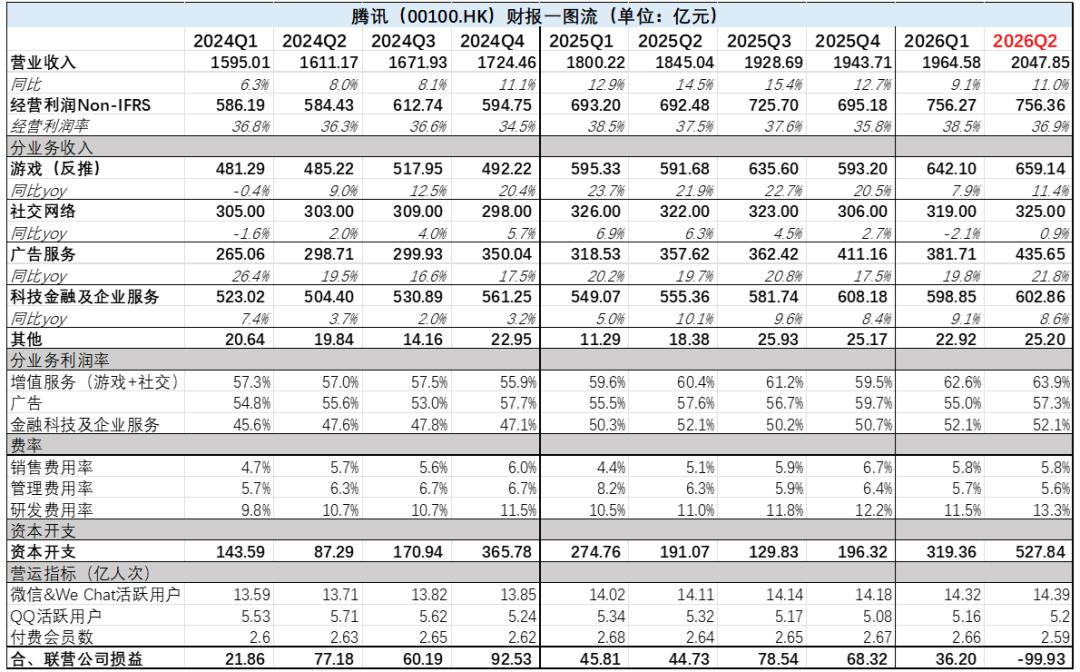
Tencent allocated 52.8 billion yuan in capital expenditure to AI.
Why It Matters
Tencent’s spending provides a major signal about the cost of competing in the AI platform and infrastructure race. For AI businesses, it highlights the need to connect compute investment with concrete monetization milestones rather than treating scale alone as progress.
What To Do Next
Create an AI investment scorecard that tracks infrastructure spending, model usage, paid users, and incremental revenue each quarter.
Key Points
- •Tencent allocated 52.8 billion yuan in capital expenditure to AI.
- •The spending is significant enough to affect how investors assess Tencent’s profitability.
- •Revenue realization and monetization timing remain the key uncertainties.
🧠 Deep Insight
AI-generated analysis for this event.
🔑 Enhanced Key Takeaways
- •Tencent's capital expenditure surge is primarily driven by the massive procurement of high-end NVIDIA H20 and other specialized AI chips to bolster its Hunyuan foundation model training infrastructure.
- •The company is shifting its monetization strategy by integrating AI-driven advertising tools, which have already contributed to a double-digit percentage increase in ad revenue efficiency during the first half of 2026.
- •Tencent has prioritized 'AI-native' upgrades for its core SaaS products, including Tencent Meeting and WeCom, aiming to transition from a pure cloud provider to an intelligent enterprise service platform.
- •The massive spending includes significant investment in proprietary data center cooling technologies and energy-efficient server architectures to mitigate the rising operational costs of large-scale GPU clusters.
- •Financial analysts note that while short-term margins are pressured by depreciation of these AI assets, Tencent's free cash flow remains resilient due to its high-margin gaming and fintech cash cows.
📊 Competitor Analysis▸ Show
| Feature | Tencent (Hunyuan) | Alibaba (Qwen) | Baidu (Ernie) |
|---|---|---|---|
| Primary Focus | Ecosystem Integration | Open Source/Cloud | Search/Enterprise AI |
| Model Strategy | Closed/Hybrid | Open Weights | Closed/API-First |
| Hardware Access | NVIDIA H20/Custom | NVIDIA/Custom Chips | Kunlun/NVIDIA |
| Monetization | Ad/SaaS/Gaming | Cloud/API Usage | Search/Enterprise |
🛠️ Technical Deep Dive
- Hunyuan model architecture utilizes a Mixture-of-Experts (MoE) framework to optimize inference latency and reduce computational overhead for real-time applications.
- Implementation of 'Tencent Cloud AI Acceleration' (TCA) stack which optimizes the communication between GPU clusters using proprietary RDMA-based networking protocols.
- Deployment of large-scale distributed training techniques that support parameter-efficient fine-tuning (PEFT) to allow enterprise clients to customize models without full retraining.
- Integration of multi-modal capabilities allowing the model to process and generate high-fidelity video and audio directly within the Tencent ecosystem.
🔮 Future ImplicationsAI analysis grounded in cited sources
⏳ Timeline
Weekly AI Recap
Read this week's curated digest of top AI events →
👉Related Updates

AI-curated news aggregator. All content rights belong to original publishers.
Original source: 钛媒体 ↗