💰钛媒体•Freshcollected in 48m
Insta360 Draws New Boundaries for AI Hardware
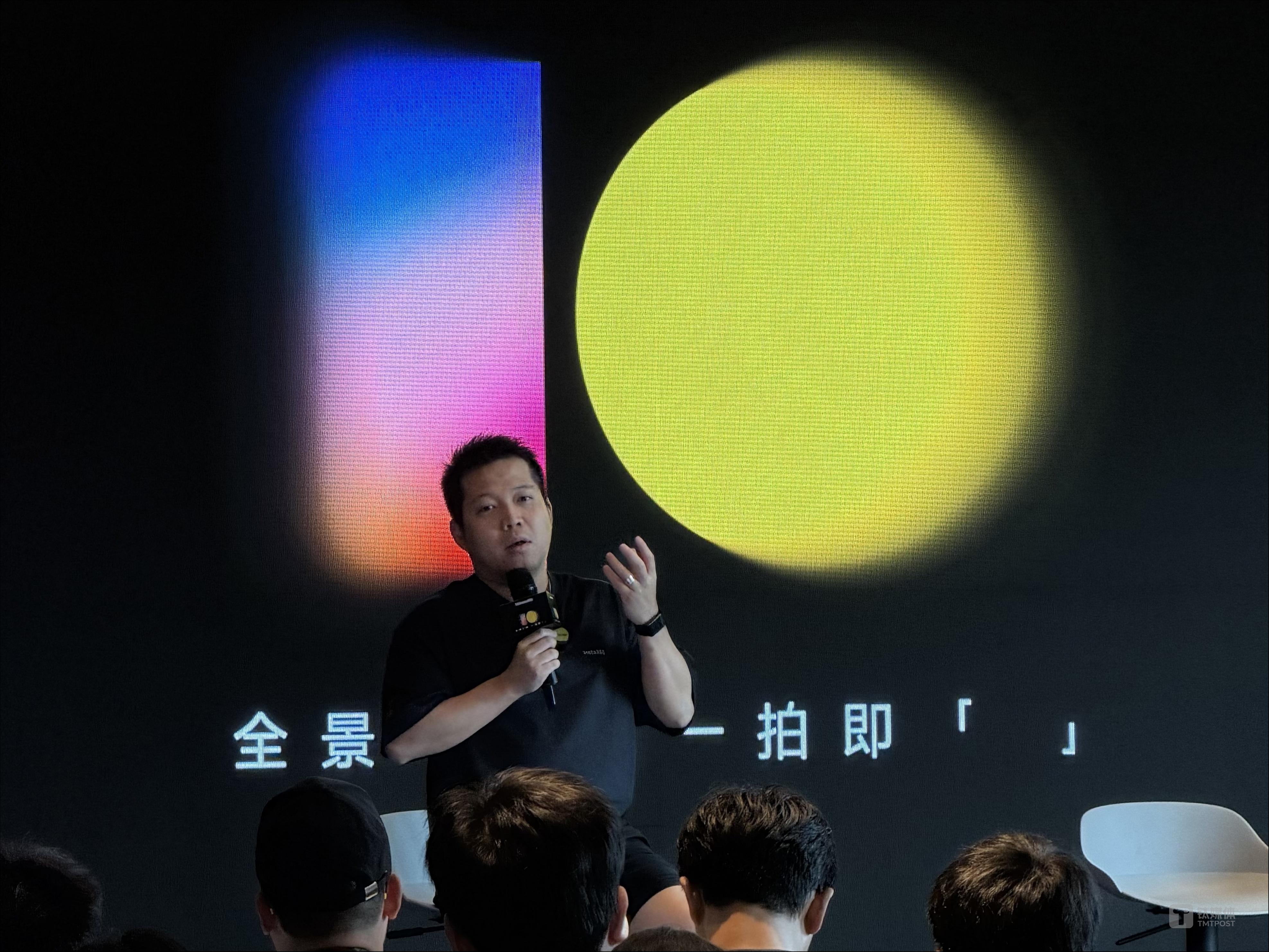
💡See how Insta360 may turn AI from a feature into a new hardware business model.
⚡ 30-Second TL;DR
What Changed
Insta360 is looking beyond the X6 panoramic camera.
Why It Matters
The strategy could influence how camera and imaging companies integrate AI into differentiated hardware products. For builders, the key takeaway is to evaluate whether AI adds durable device value instead of merely adding software features.
What To Do Next
Audit your camera or edge-device roadmap and identify one AI workflow that can run locally without adding unnecessary cloud dependency.
Who should care:Founders & Product Leaders
Key Points
- •Insta360 is looking beyond the X6 panoramic camera.
- •The company is reassessing its hardware strategy in the AI era.
- •The article frames AI as a boundary-setting question for hardware products rather than announcing a specific feature.
🧠 Deep Insight
AI-generated analysis for this event.
🔑 Enhanced Key Takeaways
- •Insta360 has shifted its R&D focus toward 'AI-native' hardware, prioritizing on-device computational photography and real-time generative video processing over traditional post-production workflows.
- •The company is actively integrating Large Multimodal Models (LMMs) into its firmware to enable semantic scene understanding, allowing cameras to automatically identify and highlight 'hero' moments without user intervention.
- •Insta360 is expanding its ecosystem beyond consumer action cameras into professional-grade AI-integrated spatial computing peripherals, aiming to bridge the gap between 360-degree capture and VR/AR content creation.
- •Strategic partnerships with major mobile SoC manufacturers are being leveraged to optimize NPU (Neural Processing Unit) utilization, specifically for low-latency AI noise reduction and frame interpolation in high-resolution panoramic video.
- •Internal restructuring at Insta360 has created a dedicated 'AI Hardware Lab' focused on reducing the latency between AI-driven object tracking and physical gimbal or lens adjustment.
📊 Competitor Analysis▸ Show
| Feature | Insta360 (AI-Native Strategy) | GoPro (Hero/Max Series) | DJI (Osmo Series) |
|---|---|---|---|
| AI Focus | Generative/Semantic Processing | Cloud-based Auto-Edit | Intelligent Tracking/Stabilization |
| Hardware Integration | Deep NPU/SoC Optimization | Standard ISP Processing | Vision-Sensor Fusion |
| Market Positioning | AI-First Creative Tools | Rugged Action/Sports | Professional Cinematography |
| Pricing Strategy | Premium/Software-Value Add | Competitive/Hardware-Centric | Mid-to-High/Feature-Rich |
🛠️ Technical Deep Dive
- Implementation of proprietary 'FlowState' AI stabilization algorithms now utilizing on-device NPU acceleration rather than CPU-bound processing.
- Integration of transformer-based architectures for real-time semantic segmentation, allowing for dynamic background replacement or object isolation in 360-degree video.
- Utilization of multi-sensor fusion techniques that combine IMU data with visual odometry to improve AI-driven subject tracking in low-light environments.
- Development of a unified AI-middleware layer that allows for cross-device compatibility of generative editing features across the X-series and Flow product lines.
🔮 Future ImplicationsAI analysis grounded in cited sources
Insta360 will release a standalone AI-powered wearable camera by Q4 2026.
The company's recent patent filings and strategic pivot toward 'AI-native' hardware suggest a move away from traditional form factors toward ambient, always-on capture devices.
The company will transition to a subscription-heavy revenue model driven by AI cloud services.
As hardware becomes commoditized, Insta360 is increasingly locking advanced generative editing features behind its cloud-based software ecosystem.
⏳ Timeline
2015-10
Insta360 launches its first 360-degree camera, the Insta360 4K.
2020-01
Introduction of the Insta360 ONE R, marking the company's shift toward modular, AI-assisted hardware.
2022-09
Launch of the X3, significantly increasing the reliance on AI-powered 'Deep Track' and auto-reframing software.
2024-04
Release of the X4, featuring 8K resolution and enhanced AI-driven low-light processing capabilities.
2026-03
Insta360 announces a strategic reorganization to prioritize AI-native hardware development over traditional camera iterations.
📰
Weekly AI Recap
Read this week's curated digest of top AI events →
👉Related Updates


AI-curated news aggregator. All content rights belong to original publishers.
Original source: 钛媒体 ↗