Tempus AI’s First Profit Wasn’t From AI
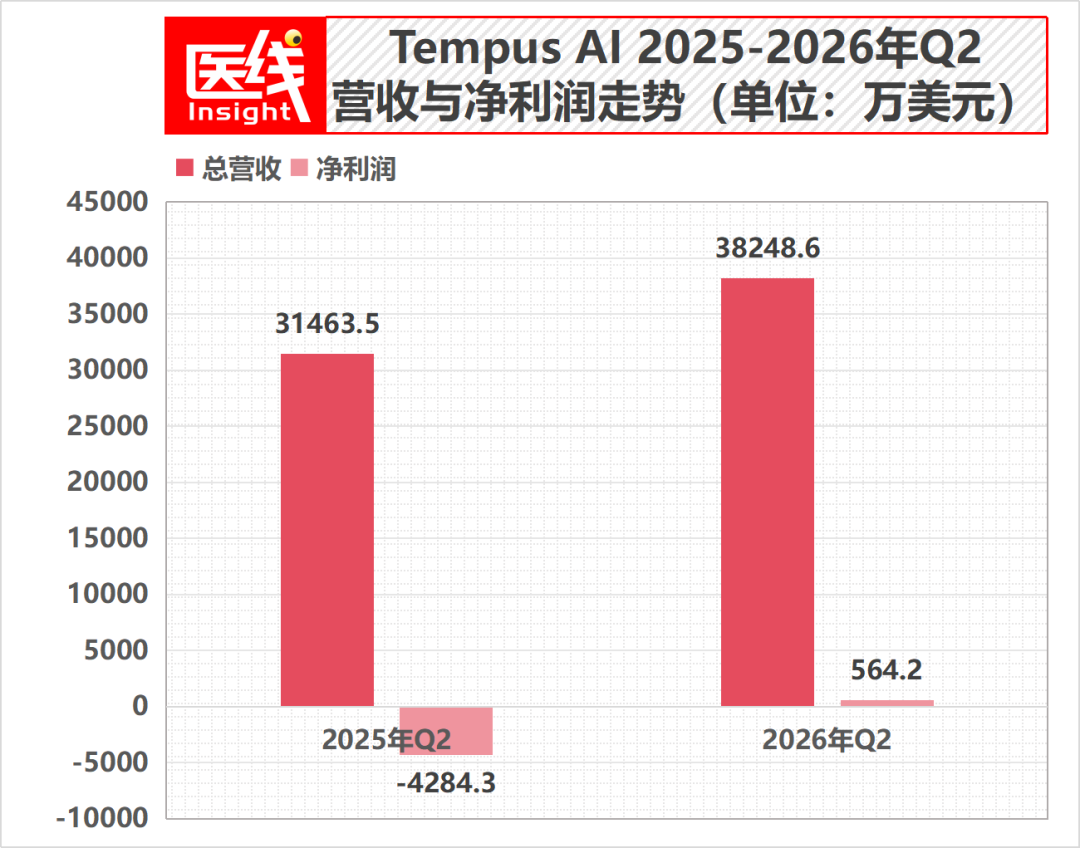
💡Tempus AI’s first profit exposes why headline earnings can misrepresent AI commercialization and recurring revenue.
⚡ 30-Second TL;DR
What Changed
Q2 2026 revenue reached 380 million dollars, up 22% year over year, while operating losses remained substantial.
Why It Matters
The results caution AI founders and investors against treating accounting profit as evidence of sustainable AI unit economics. For healthcare AI companies, the report underscores the importance of separating recurring product revenue, operating margin, equity gains, and other non-cash items.
What To Do Next
When evaluating a healthcare AI vendor, rebuild its latest income statement by separating diagnostic revenue, data-and-applications revenue, operating loss, stock-based compensation, and unrealized gains.
Key Points
- •Q2 2026 revenue reached 380 million dollars, up 22% year over year, while operating losses remained substantial.
- •Approximately 98.47 million dollars of the 103 million dollars in other income came from unrealized stock gains.
- •Diagnostics generated about 290 million dollars, or more than three-quarters of revenue, making genetic sequencing the company’s core business.
- •Tempus AI’s AI-focused products, including Next, are primarily embedded in its data and applications business for clinical-trial matching and analysis.
🧠 Deep Insight
AI-generated analysis for this event.
🔑 Enhanced Key Takeaways
- •Tempus AI's business model relies heavily on its proprietary 'Tempus One' multimodal AI assistant, which integrates clinical data with genomic sequencing to support physician decision-making.
- •The company's data library, often cited as a key competitive moat, contains over 200 petabytes of multimodal data, including longitudinal clinical records and molecular profiles.
- •Tempus AI maintains a strategic partnership with various pharmaceutical companies to accelerate drug discovery, which is distinct from its clinical diagnostics revenue stream.
- •The company's IPO in mid-2024 was characterized by significant investor interest in its 'data-first' approach, despite ongoing debates regarding the scalability of its AI-driven clinical trial matching.
- •Regulatory scrutiny remains a factor, as the FDA continues to refine its framework for AI-enabled medical devices, impacting how Tempus AI validates its diagnostic algorithms.
📊 Competitor Analysis▸ Show
| Feature | Tempus AI | Guardant Health | Foundation Medicine |
|---|---|---|---|
| Core Focus | Multimodal AI + Diagnostics | Liquid Biopsy (Oncology) | Genomic Profiling |
| Data Integration | High (Clinical + Molecular) | Moderate (Molecular) | High (Molecular) |
| AI Maturity | High (Proprietary LLMs) | Moderate (Predictive Analytics) | Moderate (Clinical Decision Support) |
| Revenue Model | Diagnostics + Data Licensing | Diagnostic Testing | Diagnostic Testing |
🛠️ Technical Deep Dive
- Tempus AI utilizes a proprietary multimodal platform that ingests structured and unstructured data, including pathology slides, radiology images, and electronic health records (EHR).
- The company employs transformer-based architectures to process clinical notes and correlate them with genomic variants identified through next-generation sequencing (NGS).
- Its 'Tempus One' assistant leverages generative AI to provide real-time, evidence-based insights by querying the company's internal database of clinical trials and patient outcomes.
- The diagnostic pipeline utilizes CLIA-certified and CAP-accredited laboratories to ensure clinical-grade accuracy for its genetic sequencing products.
🔮 Future ImplicationsAI analysis grounded in cited sources
⏳ Timeline
Weekly AI Recap
Read this week's curated digest of top AI events →
👉Related Updates


AI-curated news aggregator. All content rights belong to original publishers.
Original source: 虎嗅 ↗