Can Local Control Save Joint Ventures?
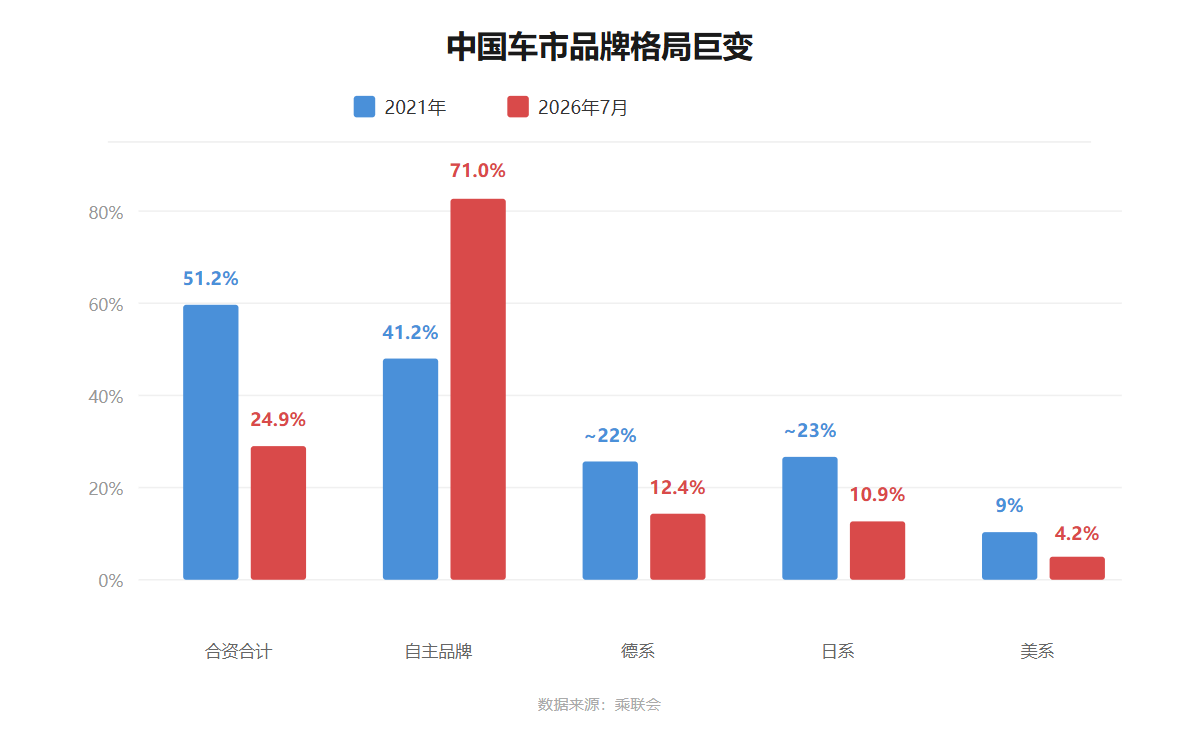
💡China’s joint ventures are handing product and AI decisions to local teams—reshaping automotive deployment opportunities
⚡ 30-Second TL;DR
What Changed
July passenger-car retail sales fell 20.9% year over year, while mainstream joint-venture brands dropped 35%.
Why It Matters
The shift could accelerate localization of automotive AI stacks, including intelligent cockpits, ADAS, and vehicle data operations. For AI vendors, Chinese-led joint ventures may offer more direct access to procurement and deployment decisions than traditional global headquarters structures.
What To Do Next
Map your automotive AI product against the procurement authority of Chinese joint ventures and validate integration requirements with Momenta or Horizon Robotics-compatible interfaces.
Key Points
- •July passenger-car retail sales fell 20.9% year over year, while mainstream joint-venture brands dropped 35%.
- •Foreign automakers are adopting four survival paths: exiting new-car sales, becoming export bases, shifting to asset-light partnerships, or renewing contracts with deeper local control.
- •SAIC-GM says new products are defined entirely around Chinese customer needs, using a China-led architecture and local suppliers to shorten development cycles and reduce BOM costs.
- •SAIC Volkswagen is adding range-extender technology and allowing Chinese teams to define products for mainstream new-energy segments.
- •The article argues that genuine empowerment requires local authority over vehicle architecture, intelligent-driving partners, pricing, and project veto rights.
🧠 Deep Insight
AI-generated analysis for this event.
🔑 Enhanced Key Takeaways
- •The 'China-led' strategy has led to a significant shift in R&D spending, with joint ventures increasingly bypassing global headquarters to integrate local tech stacks like Momenta for autonomous driving and Horizon Robotics for cockpit chips.
- •Data indicates that the 'Joint Venture' market share in China has plummeted from over 60% in 2020 to below 35% by mid-2026, forcing a structural pivot toward 'In China, For China' R&D centers.
- •SAIC-GM has specifically accelerated the adoption of the Ultium platform's localized iterations, moving away from global battery cell specifications to cheaper, locally sourced LFP (Lithium Iron Phosphate) solutions to compete on price.
- •Regulatory pressure and the 'New Energy Vehicle' (NEV) credit system have forced joint ventures to prioritize plug-in hybrid (PHEV) and range-extender (EREV) development, segments previously ignored by their global parent companies.
- •Several joint ventures are now implementing 'dual-track' supply chains, where they maintain global quality standards for export models while utilizing a completely separate, low-cost local supply chain for domestic Chinese market vehicles.
📊 Competitor Analysis▸ Show
| Feature | Joint Venture (Legacy) | Domestic EV (BYD/NIO/Li Auto) |
|---|---|---|
| Software Architecture | Centralized/Global-led | Domain-Controller/Local-led |
| Development Cycle | 36-48 Months | 18-24 Months |
| Pricing Strategy | Brand Premium/Fixed | Cost-Plus/Dynamic |
| Intelligent Driving | Level 2 (Basic) | Level 2+/NOA (Advanced) |
🛠️ Technical Deep Dive
- Shift to E/E (Electrical/Electronic) architecture: Moving from distributed ECUs to centralized domain controllers to support OTA (Over-the-Air) updates.
- Integration of local SoC (System on Chip): Transitioning from global suppliers like Qualcomm/Nvidia to local alternatives like Horizon Robotics Journey series for cost optimization.
- Battery Chemistry: Adoption of localized LFP (Lithium Iron Phosphate) battery packs to reduce BOM costs by 20-30% compared to global NMC (Nickel Manganese Cobalt) standards.
- Software Stack: Decoupling the HMI (Human-Machine Interface) from global infotainment systems to allow for deep integration with Chinese ecosystem apps like WeChat, Baidu Maps, and local voice assistants.
🔮 Future ImplicationsAI analysis grounded in cited sources
⏳ Timeline
Weekly AI Recap
Read this week's curated digest of top AI events →
👉Related Updates

AI-curated news aggregator. All content rights belong to original publishers.
Original source: 虎嗅 ↗