Source钛媒体•Stalecollected in 15m
Teaching Robots to Work by Instinct
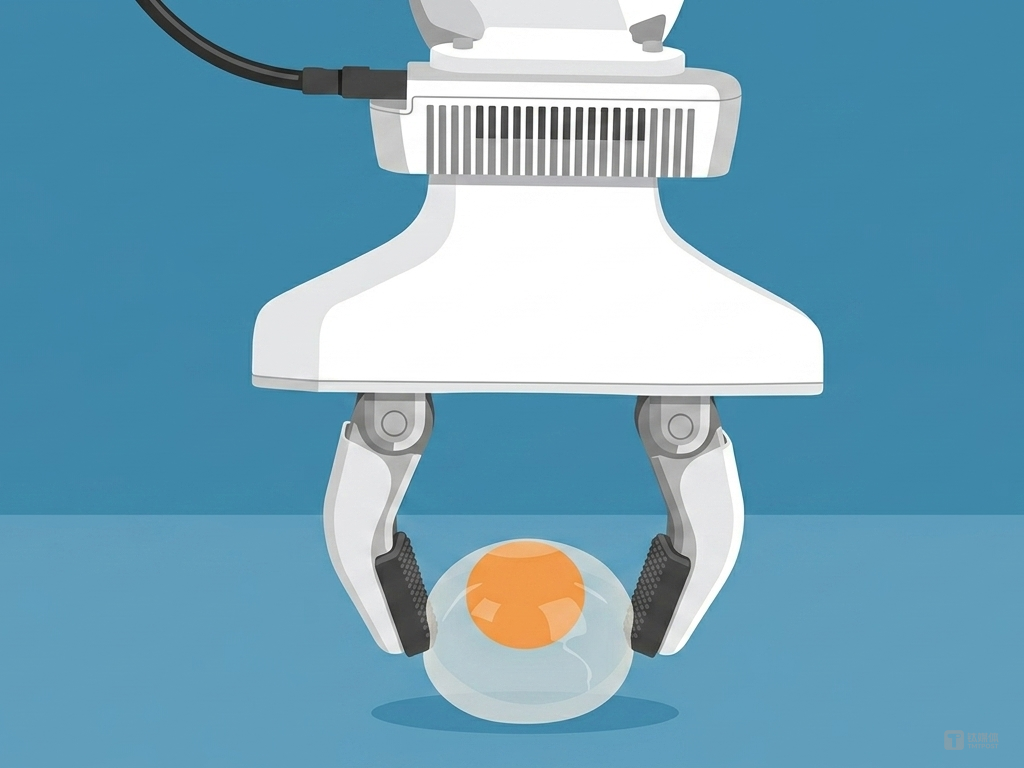
了解為何下一代具身 AI 可能從視覺優先轉向觸覺驅動。
30-Second TL;DR
What Changed
橡木果機器人希望讓機器人以類似人類本能的方式執行工作
Why It Matters
如果觸覺能成為機器人決策的重要輸入,機器人在抓取、裝配與非結構化環境中的適應能力可能提升。這也意味著具身 AI 的競爭將從視覺模型延伸至多模態感知、控制與本體設計。
What To Do Next
為你的機器人原型加入一個觸覺感測末端執行器,並比較僅使用視覺與視覺加觸覺時的抓取成功率。
Who should care:Developers & AI Engineers
Key Points
- •橡木果機器人希望讓機器人以類似人類本能的方式執行工作
- •觸覺被視為理解接觸、受力與環境變化的第一手感知訊號
- •視覺不再是唯一核心感測能力,而是與觸覺互補的旁觀者
Deep Insight
AI-generated analysis for this event — not the original article.
Enhanced Key Takeaways
- •Oakwood Robotics (橡木果機器人) utilizes a proprietary 'tactile-first' sensor fusion architecture that prioritizes high-frequency force feedback over traditional high-latency visual processing.
- •The company's research focuses on 'embodied intelligence' (具身智能), aiming to reduce the computational overhead typically required for complex manipulation tasks by leveraging physical constraints.
- •Their approach integrates Large Behavior Models (LBMs) that map tactile patterns directly to motor control primitives, bypassing the need for explicit 3D environment reconstruction.
- •Oakwood Robotics has demonstrated successful deployment of these instinct-based models in unstructured environments, such as sorting irregular industrial components where visual occlusion is common.
- •The technology aims to solve the 'sim-to-real' gap by training robots in environments where tactile feedback is simulated with high fidelity, allowing for faster adaptation to physical hardware.
Competitor Analysis
Primary Sensing
- Oakwood Robotics
- Tactile-First
- Sanctuary AI
- Multimodal (Vision/Tactile)
- Figure AI
- Vision-Centric
Control Paradigm
- Oakwood Robotics
- Instinct/Reflex-based
- Sanctuary AI
- General Purpose Humanoid
- Figure AI
- Neural Network/Vision-Language
Target Market
- Oakwood Robotics
- Industrial Manipulation
- Sanctuary AI
- General Labor
- Figure AI
- General Purpose Humanoid
| Feature | Oakwood Robotics | Sanctuary AI | Figure AI |
|---|---|---|---|
| Primary Sensing | Tactile-First | Multimodal (Vision/Tactile) | Vision-Centric |
| Control Paradigm | Instinct/Reflex-based | General Purpose Humanoid | Neural Network/Vision-Language |
| Target Market | Industrial Manipulation | General Labor | General Purpose Humanoid |
Technical Deep Dive
- Architecture: Employs a hierarchical control system where low-level tactile loops operate at >1kHz to handle contact dynamics.
- Sensor Integration: Utilizes custom-developed high-resolution tactile skins capable of detecting shear force and micro-vibrations.
- Model Training: Uses Reinforcement Learning from Human Feedback (RLHF) combined with tactile-rich datasets to refine 'instinctive' motor responses.
- Latency Optimization: Implements edge-based inference to ensure tactile feedback loops are not delayed by cloud-based visual processing.
Future ImplicationsAI analysis grounded in cited sources
Tactile-first robotics will reduce industrial automation costs by 30% by 2028.
By minimizing the reliance on expensive, high-compute visual processing systems, robots can operate with simpler hardware and lower energy consumption.
Standardized tactile benchmarks will emerge as the primary metric for humanoid dexterity.
As the industry shifts toward embodied intelligence, visual accuracy is becoming a commodity, making physical manipulation capability the new differentiator.
Timeline
2023-05
Oakwood Robotics founded with a focus on tactile-driven manipulation.
2024-09
Release of the first-generation tactile sensor skin prototype for industrial testing.
2025-11
Successful pilot program demonstrating autonomous sorting of non-uniform objects using instinct-based control.
- 2023-05Oakwood Robotics founded with a focus on tactile-driven manipulation.
- 2024-09Release of the first-generation tactile sensor skin prototype for industrial testing.
- 2025-11Successful pilot program demonstrating autonomous sorting of non-uniform objects using instinct-based control.
Weekly AI Recap
Read this week's curated digest of top AI events →
Related Updates


AI-curated news aggregator. All content rights belong to original publishers.
Original source: 钛媒体 ↗
This is a summary, not the original. Read the source, or get the weekly briefing.
The weekly digest
One email a week. Unsubscribe anytime.