Tactile Fingertips: The New Frontier in Robotics
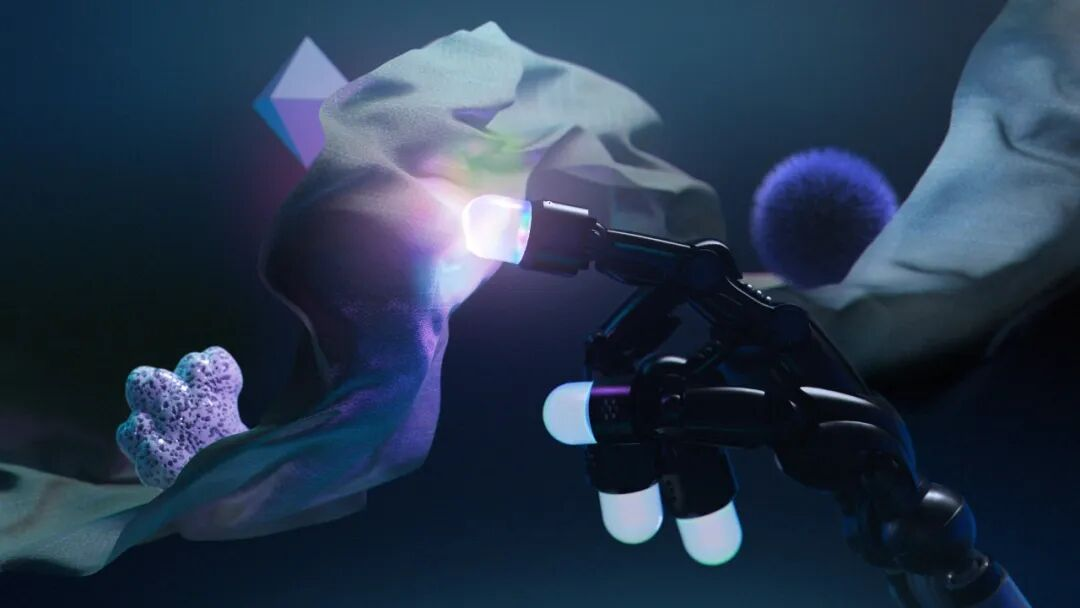
Tactile sensing is the next big hardware bottleneck for humanoid robots; learn why investors are betting on fingertips.
30-Second TL;DR
What Changed
Tactile sensing is crucial for robots to handle real-world objects like glass or soft fruit.
Why It Matters
Tactile sensing is the 'missing link' for humanoid robots to transition from controlled lab environments to complex, unstructured real-world tasks.
What To Do Next
Explore tactile sensor integration in your simulation environments using platforms like MuJoCo or Isaac Sim to prepare for embodied AI tasks.
Key Points
- •Tactile sensing is crucial for robots to handle real-world objects like glass or soft fruit.
- •Vision-based tactile sensors (GelSight-style) use flexible materials and micro-cameras to detect pressure and slip.
- •Key challenges include sensor durability, high-frequency data processing, and manufacturing consistency.
- •Major players like Meta and Figure are integrating tactile feedback directly into control models.
Deep Insight
AI-generated analysis for this event — not the original article.
Enhanced Key Takeaways
- •Tactile sensing is increasingly leveraging 'Sim-to-Real' reinforcement learning, where synthetic tactile data is used to train policies that transfer to physical hardware, reducing the need for massive real-world data collection.
- •The integration of tactile feedback is moving beyond simple slip detection to 'haptic perception,' allowing robots to identify material properties like texture, stiffness, and thermal conductivity through active exploration.
- •Recent advancements in neuromorphic tactile sensing, which mimics biological skin by processing events asynchronously, are significantly reducing the power consumption and latency compared to traditional frame-based camera sensors.
- •Standardization efforts are emerging to create universal tactile interfaces, addressing the current fragmentation where proprietary sensor designs prevent interoperability between different robotic end-effectors.
- •Research is shifting toward 'skin-like' tactile arrays that cover larger surface areas of the robot arm, rather than just the fingertips, to enable whole-body manipulation and safety in human-robot collaboration.
Competitor Analysis
- Weitai Robotics (Tactile)
- Proprietary Optical/MEMS
- Meta (Digit/GelSight)
- Optical (GelSight)
- Figure (Integrated)
- Multi-modal Fusion
- Weitai Robotics (Tactile)
- Industrial Durability
- Meta (Digit/GelSight)
- Research/Open Source
- Figure (Integrated)
- Humanoid Dexterity
- Weitai Robotics (Tactile)
- Edge-based AI
- Meta (Digit/GelSight)
- Cloud/GPU Intensive
- Figure (Integrated)
- Real-time Control Loop
- Weitai Robotics (Tactile)
- Commercial Scaling
- Meta (Digit/GelSight)
- Academic/R&D Standard
- Figure (Integrated)
- Integrated Platform
| Feature | Weitai Robotics (Tactile) | Meta (Digit/GelSight) | Figure (Integrated) |
|---|---|---|---|
| Sensor Type | Proprietary Optical/MEMS | Optical (GelSight) | Multi-modal Fusion |
| Primary Focus | Industrial Durability | Research/Open Source | Humanoid Dexterity |
| Data Processing | Edge-based AI | Cloud/GPU Intensive | Real-time Control Loop |
| Market Position | Commercial Scaling | Academic/R&D Standard | Integrated Platform |
Technical Deep Dive
- Optical tactile sensors typically utilize a deformable elastomer membrane coated with reflective particles or patterns, which are imaged by an internal camera to reconstruct 3D surface deformation.
- High-frequency tactile feedback loops often operate at 100Hz to 1kHz, requiring dedicated FPGA or high-speed ISP (Image Signal Processor) pipelines to minimize latency in grasp adjustment.
- Tactile data is increasingly represented as point clouds or tactile 'images' that are fed into Vision-Language-Action (VLA) models, allowing the robot to associate visual cues with tactile sensations.
- Signal processing often involves calculating the optical flow of the internal membrane markers to estimate shear forces and contact geometry in real-time.
Future ImplicationsAI analysis grounded in cited sources
Timeline
- 2023-05Weitai Robotics secures initial funding to develop high-precision tactile sensing modules for industrial automation.
- 2024-09Company achieves milestone in sensor durability, passing 1 million cycle stress tests for industrial deployment.
- 2025-11Weitai Robotics integrates its tactile feedback system with mainstream humanoid control architectures for pilot testing.
Weekly AI Recap
Read this week's curated digest of top AI events →
Related Updates
AI-curated news aggregator. All content rights belong to original publishers.
Original source: 虎嗅 ↗
This is a summary, not the original. Read the source, or get the weekly briefing.
The weekly digest
One email a week. Unsubscribe anytime.