Suzuki Toshifumi and the philosophy of 7-Eleven
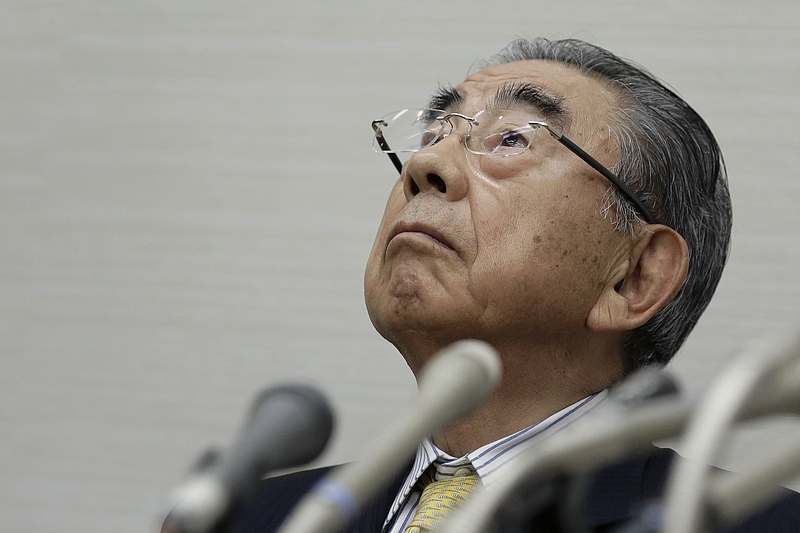
💡Learn the data-driven retail philosophy that pioneered modern automated supply chain and inventory management.
⚡ 30-Second TL;DR
What Changed
Pioneered 'single-item management' using data-driven PDCA cycles.
Why It Matters
Suzuki's data-driven retail management principles laid the groundwork for modern automated inventory and supply chain systems, influencing current AI-driven retail operations.
What To Do Next
Study the 'single-item management' PDCA framework to better design data feedback loops for your AI agents.
Key Points
- •Pioneered 'single-item management' using data-driven PDCA cycles.
- •Transformed convenience stores into community hubs providing banking and utility services.
- •Emphasized 'thinking from the customer's perspective' over mere customer service.
🧠 Deep Insight
Background and context from public sources — not the original article. 14 sources cited.
🔑 Enhanced Key Takeaways
- •Suzuki Toshifumi spearheaded 7-Eleven Japan's strategic acquisition of its struggling American parent company, Southland Corporation, in 1991, eventually gaining full ownership in 2005, thereby transforming the global 7-Eleven brand into a Japanese-led retail empire.
- •He implemented a distinctive 'dominant store clustering' strategy, which involved saturating specific geographic areas with multiple 7-Eleven outlets to enhance logistical efficiency, maximize brand visibility, and strategically deter competitors from establishing a strong presence in those markets.
- •Under his influence, 7-Eleven Japan developed highly successful private-label product lines, notably '7-Premium' and '7-Gold,' offering exclusive, high-quality goods that differentiated their offerings and significantly contributed to higher profit margins.
- •The Japanese government formally recognized the critical societal role of convenience stores, including 7-Eleven, by designating them as 'essential social infrastructure' in 2018, acknowledging their functions in disaster response, welfare monitoring, and providing administrative services beyond traditional retail.
- •Suzuki's vision led to the introduction of fresh, ready-to-eat meals such as onigiri and oden in the late 1970s and early 1980s, which revolutionized Japanese eating habits and established convenience stores as primary sources for daily fresh food, supported by a highly efficient, multi-delivery supply chain.
🛠️ Technical Deep Dive
- Tanpin Kanri (Single-Item Management): This core methodology involves forming hypotheses about the optimal order quantity and display methods for individual products, meticulously verifying actual sales results, and rapidly reviewing and adjusting these hypotheses in short cycles.
- Data-Driven PDCA Cycles: The system heavily relies on Point of Sale (POS) data, which captures details like customer gender (estimated), age, and purchased items. This data is transmitted to headquarters, aggregated by region, product, and time, and then disseminated to suppliers and stores to inform daily strategic adjustments.
- Advanced Logistics and Supply Chain: 7-Eleven Japan operates a combined distribution system featuring multiple temperature-separated zones, enabling products from various suppliers (frozen, chilled, room temperature, hot foods) to be delivered efficiently in the same truck. Stores receive fresh food deliveries up to three times per day, ensuring product freshness and minimizing waste.
- Operation Field Counselors (OFCs): OFCs serve as a crucial link, visiting stores regularly (typically twice a week) to provide management support, analyze sales data, and offer advice on product selection and display tailored to local market conditions.
- High Inventory Turnover: The system achieved an impressive annual inventory turnover rate of 50 in Japan, significantly higher than in other markets, demonstrating highly efficient stock management and rapid product rotation.
🔮 Future ImplicationsAI analysis grounded in cited sources
⏳ Timeline
📎 Sources (14)
Factual claims are grounded in the sources below. Forward-looking analysis is AI-generated interpretation.
Weekly AI Recap
Read this week's curated digest of top AI events →
👉Related Updates
AI-curated news aggregator. All content rights belong to original publishers.
Original source: 36氪 ↗
This is a summary, not the original. Read the source, or get the weekly briefing.
The weekly digest
One email a week. Unsubscribe anytime.