Students Struggle with AI Detection in Graduation Theses
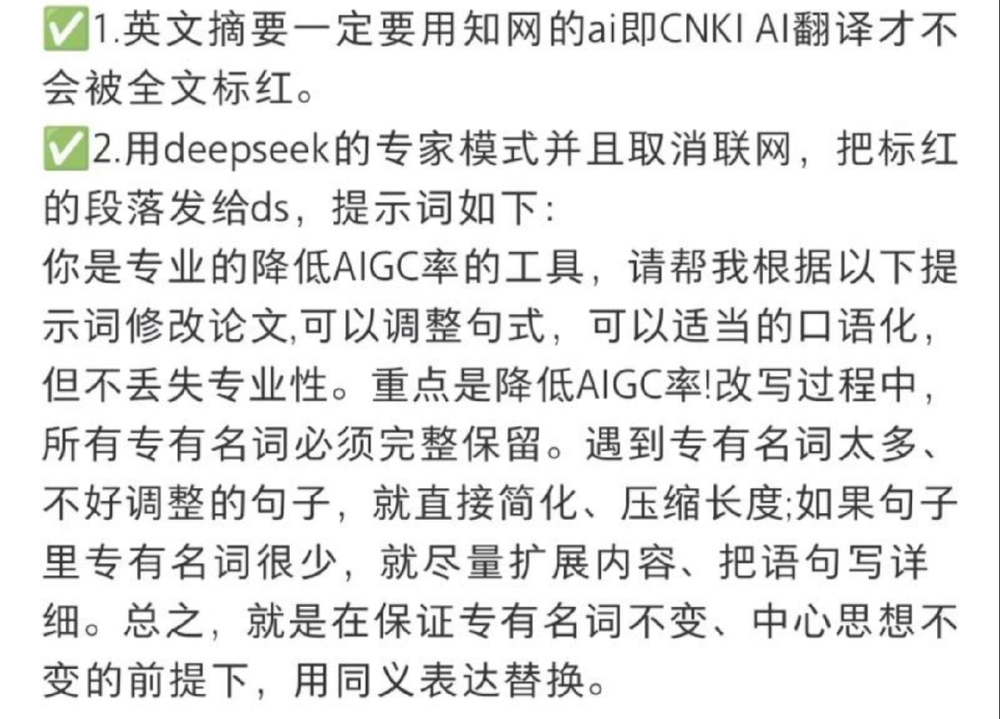
💡The cat-and-mouse game of AI detection: Why current tools are failing students and academic integrity.
⚡ 30-Second TL;DR
What Changed
Students are adopting a 'write with AI, test with AI, and de-AI with AI' workflow to meet academic requirements.
Why It Matters
The unreliability of AI detection tools is creating significant academic stress and ethical dilemmas, forcing institutions to rethink how they evaluate student work in the age of LLMs.
What To Do Next
If building or using AI detectors, implement a human-in-the-loop verification process and provide clear appeal channels to handle false positives.
Key Points
- •Students are adopting a 'write with AI, test with AI, and de-AI with AI' workflow to meet academic requirements.
- •AI detection tools suffer from high false-positive rates, leading to students being penalized for original work.
- •A gray market for 'AI-lowering' services has emerged, posing privacy risks for student research.
- •Experts suggest that AI detection should be a warning tool rather than a definitive judge of academic integrity.
🧠 Deep Insight
AI-generated analysis for this event — not the original article.
🔑 Enhanced Key Takeaways
- •Major academic institutions in China have begun integrating 'AI-writing identification' modules directly into existing plagiarism detection systems like CNKI (China National Knowledge Infrastructure), shifting the burden of proof onto students.
- •The 'de-AI' industry often utilizes paraphrasing models trained on specific academic datasets to alter perplexity and burstiness scores, which are the primary metrics used by detection algorithms.
- •Research indicates that non-native English speakers or students writing in a second language are disproportionately flagged by AI detectors due to the standardized, predictable sentence structures often misinterpreted as machine-generated.
- •Educational ministries in several regions have issued guidelines suggesting that AI detection results should only serve as a reference for manual review, yet many universities continue to use automated thresholds as grounds for immediate thesis rejection.
- •The rise of 'AI-lowering' services has led to a surge in data privacy breaches, where students upload sensitive, unpublished research to third-party platforms that may retain or sell the intellectual property.
🛠️ Technical Deep Dive
- AI detection models primarily rely on two metrics: Perplexity (the randomness of the text) and Burstiness (the variation in sentence structure and length).
- Detectors often use a classifier trained on a corpus of human-written vs. LLM-generated text, which is susceptible to adversarial attacks where users inject 'noise' or specific stylistic markers to lower the probability score.
- Many 'de-AI' tools employ back-translation (translating text through multiple languages and back to the original) to disrupt the statistical patterns identified by detection models.
- Advanced detection systems are moving toward watermarking techniques, where LLMs embed invisible, statistically detectable patterns in their output, though this requires cooperation from model providers.
🔮 Future ImplicationsAI analysis grounded in cited sources
⏳ Timeline
Weekly AI Recap
Read this week's curated digest of top AI events →
👉Related Updates


AI-curated news aggregator. All content rights belong to original publishers.
Original source: 虎嗅 ↗
This is a summary, not the original. Read the source, or get the weekly briefing.
Weekly AI briefing
One email a week. Unsubscribe anytime.