Source钛媒体•Stalecollected in 19m
Storage Panic: Google Fears Mask AI Cycle
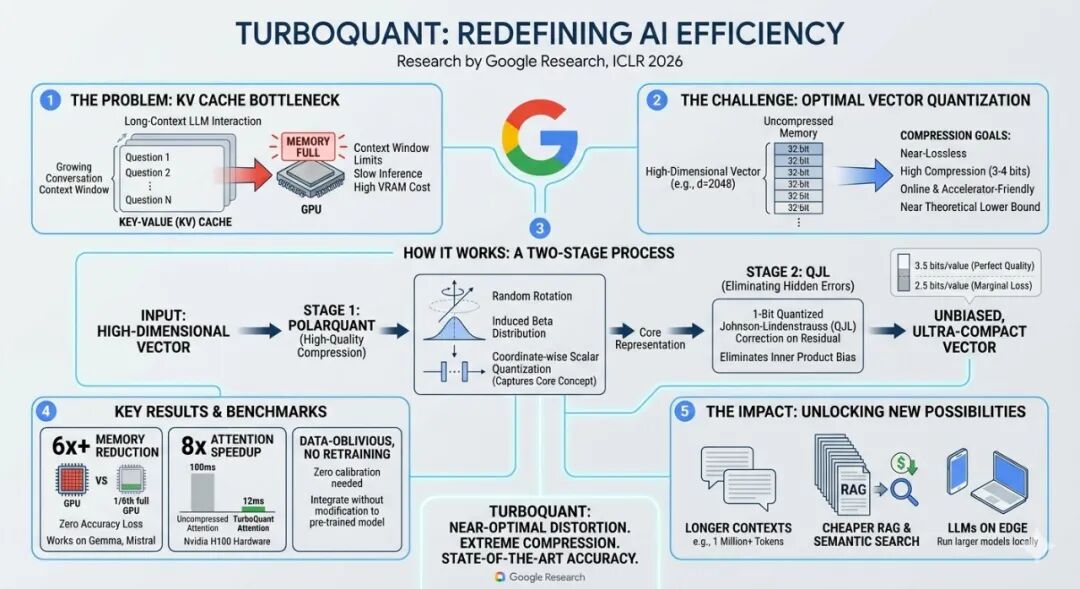
#storage-stocks#ai-compute#market-cyclestorage-infrastructuregoogleturboquant
💡Reveals AI compute boom driving storage cycles beyond Google hype
⚡ 30-Second TL;DR
What Changed
Storage stocks decline triggered by 'Google panic' over TurboQuant
Why It Matters
Highlights investment opportunities in AI-optimized storage amid market volatility. Signals long-term growth from compute demands.
What To Do Next
Benchmark HBM3e suppliers like SK Hynix for AI cluster memory needs.
Who should care:Enterprise & Security Teams
Key Points
- •Storage stocks decline triggered by 'Google panic' over TurboQuant
- •True cause is new cycle adjustment in storage industry
- •AI compute demand fuels underlying structural shifts
🧠 Deep Insight
AI-generated analysis for this event — not the original article.
🔑 Enhanced Key Takeaways
- •TurboQuant represents a shift toward 'in-memory compute' architectures, which reduces data movement bottlenecks between storage and processing units, directly challenging traditional NAND flash-based storage providers.
- •Market volatility is exacerbated by the transition from legacy enterprise storage procurement to AI-optimized high-bandwidth memory (HBM) and CXL-based storage solutions, causing temporary inventory digestion cycles.
- •Google's internal deployment of TurboQuant has led to a reduction in their reliance on third-party high-capacity SSD vendors, signaling a broader trend of hyperscalers vertically integrating storage hardware to optimize AI training costs.
🔮 Future ImplicationsAI analysis grounded in cited sources
NAND flash manufacturers will experience a 15% decline in enterprise revenue by Q4 2026.
Hyperscalers are increasingly adopting proprietary in-memory compute architectures that bypass traditional SSD storage layers.
CXL 3.0 adoption will become the primary industry standard for AI data centers by 2027.
The need for memory pooling and low-latency data access in AI clusters necessitates a shift away from legacy PCIe-based storage interfaces.
⏳ Timeline
2025-09
Google announces initial research into TurboQuant architecture for AI training efficiency.
2026-01
Google begins large-scale internal deployment of TurboQuant in its primary AI data centers.
2026-03
Market reaction to TurboQuant deployment triggers a sell-off in major storage hardware stocks.
📰
Weekly AI Recap
Read this week's curated digest of top AI events →
👉Related Updates



AI-curated news aggregator. All content rights belong to original publishers.
Original source: 钛媒体 ↗
This is a summary, not the original. Read the source, or get the weekly briefing.
The weekly digest
One email a week. Unsubscribe anytime.