來源钛媒体•較早收集於 19m
儲存恐慌:谷歌恐懼掩蓋AI週期
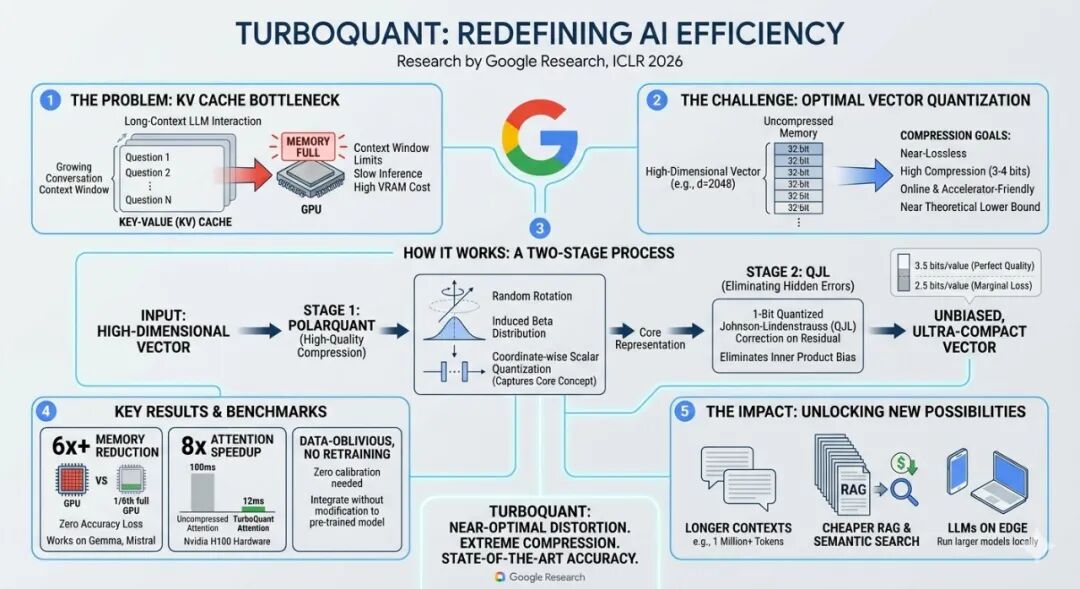
#storage-stocks#ai-compute#market-cyclestorage-infrastructuregoogleturboquant
💡揭露 AI 算力熱潮驅動儲存週期,超越谷歌炒作
⚡ 30 秒速覽
有什麼變化
儲存股因 TurboQuant 引發的「谷歌恐慌」而下跌
為什麼重要
突顯市場波動中AI優化儲存的投資機會。預示算力需求帶來的長期成長。
下一步行動
基準測試 SK Hynix 等 HBM3e 供應商以滿足 AI 叢集記憶體需求。
誰應關注:Enterprise & Security Teams
關鍵要點
- •儲存股因 TurboQuant 引發的「谷歌恐慌」而下跌
- •真正原因是儲存產業新週期的正常調整
- •AI 算力需求推動底層結構性變化
🧠 深度解析
本篇為 AI 生成分析,非原文內容。
🔑 增強重點摘要
- •TurboQuant represents a shift toward 'in-memory compute' architectures, which reduces data movement bottlenecks between storage and processing units, directly challenging traditional NAND flash-based storage providers.
- •Market volatility is exacerbated by the transition from legacy enterprise storage procurement to AI-optimized high-bandwidth memory (HBM) and CXL-based storage solutions, causing temporary inventory digestion cycles.
- •Google's internal deployment of TurboQuant has led to a reduction in their reliance on third-party high-capacity SSD vendors, signaling a broader trend of hyperscalers vertically integrating storage hardware to optimize AI training costs.
🔮 前景展望基於引用來源的 AI 分析
NAND flash manufacturers will experience a 15% decline in enterprise revenue by Q4 2026.
Hyperscalers are increasingly adopting proprietary in-memory compute architectures that bypass traditional SSD storage layers.
CXL 3.0 adoption will become the primary industry standard for AI data centers by 2027.
The need for memory pooling and low-latency data access in AI clusters necessitates a shift away from legacy PCIe-based storage interfaces.
⏳ 時間線
2025-09
Google announces initial research into TurboQuant architecture for AI training efficiency.
2026-01
Google begins large-scale internal deployment of TurboQuant in its primary AI data centers.
2026-03
Market reaction to TurboQuant deployment triggers a sell-off in major storage hardware stocks.
📰
AI 週報
閱讀本週精選 AI 大事摘要 →
👉相關動態



AI 策展新聞聚合。所有內容版權歸原始發布者所有。
原始來源: 钛媒体 ↗
每週電子報
每週一封,可隨時退訂。