Starlink Targets Most Global Internet Traffic Within a Decade
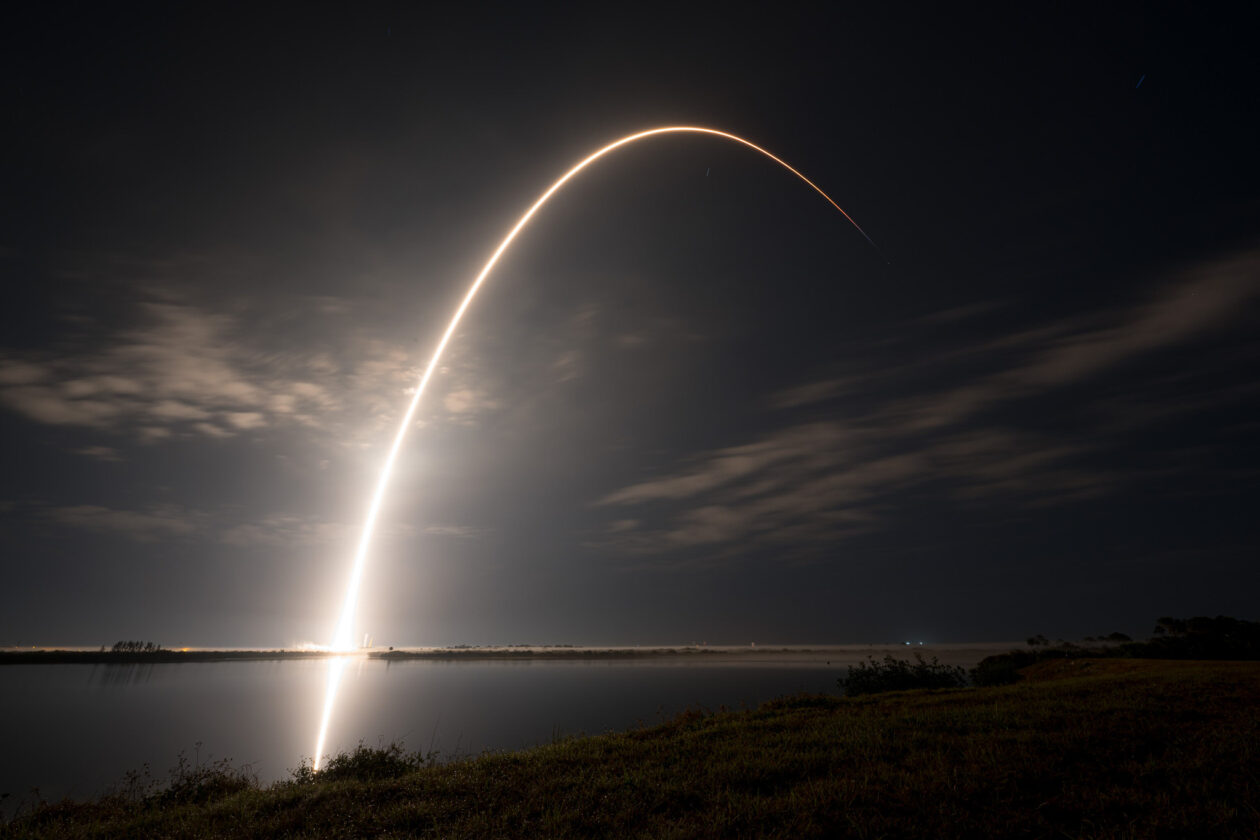
Starlink's expansion could reshape connectivity for remote AI systems and distributed infrastructure.
30-Second TL;DR
What Changed
Elon Musk projects that Starlink could handle most global internet traffic within ten years.
Why It Matters
A large-scale Starlink expansion could improve connectivity for remote AI deployments, distributed teams, and edge systems. However, the decade-long projection remains a strategic ambition rather than a confirmed delivery timeline.
What To Do Next
Assess Starlink availability and latency at remote deployment sites before using it as connectivity for edge AI workloads.
Key Points
- •Elon Musk projects that Starlink could handle most global internet traffic within ten years.
- •Starlink was identified as the only profitable segment in SpaceX's first public-company earnings report.
- •The satellite network is built using satellites manufactured in Redmond.
Deep Insight
AI-generated analysis for this event — not the original article.
Enhanced Key Takeaways
- •SpaceX's transition to a public company in 2026 marked a significant shift in corporate transparency, revealing that Starlink's revenue growth has outpaced the launch services division.
- •The Redmond manufacturing facility utilizes automated high-volume production lines capable of churning out hundreds of satellites per month to maintain the constellation's density.
- •Starlink has begun deploying 'V3' satellites equipped with direct-to-cell capabilities, allowing for standard LTE connectivity without specialized hardware.
- •Regulatory filings indicate that Starlink has secured landing rights in over 100 countries, creating a massive moat against regional competitors.
- •The network now utilizes inter-satellite laser links (optical inter-satellite links) to route traffic in space, reducing reliance on ground stations in remote or geopolitically sensitive regions.
Competitor Analysis
- Starlink
- LEO (Low Earth)
- Kuiper (Amazon)
- LEO (Low Earth)
- OneWeb (Eutelsat)
- LEO (Low Earth)
- Starlink
- 25-50ms
- Kuiper (Amazon)
- Expected 30-60ms
- OneWeb (Eutelsat)
- 70-100ms
- Starlink
- Operational/Profitable
- Kuiper (Amazon)
- Testing/Deployment
- OneWeb (Eutelsat)
- Operational
- Starlink
- Consumer/Enterprise
- Kuiper (Amazon)
- Enterprise/Government
- OneWeb (Eutelsat)
- Enterprise/Gov/Maritime
| Feature | Starlink | Kuiper (Amazon) | OneWeb (Eutelsat) |
|---|---|---|---|
| Orbit | LEO (Low Earth) | LEO (Low Earth) | LEO (Low Earth) |
| Latency | 25-50ms | Expected 30-60ms | 70-100ms |
| Status | Operational/Profitable | Testing/Deployment | Operational |
| Primary Market | Consumer/Enterprise | Enterprise/Government | Enterprise/Gov/Maritime |
Technical Deep Dive
- Constellation Architecture: Utilizes a multi-shell LEO architecture at altitudes ranging from 540km to 570km to minimize latency and maximize throughput.
- Optical Inter-Satellite Links (OISL): Employs laser terminals on each satellite to create a mesh network in space, enabling data transmission without ground station hops.
- Phased Array Antennas: User terminals use advanced beamforming technology to track multiple satellites simultaneously as they move across the sky.
- Frequency Bands: Operates primarily in Ku and Ka bands for user links and gateway links, with E-band testing for high-capacity backhaul.
- Manufacturing: Redmond facility employs vertical integration, producing custom-designed silicon and phased-array components in-house to reduce costs.
Future ImplicationsAI analysis grounded in cited sources
Timeline
- 2019-05First batch of 60 Starlink satellites launched into orbit.
- 2020-10Starlink public beta program begins for select users in the northern US and Canada.
- 2022-09Starlink achieves full global coverage capability (excluding polar regions).
- 2024-01First direct-to-cell satellites launched to enable mobile phone connectivity.
- 2026-05SpaceX completes its initial public offering (IPO), becoming a publicly traded company.
Weekly AI Recap
Read this week's curated digest of top AI events →
Related Updates

AI-curated news aggregator. All content rights belong to original publishers.
Original source: GeekWire ↗
This is a summary, not the original. Read the source, or get the weekly briefing.
The weekly digest
One email a week. Unsubscribe anytime.