Starcloud Raises $250M for Orbital AI Data Centers
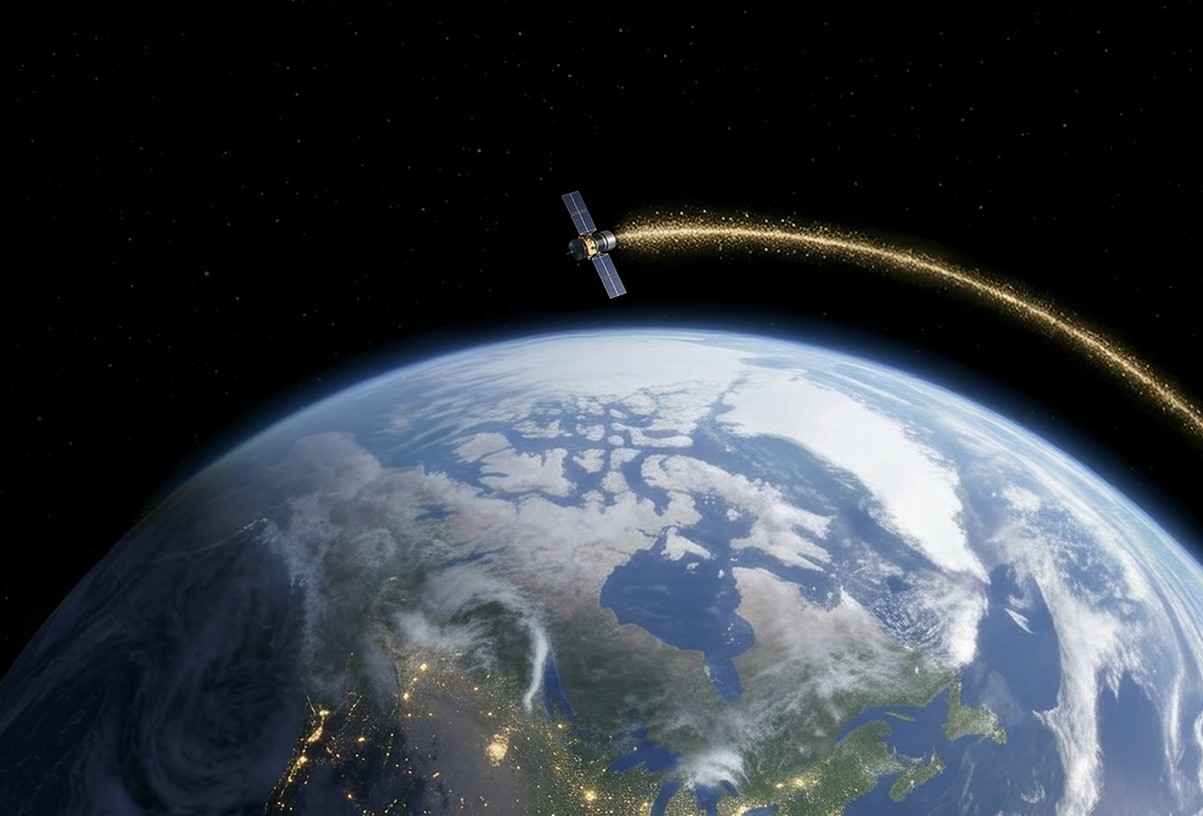
💡Starcloud’s $250M bet pairs orbital data centers with NVIDIA’s next-generation chips.
⚡ 30-Second TL;DR
What Changed
Starcloud raised $250 million to support development of its satellite data center network.
Why It Matters
If the concept proves technically and economically viable, orbital computing could offer a new location for AI data processing and reduce dependence on terrestrial data centers. However, launch costs, power availability, thermal management, networking, and maintenance will be critical execution challenges.
What To Do Next
Prototype a representative inference workload with NVIDIA CUDA and benchmark its power, latency, and bandwidth requirements before evaluating orbital deployment.
Key Points
- •Starcloud raised $250 million to support development of its satellite data center network.
- •The Seattle-area startup plans to use NVIDIA’s next-generation chips in its satellites.
- •The network is designed to process AI workloads in orbit rather than relying solely on ground-based facilities.
🧠 Deep Insight
Background and context from public sources — not the original article. 10 sources cited.
🔑 Enhanced Key Takeaways
- •Starcloud's Series A extension brings total capital raised to $450 million, achieving a post-money valuation of $2.3 billion.
- •The funding round included strategic investment from Nvidia, Cisco Investments, Cedar Capital, Goanna Capital, and Standard Capital.
- •Starcloud successfully demonstrated the first-ever in-space AI model training (NanoGPT) using an H100 GPU during a November 2025 SpaceX mission.
- •The company is scaling production at a new 100,000-square-foot manufacturing facility in Woodinville, Washington, dedicated to the Starcloud-3 spacecraft.
- •Starcloud's operational model leverages passive cooling by radiating heat into the -270°C space environment, removing the need for water-based cooling systems.
📊 Competitor Analysis▸ Show
| Competitor | Focus Area | Key Differentiator |
|---|---|---|
| EDGX | Edge AI compute | Specialized satellite-based edge processing |
| Enduro Sat | Sovereign platforms | Focus on sovereign satellite infrastructure |
| Blue Origin (Tera Wave) | Connectivity | High-capacity orbital data networking |
🛠️ Technical Deep Dive
- Hardware: Integration of the Nvidia Space-1 Vera Rubin Module, projected to deliver 25x the compute capability of the H100 GPU.
- Thermal Management: Utilization of passive cooling systems that leverage the deep space vacuum and -270°C ambient temperature to dissipate heat.
- Power Source: Reliance on continuous solar energy harvesting in orbit to maintain high-compute workloads.
- Flight Heritage: Successful deployment and operation of H100 GPUs in low-earth orbit as of November 2025.
🔮 Future ImplicationsAI analysis grounded in cited sources
⏳ Timeline
📎 Sources (10)
Factual claims are grounded in the sources below. Forward-looking analysis is AI-generated interpretation.
Weekly AI Recap
Read this week's curated digest of top AI events →
👉Related Updates


AI-curated news aggregator. All content rights belong to original publishers.
Original source: GeekWire ↗
This is a summary, not the original. Read the source, or get the weekly briefing.
Weekly AI briefing
One email a week. Unsubscribe anytime.