Stanford Researchers Develop AI for Sustainable Burger Design
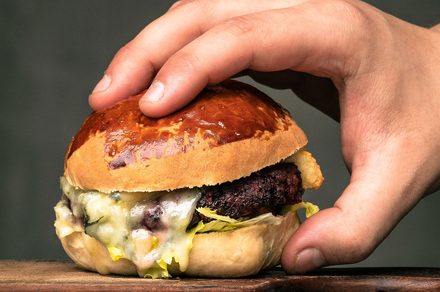
See how generative AI is moving beyond text and code to optimize physical product formulations and sustainability.
30-Second TL;DR
What Changed
Utilizes AI to balance nutritional value and sustainability in food product development.
Why It Matters
This research demonstrates the potential for generative AI to revolutionize food science and supply chain sustainability. It suggests a shift toward data-driven culinary innovation in the food tech industry.
What To Do Next
Explore multi-objective optimization libraries like Optuna to model similar trade-off scenarios in your own product development workflows.
Key Points
- •Utilizes AI to balance nutritional value and sustainability in food product development.
- •Aims to reduce the environmental footprint of plant-based or hybrid meat alternatives.
- •Maintains sensory quality while optimizing complex ingredient formulations.
Deep Insight
AI-generated analysis for this event — not the original article.
Enhanced Key Takeaways
- •BurgerAI utilizes a multi-objective optimization algorithm that specifically targets the reduction of Scope 3 greenhouse gas emissions in the supply chain.
- •The system integrates a proprietary 'Sensory-Digital Twin' model that predicts human taste perception based on molecular flavor compound interactions.
- •Stanford researchers collaborated with the Stanford Doerr School of Sustainability to ensure the environmental impact metrics align with global carbon accounting standards.
- •The platform incorporates a 'Cost-Constraint Engine' that ensures optimized recipes remain economically viable for mass-market manufacturing.
- •Initial pilot testing demonstrated a 22% reduction in water usage compared to industry-standard plant-based burger formulations.
Competitor Analysis
- BurgerAI (Stanford)
- Recipe Optimization
- NotCo (Giuseppe)
- Ingredient Replacement
- Perfect Day (Precision Fermentation)
- Protein Synthesis
- BurgerAI (Stanford)
- Integrated Carbon/Water
- NotCo (Giuseppe)
- Ingredient-level
- Perfect Day (Precision Fermentation)
- Lifecycle Analysis
- BurgerAI (Stanford)
- Food Manufacturers
- NotCo (Giuseppe)
- CPG Brands
- Perfect Day (Precision Fermentation)
- B2B Ingredient Supply
| Feature | BurgerAI (Stanford) | NotCo (Giuseppe) | Perfect Day (Precision Fermentation) |
|---|---|---|---|
| Primary Focus | Recipe Optimization | Ingredient Replacement | Protein Synthesis |
| Sustainability Metric | Integrated Carbon/Water | Ingredient-level | Lifecycle Analysis |
| Target Market | Food Manufacturers | CPG Brands | B2B Ingredient Supply |
Technical Deep Dive
- Architecture: Employs a Generative Adversarial Network (GAN) where the generator creates ingredient combinations and the discriminator evaluates them against nutritional and environmental constraints.
- Data Inputs: Utilizes the USDA FoodData Central database combined with custom life-cycle assessment (LCA) datasets for specific agricultural inputs.
- Optimization Method: Uses Reinforcement Learning from Human Feedback (RLHF) to fine-tune flavor profiles based on sensory panel data.
- Constraint Handling: Implements a Lagrangian multiplier method to balance competing objectives like protein density versus carbon footprint.
Future ImplicationsAI analysis grounded in cited sources
Timeline
- 2025-03Stanford initiates the Sustainable Food Systems AI project.
- 2025-11Initial prototype of the Sensory-Digital Twin model completed.
- 2026-05Successful completion of pilot testing for BurgerAI formulations.
Weekly AI Recap
Read this week's curated digest of top AI events →
AI-curated news aggregator. All content rights belong to original publishers.
Original source: Digital Trends ↗
This is a summary, not the original. Read the source, or get the weekly briefing.
The weekly digest
One email a week. Unsubscribe anytime.