SpaceX prepares for 13th Starship test flight
💡Critical infrastructure testing for Starlink, the backbone of global high-speed satellite connectivity.
⚡ 30-Second TL;DR
What Changed
Starship will undergo high-pressure stress testing during the flight.
Why It Matters
The test provides critical data for orbital infrastructure and satellite deployment efficiency, which is essential for the future of large-scale satellite constellations.
What To Do Next
Monitor the Starlink API documentation for potential updates regarding new satellite capabilities deployed during this mission.
Key Points
- •Starship will undergo high-pressure stress testing during the flight.
- •The mission includes the deployment of next-generation Starlink satellites.
- •This marks the 13th major test flight for the Starship program.
🧠 Deep Insight
AI-generated analysis for this event — not the original article.
🔑 Enhanced Key Takeaways
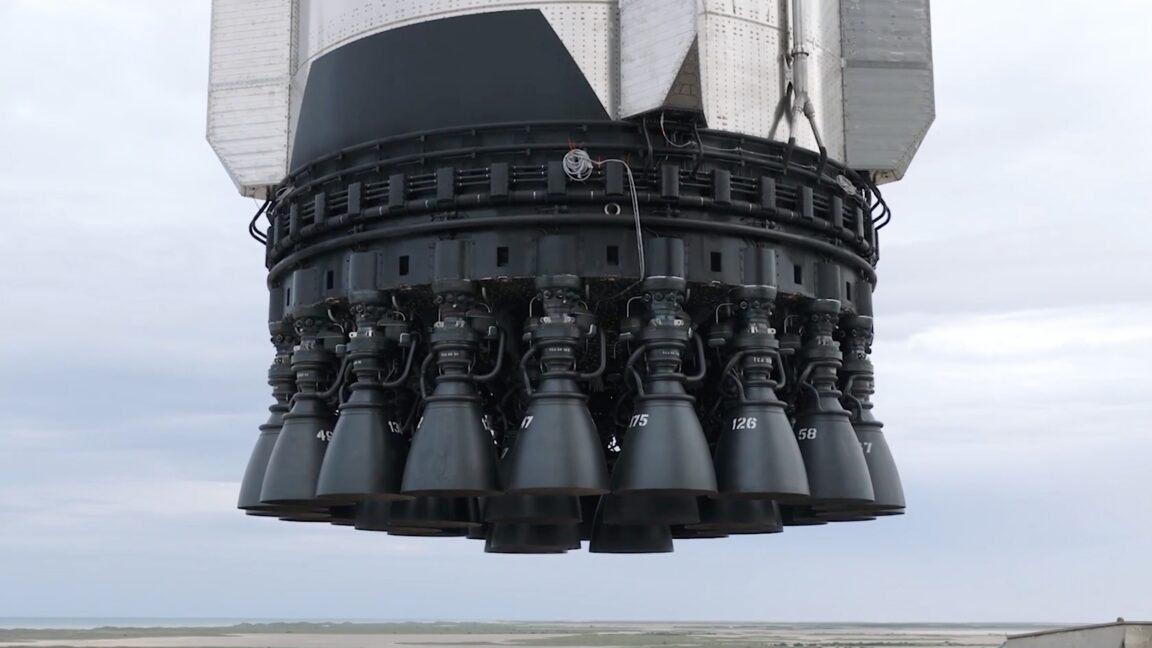
- •The mission will utilize the latest iteration of the Raptor 3 engine, which features simplified plumbing and increased thrust-to-weight ratios compared to previous versions.
- •SpaceX is testing a new 'hot-staging' ring design intended to improve structural integrity during the separation of the Super Heavy booster and the Starship upper stage.
- •This flight marks the first attempt to utilize a fully autonomous capture mechanism at the launch tower for the Super Heavy booster, moving beyond previous splashdown-focused tests.
- •The payload includes experimental optical inter-satellite links designed to increase data throughput for the Starlink constellation by 40% over current models.
- •Regulatory approval for this flight was expedited under a new FAA streamlined licensing framework for high-cadence launch operations.
📊 Competitor Analysis▸ Show
| Feature | SpaceX Starship | Blue Origin New Glenn | Rocket Lab Neutron |
|---|---|---|---|
| Reusability | Fully Rapidly Reusable | Reusable Booster | Reusable First Stage |
| Payload to LEO | 100-150+ tons | 45 tons | 13-15 tons |
| Status | Flight Testing (13th) | Initial Flight Testing | Development/Testing |
🛠️ Technical Deep Dive
- Raptor 3 Engine: Features integrated cooling channels and reduced part count to enhance reliability and ease of manufacturing.
- Heat Shielding: Utilizes a new generation of hexagonal ceramic tiles with improved attachment mechanisms to prevent shedding during high-velocity atmospheric reentry.
- Propellant Management: Implements advanced cryogenic fluid transfer systems to support long-duration orbital coasting and future in-space refueling demonstrations.
- Guidance System: Employs an upgraded AI-driven flight computer capable of real-time trajectory adjustments based on sensor fusion from multiple onboard telemetry streams.
🔮 Future ImplicationsAI analysis grounded in cited sources
⏳ Timeline
Weekly AI Recap
Read this week's curated digest of top AI events →
👉Related Updates
AI-curated news aggregator. All content rights belong to original publishers.
Original source: Ars Technica ↗
This is a summary, not the original. Read the source, or get the weekly briefing.
The weekly digest
One email a week. Unsubscribe anytime.