SpaceX IPO Liquidity Impact on Hong Kong Markets
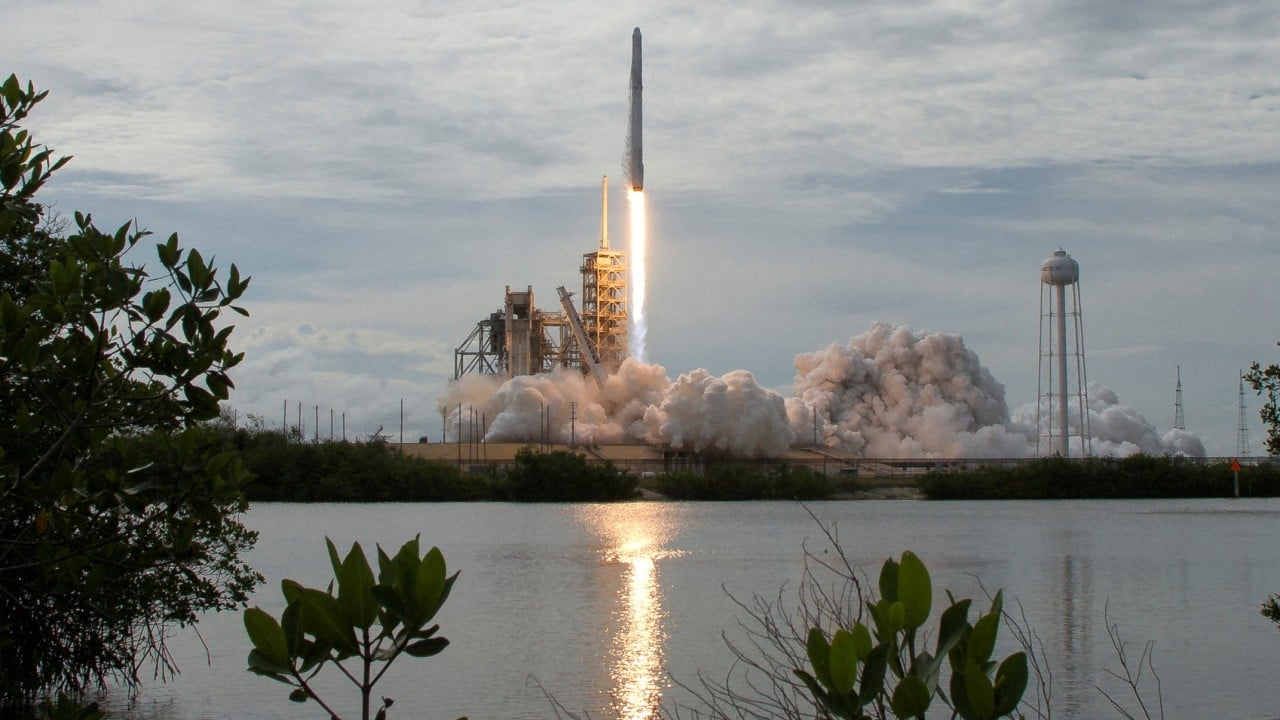
Understand how massive tech listings like SpaceX influence global capital flow and AI investment environments.
30-Second TL;DR
What Changed
SpaceX mega listing unlikely to trigger regional liquidity drain
Why It Matters
The analysis suggests that capital markets remain resilient to major tech listings, maintaining stability for AI and space-tech companies seeking future public funding.
What To Do Next
Monitor major tech IPO pipelines to assess potential shifts in venture capital availability for AI startups.
Key Points
- •SpaceX mega listing unlikely to trigger regional liquidity drain
- •Global investors prioritizing diversification into future profit stars
- •Hong Kong remains a competitive contender for global IPO fundraising
Deep Insight
Background and context from public sources — not the original article. 42 sources cited.
Enhanced Key Takeaways
- •SpaceX officially announced its plans to go public on May 20, 2026, following a confidential draft registration statement submitted to the U.S. Securities and Exchange Commission (SEC) on April 1, 2026.
- •The anticipated Initial Public Offering (IPO) is projected to be the largest in history, targeting a valuation between $1.75 trillion and $2 trillion, and aiming to raise $40 billion to $80 billion on the Nasdaq exchange under the ticker SPCX, with a potential listing date as early as June 12, 2026.
- •SpaceX's business operations are now structured into three primary segments: Starlink (satellite internet), Space (launch services), and AI, following the merger with xAI in February 2026, which had previously absorbed X in March 2025.
- •While Starlink served as the primary revenue driver, contributing $11.39 billion to SpaceX's total revenue of $18.67 billion in 2025 and generating a $1.2 billion profit in Q1 2026, the newly integrated AI segment (xAI and X) reported significant losses, including a $6.36 billion operating loss in 2025 and a $2.5 billion loss in Q1 2026.
- •JPMorgan's assessment that the SpaceX IPO is unlikely to cause a liquidity drain in Hong Kong is underpinned by global investors' continued pursuit of diversification and strong interest in emerging 'future profit stars,' particularly in Chinese AI, robotics, and healthcare listings within Hong Kong. Hong Kong itself demonstrated robust performance, reclaiming the top global IPO market position in 2025 and Q1 2026, supported by a healthy pipeline of new economy and technology companies.
Competitor Analysis
- Starlink (SpaceX)
- Low Earth Orbit (LEO)
- Amazon Leo (formerly Project Kuiper)
- Low Earth Orbit (LEO)
- Viasat
- Geostationary Orbit (GEO)
- HughesNet
- Geostationary Orbit (GEO)
- OneWeb (Eutelsat)
- Low Earth Orbit (LEO)
- Starlink (SpaceX)
- 10,300+
- Amazon Leo (formerly Project Kuiper)
- 239+ (planned 3,236)
- Viasat
- GEO constellation
- HughesNet
- GEO constellation
- OneWeb (Eutelsat)
- ~650
- Starlink (SpaceX)
- Global consumer, enterprise, mobile, government
- Amazon Leo (formerly Project Kuiper)
- Global consumer, enterprise, AWS integration
- Viasat
- Rural residential, business, government
- HughesNet
- Rural residential, business
- OneWeb (Eutelsat)
- Enterprise, government, mobility services
- Starlink (SpaceX)
- 20-400+ (often 200+)
- Amazon Leo (formerly Project Kuiper)
- Up to 400 (residential), 1 Gbps (enterprise)
- Viasat
- 25-150
- HughesNet
- 50-100
- OneWeb (Eutelsat)
- Varies by service
- Starlink (SpaceX)
- Low (20-50ms)
- Amazon Leo (formerly Project Kuiper)
- Low (LEO)
- Viasat
- High (600+ms)
- HughesNet
- High (600+ms)
- OneWeb (Eutelsat)
- Low (LEO)
- Starlink (SpaceX)
- $50-$120 (equipment extra)
- Amazon Leo (formerly Project Kuiper)
- Not yet announced (sub-$400 terminals projected)
- Viasat
- $39.99-$149.99 (equipment extra)
- HughesNet
- $39.99-$94.99 (equipment extra)
- OneWeb (Eutelsat)
- Enterprise/government focused
- Starlink (SpaceX)
- Dominant LEO player, high speeds, low latency, direct-to-cell
- Amazon Leo (formerly Project Kuiper)
- AWS integration, strong backing, competitive LEO entry
- Viasat
- Established GEO, unlimited data, no contract (Viasat Unleashed)
- HughesNet
- Established GEO, improving Gen 3 satellite
- OneWeb (Eutelsat)
- Enterprise/government focus, global coverage
- Starlink (SpaceX)
- Key Launch Vehicles
- Amazon Leo (formerly Project Kuiper)
- Focus/Status
- Starlink (SpaceX)
- Amazon Leo (formerly Project Kuiper)
- Starlink (SpaceX)
- Atlas V, Delta IV Heavy, Vulcan Centaur
- Amazon Leo (formerly Project Kuiper)
- Legacy contracts, national security, Vulcan Centaur to regain competitiveness
- Starlink (SpaceX)
- New Shepard, New Glenn
- Amazon Leo (formerly Project Kuiper)
- Reusable suborbital (New Shepard), heavy-lift orbital (New Glenn entered regular service 2025), lunar landers
- Starlink (SpaceX)
- Ariane 5, Ariane 6
- Amazon Leo (formerly Project Kuiper)
- European institutional launches, Ariane 6 for lower cadence
- Starlink (SpaceX)
- Electron, Neutron
- Amazon Leo (formerly Project Kuiper)
- Small satellite launch market leader (Electron), Neutron to enter medium-lift market
- Starlink (SpaceX)
- Long March series
- Amazon Leo (formerly Project Kuiper)
- National security, large-scale satellite constellations (Qianfan, Xingwang)
- Starlink (SpaceX)
- Mira (space tug)
- Amazon Leo (formerly Project Kuiper)
- Last-mile transportation, orbital transfer services
| Feature/Provider | Starlink (SpaceX) | Amazon Leo (formerly Project Kuiper) | Viasat | HughesNet | OneWeb (Eutelsat) |
|---|---|---|---|---|---|
| Orbit Type | Low Earth Orbit (LEO) | Low Earth Orbit (LEO) | Geostationary Orbit (GEO) | Geostationary Orbit (GEO) | Low Earth Orbit (LEO) |
| Satellites in Orbit (approx. as of Apr 2026) | 10,300+ | 239+ (planned 3,236) | GEO constellation | GEO constellation | ~650 |
| Target Market | Global consumer, enterprise, mobile, government | Global consumer, enterprise, AWS integration | Rural residential, business, government | Rural residential, business | Enterprise, government, mobility services |
| Typical Speeds (Mbps) | 20-400+ (often 200+) | Up to 400 (residential), 1 Gbps (enterprise) | 25-150 | 50-100 | Varies by service |
| Latency | Low (20-50ms) | Low (LEO) | High (600+ms) | High (600+ms) | Low (LEO) |
| Pricing (monthly, approx.) | $50-$120 (equipment extra) | Not yet announced (sub-$400 terminals projected) | $39.99-$149.99 (equipment extra) | $39.99-$94.99 (equipment extra) | Enterprise/government focused |
| Key Differentiator | Dominant LEO player, high speeds, low latency, direct-to-cell | AWS integration, strong backing, competitive LEO entry | Established GEO, unlimited data, no contract (Viasat Unleashed) | Established GEO, improving Gen 3 satellite | Enterprise/government focus, global coverage |
| Company | Key Launch Vehicles | Focus/Status | |||
| United Launch Alliance (ULA) | Atlas V, Delta IV Heavy, Vulcan Centaur | Legacy contracts, national security, Vulcan Centaur to regain competitiveness | |||
| Blue Origin | New Shepard, New Glenn | Reusable suborbital (New Shepard), heavy-lift orbital (New Glenn entered regular service 2025), lunar landers | |||
| Arianespace | Ariane 5, Ariane 6 | European institutional launches, Ariane 6 for lower cadence | |||
| Rocket Lab | Electron, Neutron | Small satellite launch market leader (Electron), Neutron to enter medium-lift market | |||
| China (State-backed) | Long March series | National security, large-scale satellite constellations (Qianfan, Xingwang) | |||
| Others (e.g., Impulse Space) | Mira (space tug) | Last-mile transportation, orbital transfer services |
Technical Deep Dive
- Starship Launch System: A two-stage, fully reusable, super heavy-lift launch vehicle under development.
- Materials: Both stages are constructed from stainless steel.
- Propulsion: The Super Heavy booster is powered by 33 Raptor engines, while the Starship upper stage uses 6 Raptor engines (3 sea-level, 3 vacuum-optimized).
- Fuel: Raptor engines utilize sub-cooled liquid methane (CH4) and liquid oxygen (LOX).
- Payload Capacity: Designed for 100-150 metric tons to Low Earth Orbit (LEO) in its baseline reusable design, with Block 3 targeting 100t and Block 4 aiming for 200t.
- Reusability: Both Super Heavy and Starship are designed for full and rapid reusability, with the Super Heavy booster intended to be caught by the launch tower upon return.
- Starship V3: The latest version, first launched on May 22, 2026, features a complete design overhaul, including four passive connection ports for in-orbit docking and fuel transfers, crucial for missions beyond LEO.
- Starlink Satellite Constellation: A low Earth orbit (LEO) satellite internet constellation operated by Starlink Services, LLC.
- Constellation Size: Over 10,020 satellites in LEO as of March 2026, constituting 65% of all active satellites.
- Satellite Design: Compact, flat-panel design to maximize launch stack density on Falcon 9 rockets.
- Connectivity: Each satellite features 5 advanced Ku-band phased array antennas and 3 dual-band (Ka-band and E-band) antennas.
- Intersatellite Links: Equipped with 3 optical intersatellite links (space lasers) per satellite, enabling a global internet mesh network with up to 200 Gbps capacity.
- Propulsion: Utilizes efficient argon thrusters for orbit raising, maneuvering, and deorbiting.
- Starlink V2 Satellites: Expected for mid-2027 deployment via Starship, promising 20 times greater link performance, user speeds up to 150 Mb/s, and 100 times the data density of first-generation satellites.
- Starlink Mobile (Direct to Cell): Rebranded direct-to-phone satellite service, targeting over 25 million active users by the end of 2026.
- Stargaze: A novel Space Situational Awareness (SSA) system developed by SpaceX, making its screening data available to the broader satellite operator community free of charge from January 2026.
- AI Infrastructure: SpaceX's S-1 filing highlights significant investment in AI.
- xAI Integration: xAI, including X (formerly Twitter), merged with SpaceX in February 2026, becoming a core segment.
- Compute Capacity: Anthropic has a $1.25 billion per month agreement with SpaceX for AI compute capacity through May 2029.
- Chip Manufacturing: Involvement in a chip manufacturing project called Terafab with Tesla and Intel.
- Orbital Data Centers: Long-term plans include deploying AI data centers in orbit, with initial deployments projected as early as 2028.
Future ImplicationsAI analysis grounded in cited sources
Timeline
- 2002SpaceX founded by Elon Musk with an initial $100 million investment.
- 2008NASA awarded SpaceX a $1.6 billion contract, crucial for the company's survival.
- 2015-01SpaceX raised $1 billion from Google and Fidelity Investments, valuing the company at approximately $12 billion, and announced the Starlink satellite constellation.
- 2020-08Completed a $1.9 billion Series J funding round, increasing its valuation to $46 billion.
- 2025-12Company valuation reached $800 billion following an insider share sale.
- 2026-02SpaceX merged with xAI.
- 2026-04-01SpaceX confidentially filed a draft registration statement for its IPO with the U.S. SEC.
- 2026-05-20SpaceX publicly released its S-1 prospectus, formally beginning the IPO process.
- 2026-05-22The Starship Version 3 (V3) megarocket successfully completed its first test flight (Flight 12).
Sources (42)
Factual claims are grounded in the sources below. Forward-looking analysis is AI-generated interpretation.
Weekly AI Recap
Read this week's curated digest of top AI events →
Related Updates

AI-curated news aggregator. All content rights belong to original publishers.
Original source: SCMP Technology ↗
This is a summary, not the original. Read the source, or get the weekly briefing.
The weekly digest
One email a week. Unsubscribe anytime.