South Korea's Stock Market Driven by Two Core Chips
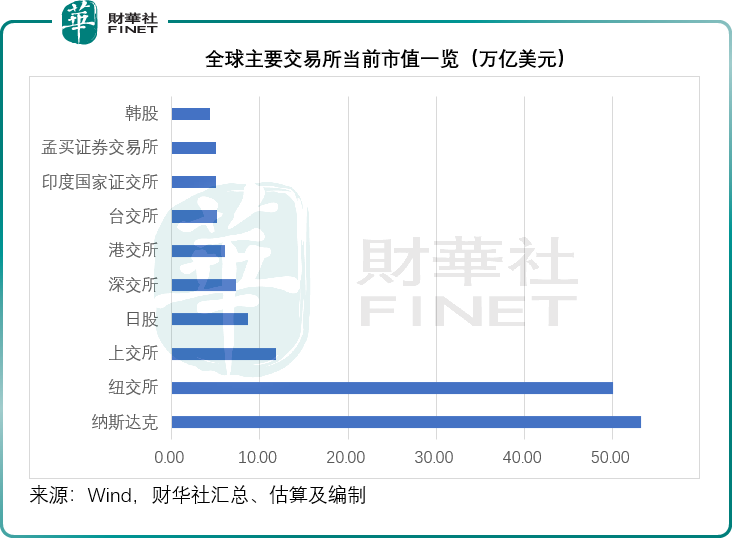
💡Understand how South Korea's chip dominance is reshaping global market dynamics and AI hardware supply.
⚡ 30-Second TL;DR
What Changed
Semiconductors are the primary engine for the South Korean economy
Why It Matters
The reliance on specific chip architectures creates high volatility and opportunity for investors monitoring the Korean tech sector. It underscores the concentration of AI hardware supply chains.
What To Do Next
Monitor KRX semiconductor stock indices to gauge global AI hardware demand trends.
Key Points
- •Semiconductors are the primary engine for the South Korean economy
- •Global capital market focus has shifted toward Seoul's tech sector
- •AI chip production capacity dictates national market performance
🧠 Deep Insight
AI-generated analysis for this event — not the original article.
🔑 Enhanced Key Takeaways
- •South Korea's KOSPI index performance is increasingly correlated with the HBM (High Bandwidth Memory) supply chain, specifically the duopoly of Samsung Electronics and SK Hynix.
- •The transition from DDR5 to HBM3E and HBM4 has created a supply-demand imbalance, forcing global AI hardware manufacturers to prioritize South Korean memory allocations.
- •South Korean government initiatives, such as the 'K-Chips Act,' have been expanded to provide tax credits and infrastructure support specifically for AI-focused semiconductor fabrication facilities.
- •Foreign institutional investor sentiment toward South Korea is currently dictated by the yield and production capacity of 12-layer HBM3E stacks rather than traditional consumer electronics demand.
- •The integration of CXL (Compute Express Link) technology alongside HBM is emerging as the next critical technical standard for South Korean firms to maintain their market dominance in AI server architectures.
📊 Competitor Analysis▸ Show
| Feature | Samsung Electronics (HBM) | SK Hynix (HBM) | Micron Technology (HBM) |
|---|---|---|---|
| Market Position | Leading High-Volume | HBM Market Leader | Challenger |
| Key Tech | HBM3E / HBM4 | HBM3E (12-Hi) | HBM3E (8-Hi/12-Hi) |
| Strategy | Vertical Integration | AI-First Focus | Capacity Expansion |
🛠️ Technical Deep Dive
- HBM3E Architecture: Utilizes Through-Silicon Via (TSV) technology to stack DRAM dies vertically, significantly increasing bandwidth while reducing power consumption compared to standard DDR5.
- 12-Layer Stacking: Advanced thermal management techniques are required to dissipate heat in 12-high stacks, a critical bottleneck for AI training clusters.
- CXL 3.0 Integration: Implementation of memory pooling and expansion protocols to allow AI accelerators to access larger memory pools, reducing latency in large language model (LLM) inference.
- MR-MUF Packaging: Mass Reflow Molded Underfill (MR-MUF) process used by SK Hynix to improve yield and thermal efficiency in high-density memory modules.
🔮 Future ImplicationsAI analysis grounded in cited sources
⏳ Timeline
Weekly AI Recap
Read this week's curated digest of top AI events →
👉Related Updates



AI-curated news aggregator. All content rights belong to original publishers.
Original source: 钛媒体 ↗
This is a summary, not the original. Read the source, or get the weekly briefing.
Weekly AI briefing
One email a week. Unsubscribe anytime.