Greenspan's legacy and the 'Fed Put' myth
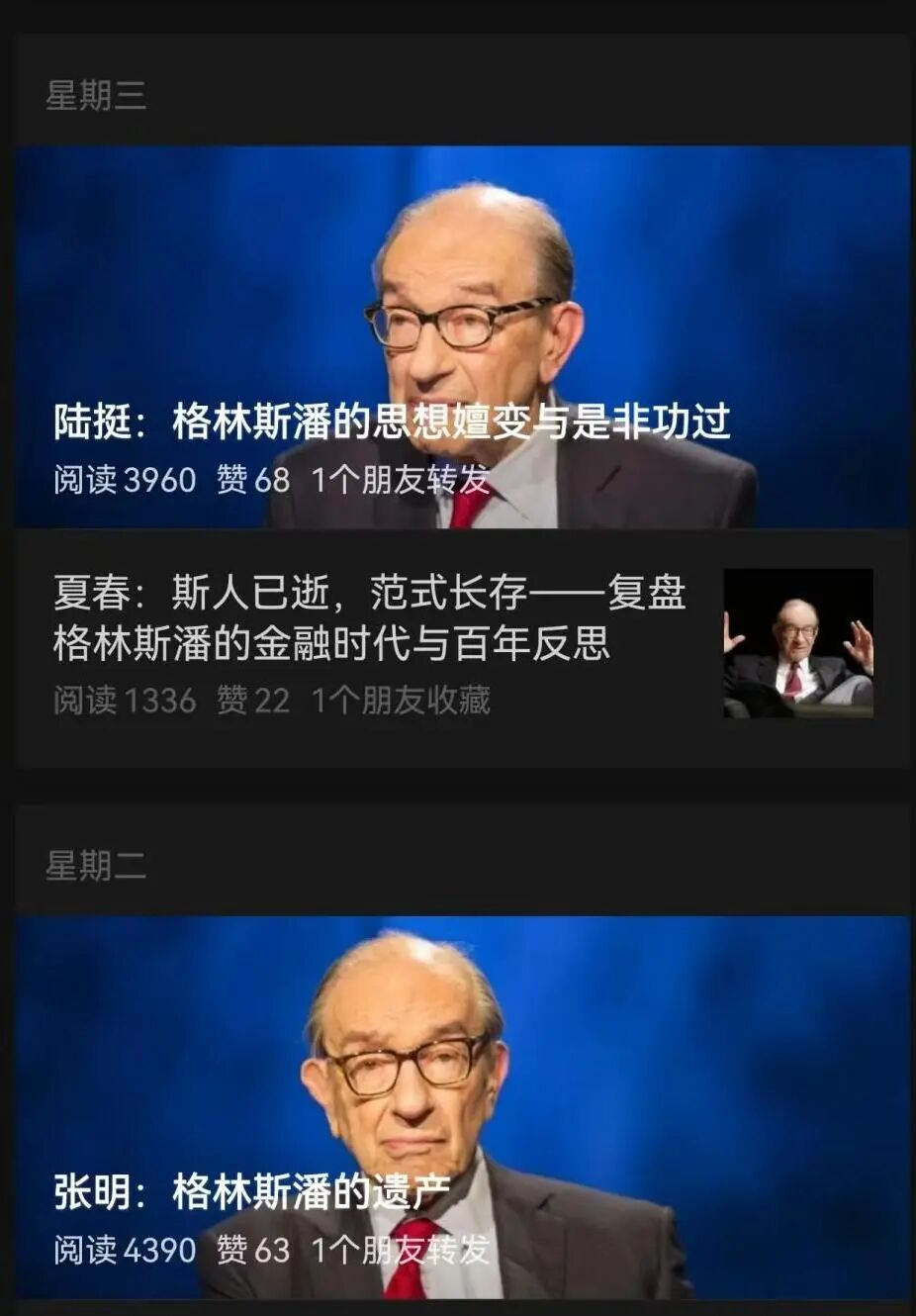
💡Learn how central bank liquidity cycles—not just tech innovation—drive the AI investment bubble.
⚡ 30-Second TL;DR
What Changed
Greenspan's tenure prioritized financial market stability and asset price support over broader economic health.
Why It Matters
Understanding the 'Fed Put' is crucial for AI founders and investors, as liquidity cycles and central bank interventions directly influence venture capital availability and AI market valuations.
What To Do Next
Incorporate macroeconomic liquidity indicators into your financial modeling to better anticipate market volatility and funding environment shifts.
Key Points
- •Greenspan's tenure prioritized financial market stability and asset price support over broader economic health.
- •The 'Fed Put' concept has become an implicit obligation for central banks to intervene during market downturns.
- •His push for financial deregulation contributed to the 2008 financial crisis and the rise of complex derivatives.
- •The article critiques the 'myth' of the free market, arguing that central bank intervention is now a permanent feature of modern capitalism.
🧠 Deep Insight
AI-generated analysis for this event — not the original article.
🔑 Enhanced Key Takeaways
- •Greenspan's 'Fed Put' was heavily influenced by his reaction to the 1987 Black Monday crash, where he famously issued a one-sentence statement pledging liquidity to the financial system.
- •The 'Greenspan Doctrine' shifted the Fed's focus from preemptively fighting inflation to a 'risk management' approach, which critics argue prioritized preventing market crashes over long-term stability.
- •Greenspan was a vocal proponent of the Commodity Futures Modernization Act of 2000, which exempted over-the-counter derivatives from regulation, a key factor in the 2008 crisis.
- •The 'Fed Put' has evolved into the 'Powell Put' and subsequent iterations, as modern central banking has increasingly relied on quantitative easing (QE) as a standard tool rather than an emergency measure.
- •Greenspan's ideological shift from strict Objectivist principles to pragmatic interventionism remains a subject of intense debate regarding the consistency of his economic philosophy.
🔮 Future ImplicationsAI analysis grounded in cited sources
⏳ Timeline
Weekly AI Recap
Read this week's curated digest of top AI events →
👉Related Updates


AI-curated news aggregator. All content rights belong to original publishers.
Original source: 虎嗅 ↗
This is a summary, not the original. Read the source, or get the weekly briefing.
Weekly AI briefing
One email a week. Unsubscribe anytime.