South Korea's AI Wealth and the 'End-Owner' Crisis
Understand how AI-driven wealth concentration is triggering national-level policy debates on redistribution.
30-Second TL;DR
What Changed
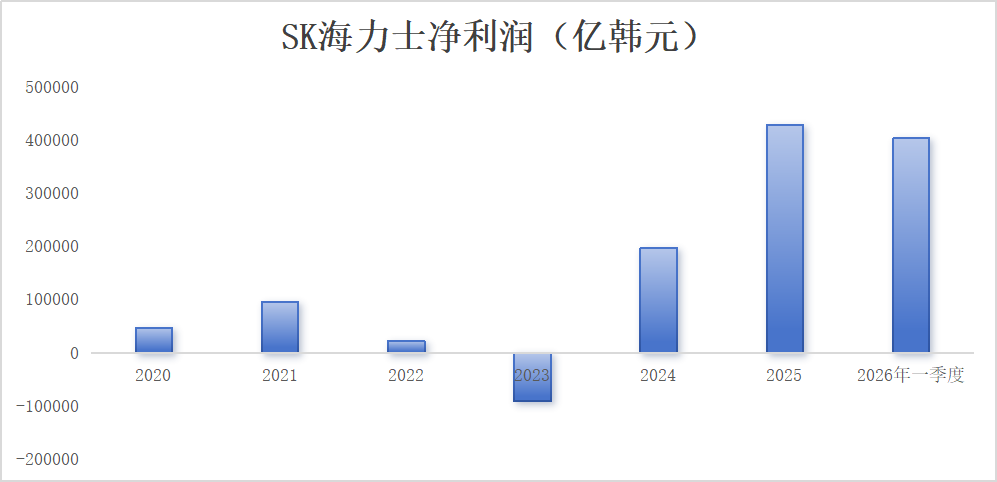
Samsung and SK Hynix expect record profits due to global AI memory demand.
Why It Matters
The debate highlights the socio-economic tension between AI capital owners and the broader public, potentially influencing future AI tax and redistribution policies.
What To Do Next
Monitor emerging AI-related fiscal policies in tech-heavy economies to anticipate potential regulatory shifts in compute resource allocation.
Key Points
- •Samsung and SK Hynix expect record profits due to global AI memory demand.
- •Government officials propose a 'Citizen AI Dividend' to share AI-driven wealth.
- •Concerns exist regarding extreme wealth concentration and AI-driven labor displacement.
- •The proposal suggests linking dividends to AI industry performance rather than universal basic income.
Deep Insight
Background and context from public sources — not the original article. 21 sources cited.
Enhanced Key Takeaways
- •The 'Citizen AI Dividend' was proposed by Kim Yong-beom, Chief Policy Secretary of South Korea's Blue House, via a Facebook post on May 11, 2026, which initially caused a significant drop in the Kospi index before clarification that it would be funded by surplus government tax receipts, not a direct corporate windfall tax.
- •The proposal draws parallels to the Alaska Permanent Fund, aiming to convert extraordinary income from a common resource (AI, in this case, instead of oil) into recurring payments to citizens, framing it as industrial policy rather than social spending.
- •The debate over the AI dividend is unfolding amidst existing labor tensions at Samsung, where unionized workers are demanding a share of the company's surging profits, with a potential strike scheduled from May 21 to June 7, 2026.
- •South Korea's K-shaped economic divergence is characterized by an IT sector-led growth structure, rapidly rising asset prices, and an AI technology leap, leading to executive bonuses exceeding $800,000 in the chip industry while real household consumption contracts in non-IT sectors.
- •Nobel laureate economist Peter Howitt has deemed the debate over a national AI dividend "premature," citing the nascent stage of AI technology and uncertainty about future semiconductor industry performance, while emphasizing the importance of broadly sharing AI boom benefits.
Technical Deep Dive
- HBM (High Bandwidth Memory): A computer memory interface for 3D-stacked synchronous dynamic random-access memory (SDRAM) used in high-performance graphics accelerators, network devices, and AI systems.
- HBM3: Offers 6.4 Gb/s per pin and up to 819 GB/s of bandwidth per stack, with 16 GB and 24 GB capacity options, widely adopted in AI training clusters and GPUs.
- HBM3E: Designed for extreme AI workloads, delivering up to 9.2 Gb/s per pin and up to 1,180 GB/s of bandwidth per stack. Samsung's 12-layer HBM3E stack offers 36GB capacity and 1.28 TB/s bandwidth, with improved power efficiency of approximately 12% over the previous generation. SK Hynix also unveiled HBM3E with 8 Gbit/s/pin data processing speed, achieving 1 TB/s bandwidth per stack.
- HBM4: Expected to redefine system capability with up to 2.7x higher throughput and up to 40% greater power efficiency. It features 2,048 I/O pins, enabling up to 3,300 GB/s of bandwidth. Samsung has introduced its 10-nanometer class 6th generation (1c) DRAM process and 4-nanometer foundry process for HBM4. Mass production of HBM4 devices by Samsung and SK Hynix is aimed for 2026.
- Market Dominance: SK Hynix held a dominant market share of approximately 62% in HBM in Q2 2025, with Micron at 21% and Samsung at 17%. However, Samsung is projected to increase its HBM market share above 30% in 2026 with HBM3E and HBM4.
Future ImplicationsAI analysis grounded in cited sources
Timeline
- 2013SK Hynix produced the first HBM memory chip.
- 2019South Korea launched its National Strategy for Artificial Intelligence, aiming to become a world leader in AI by 2030.
- 2022-01JEDEC officially announced the HBM3 standard.
- 2024-03SK Hynix announced mass production of HBM3E memory.
- 2025-04SK Hynix overtook Samsung in worldwide DRAM market share, largely due to HBM demand.
- 2026-05-11Kim Yong-beom, South Korea's Chief Policy Secretary, publicly proposed the 'Citizen AI Dividend'.
Sources (21)
Factual claims are grounded in the sources below. Forward-looking analysis is AI-generated interpretation.
Weekly AI Recap
Read this week's curated digest of top AI events →
AI-curated news aggregator. All content rights belong to original publishers.
Original source: 虎嗅 ↗
This is a summary, not the original. Read the source, or get the weekly briefing.
The weekly digest
One email a week. Unsubscribe anytime.