South Korea to train entire military as drone warriors
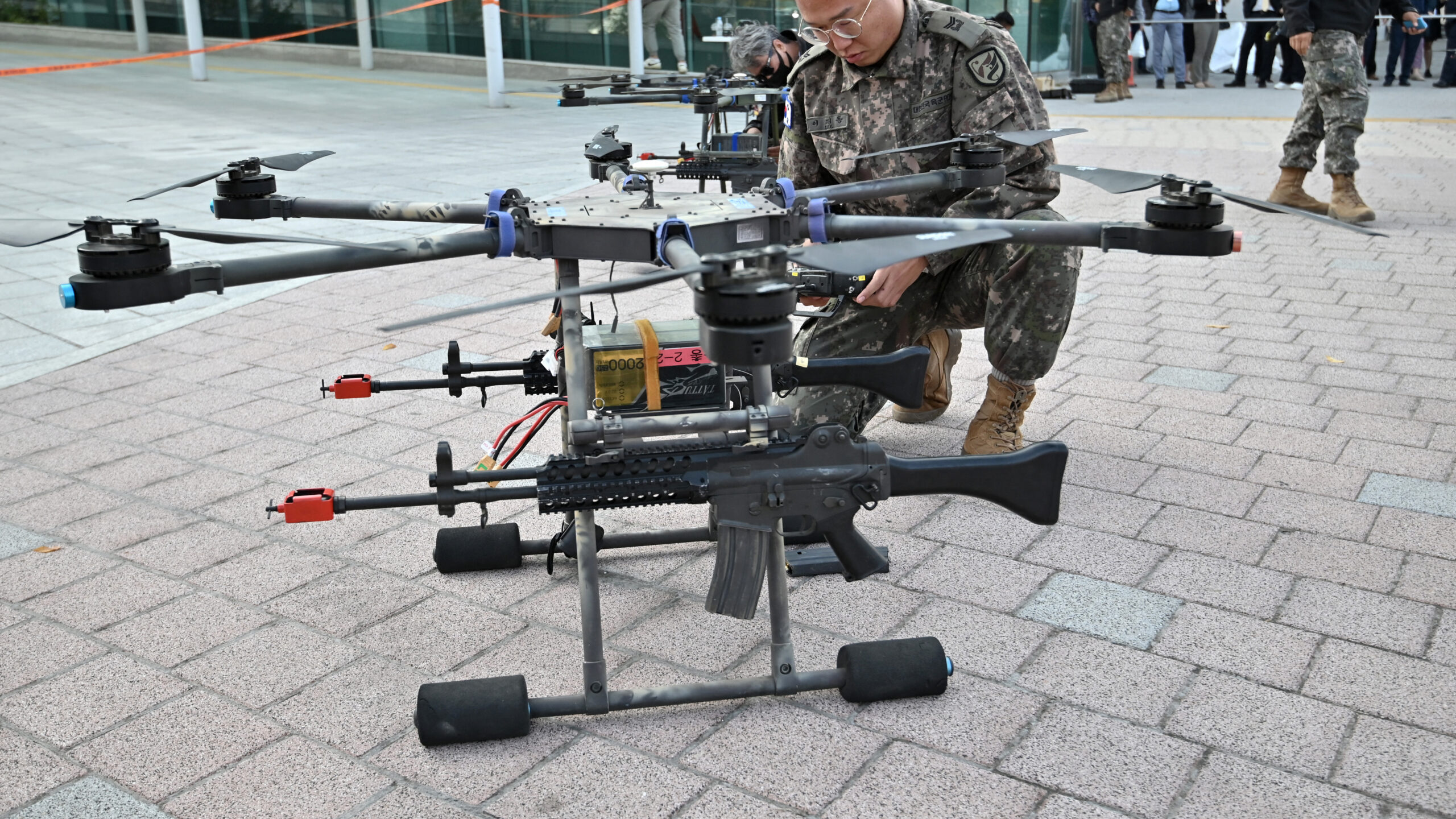
A massive state-level push for drone integration that will drive demand for AI-driven autonomous defense software.
30-Second TL;DR
What Changed
Training 500,000 personnel in drone operations
Why It Matters
This move signals a massive scale-up in military robotics adoption, likely driving demand for ruggedized, AI-integrated drone hardware and swarm control software. It sets a precedent for national-level integration of autonomous systems in defense.
What To Do Next
Research existing open-source drone swarm frameworks like ArduPilot or PX4 to understand the software requirements for large-scale autonomous fleet management.
Key Points
- •Training 500,000 personnel in drone operations
- •Standardizing drones as a universal combat tool
- •Strategic shift toward autonomous and remote-piloted warfare
Deep Insight
AI-generated analysis for this event — not the original article.
Enhanced Key Takeaways
- •The initiative is part of the 'Drone Command' establishment, South Korea's first joint military unit specifically dedicated to drone operations across all service branches.
- •The training curriculum emphasizes counter-drone capabilities, including electronic warfare and jamming techniques, to neutralize enemy unmanned systems.
- •South Korea is prioritizing the development of 'AI-integrated' drone swarms that can operate autonomously in GPS-denied environments.
- •The program includes the mass procurement of low-cost, expendable 'kamikaze' drones to offset the numerical superiority of regional adversaries.
- •Military doctrine is shifting toward 'Human-AI Teaming' (HIT), where soldiers act as supervisors for semi-autonomous drone squads rather than manual pilots.
Competitor Analysis
- South Korea (Drone Command)
- Universal soldier training
- USA (Replicator Initiative)
- Mass-scale autonomous attrition
- China (PLA Drone Units)
- Swarm intelligence & integration
- South Korea (Drone Command)
- 500,000 personnel
- USA (Replicator Initiative)
- Industrial-scale production
- China (PLA Drone Units)
- Massive fleet deployment
- South Korea (Drone Command)
- High (AI/Electronic Warfare)
- USA (Replicator Initiative)
- High (Software/Networking)
- China (PLA Drone Units)
- Very High (Manufacturing/Scale)
| Feature | South Korea (Drone Command) | USA (Replicator Initiative) | China (PLA Drone Units) |
|---|---|---|---|
| Primary Focus | Universal soldier training | Mass-scale autonomous attrition | Swarm intelligence & integration |
| Scale | 500,000 personnel | Industrial-scale production | Massive fleet deployment |
| Tech Maturity | High (AI/Electronic Warfare) | High (Software/Networking) | Very High (Manufacturing/Scale) |
Technical Deep Dive
- Architecture: Utilizes a decentralized mesh network protocol allowing drones to maintain communication links without a central hub.
- AI Integration: Employs edge computing modules for real-time object recognition and target acquisition without relying on cloud connectivity.
- Electronic Warfare: Systems are hardened against GNSS spoofing and utilize inertial navigation systems (INS) for redundancy.
- Propulsion: Focus on high-density solid-state battery technology to extend operational range for small-form-factor tactical drones.
Future ImplicationsAI analysis grounded in cited sources
Timeline
- 2022-12South Korea announces the creation of a dedicated drone unit following North Korean drone incursions.
- 2023-09Official inauguration of the South Korea Drone Operations Command.
- 2024-05Ministry of National Defense releases the 'Defense Innovation 4.0' roadmap prioritizing AI and unmanned systems.
- 2025-11Successful large-scale joint exercise testing swarm drone coordination in urban environments.
Weekly AI Recap
Read this week's curated digest of top AI events →
Related Updates

AI-curated news aggregator. All content rights belong to original publishers.
Original source: Ars Technica AI ↗
This is a summary, not the original. Read the source, or get the weekly briefing.
The weekly digest
One email a week. Unsubscribe anytime.