South Korea invests $300M+ in next-gen power semiconductors
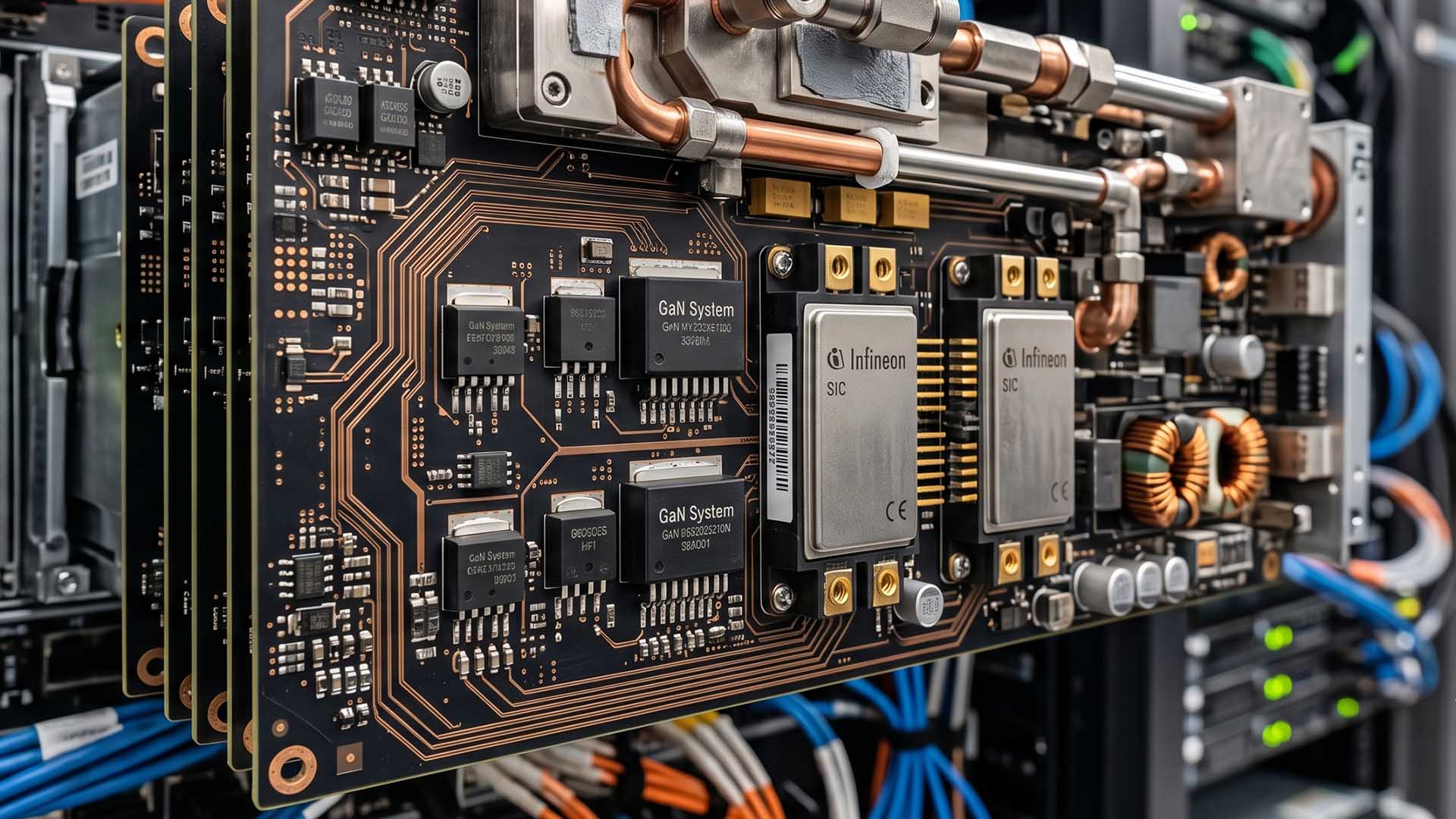
💡Critical infrastructure news: South Korea's push for power chips directly impacts AI data center energy efficiency.
⚡ 30-Second TL;DR
What Changed
Investment of 500 billion KRW (~$329M) for R&D and mass production
Why It Matters
This investment strengthens the global supply chain for power-efficient chips, which are critical for AI data centers and robotics hardware.
What To Do Next
Assess how improved power efficiency in semiconductors might reduce operational costs for your large-scale AI training clusters.
Key Points
- •Investment of 500 billion KRW (~$329M) for R&D and mass production
- •Strategic focus on next-generation power semiconductor technology
- •Aiming to establish a new 'cash cow' industry alongside memory chips
🧠 Deep Insight
Background and context from public sources — not the original article. 15 sources cited.
🔑 Enhanced Key Takeaways
- •The total investment for the 'Ultra-Innovation Economy Project', including private sector matching, is approximately 750 billion KRW (around $494.1 million), which is significantly higher than the initial $329 million state funding.
- •The project specifically targets the development and mass production of Silicon Carbide (SiC) and Gallium Nitride (GaN) based power semiconductors, which are identified as critical components for future industries such as AI data centers, electric vehicles, and defense.
- •South Korea aims to increase its technology self-reliance rate for next-generation power semiconductors from the current 10% to 20% by 2030, signaling a strategic move to reduce dependency on foreign suppliers.
- •The government's strategy employs a 'demand-first, development-later' approach, intending to integrate domestically developed power semiconductors into critical public infrastructure, including national power grids, AI data centers, and weapons systems.
- •A commercialization technology roadmap for these next-generation power semiconductors is expected to be finalized in June 2026, with plans to expand mass production infrastructure through facilities like the Busan specialized complex.
🛠️ Technical Deep Dive
- Next-generation power semiconductors primarily utilize Wide-Bandgap (WBG) materials such as Silicon Carbide (SiC) and Gallium Nitride (GaN), which offer superior performance compared to traditional silicon-based devices.
- SiC devices are capable of tolerating high voltages, often up to 1700 V, with reduced leakage and enhanced robustness at elevated temperatures, making them suitable for power conversion systems.
- GaN devices facilitate faster switching speeds, operating in the MHz range, which allows for the miniaturization of passive components (inductors, capacitors) and overall system size reduction.
- Gallium Oxide (Ga2O3) is an emerging ultra-wide-bandgap (UWBG) semiconductor material with a bandgap of 4.9 eV, a theoretical breakdown electric field of 8 MV/cm, and a Baliga's figure of merit (BFOM) 3 to 10 times higher than SiC and GaN.
- Ga2O3 boasts a unique melt-based crystal growth advantage, which could lead to lower manufacturing costs compared to SiC and GaN.
- A significant engineering challenge for Ga2O3 is its lower thermal conductivity (approximately 0.27 W/cm·K), with proposed solutions including Ga2O3-on-SiC integration and heterogeneous combinations with diamond substrates to improve thermal management.
- The primary device architectures for Ga2O3 power semiconductors are Schottky barrier diodes (SBDs) and field-effect transistors (FETs).
- The intrinsic p-type doping constraint in Ga2O3 is being addressed by creating junction functionality through interfaces between dissimilar materials, mirroring how GaN overcomes its p-type doping issues via AlGaN/GaN heterojunctions.
🔮 Future ImplicationsAI analysis grounded in cited sources
⏳ Timeline
📎 Sources (15)
Factual claims are grounded in the sources below. Forward-looking analysis is AI-generated interpretation.
Weekly AI Recap
Read this week's curated digest of top AI events →
👉Related Updates
AI-curated news aggregator. All content rights belong to original publishers.
Original source: cnBeta (Full RSS) ↗
This is a summary, not the original. Read the source, or get the weekly briefing.
The weekly digest
One email a week. Unsubscribe anytime.