🐯虎嗅•Stalecollected in 27m
Software firms counterattack AI siege
💡Software giants win enterprise AI via know-how, not pure models
⚡ 30-Second TL;DR
What Changed
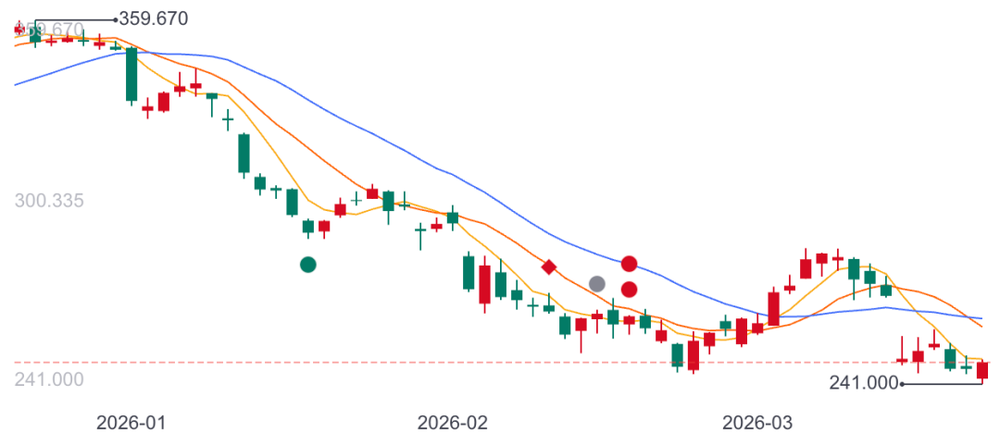
Software stocks crash (Adobe -30%) amid AI 'killing software' fears
Why It Matters
Empowers software incumbents in enterprise AI, stabilizing sector and spurring AI service revenues amid market panic.
What To Do Next
Test SAP Skills API to atomize your ERP for AI agent integration.
Who should care:Enterprise & Security Teams
Key Points
- •Software stocks crash (Adobe -30%) amid AI 'killing software' fears
- •Enterprises choose software vendors for AI due to data/tools/know-how moats
- •SAP builds Agent platform atomizing ERP into Skills for AI calls
- •AI disrupts via incumbents' self-revolution, not AI-native replacements
🧠 Deep Insight
AI-generated analysis for this event — not the original article.
🔑 Enhanced Key Takeaways
- •The shift toward 'Agentic Workflows' is forcing a transition from traditional SaaS subscription models to consumption-based pricing, as enterprises prioritize task-based outcomes over seat-based licensing.
- •Major software incumbents are increasingly adopting 'Hybrid AI' architectures, combining proprietary on-premise data silos with cloud-based LLM orchestration to address strict enterprise data sovereignty and compliance requirements.
- •The 'AI siege' has triggered a wave of M&A activity where legacy software firms are acquiring specialized AI-agent startups to rapidly integrate autonomous reasoning capabilities into their existing ERP and CRM backends.
📊 Competitor Analysis▸ Show
| Feature | Traditional SaaS (e.g., Legacy ERP) | AI-Native Startups | Agentic Incumbents (e.g., SAP/Adobe) |
|---|---|---|---|
| Core Value | Process Automation | Model Performance | Workflow Orchestration |
| Data Moat | High (Proprietary) | Low (Public/Synthetic) | Very High (Contextual) |
| Implementation | Long/Consultant-led | Rapid/API-first | Modular/Skill-based |
| Pricing | Per-seat/Subscription | Token/Usage-based | Outcome/Agent-based |
🛠️ Technical Deep Dive
- •Agentic architecture utilizes a 'Skill-based' abstraction layer where ERP functions are decomposed into atomic, API-callable units (Skills).
- •Implementation of 'Human-in-the-loop' (HITL) guardrails within the agent orchestration layer to manage high-stakes enterprise decision-making.
- •Integration of RAG (Retrieval-Augmented Generation) pipelines specifically tuned for structured enterprise data (SQL/ERP schemas) rather than just unstructured text.
- •Use of multi-agent orchestration frameworks (e.g., LangGraph or proprietary equivalents) to manage complex, multi-step business processes across disparate software modules.
🔮 Future ImplicationsAI analysis grounded in cited sources
SaaS revenue models will shift to 'Agent-as-a-Service' by 2027.
Enterprises are moving away from paying for user seats toward paying for autonomous task completion and successful business outcomes.
Data governance will become the primary competitive differentiator over model size.
The ability to securely integrate proprietary, siloed enterprise data into agentic workflows provides a moat that general-purpose LLMs cannot replicate.
⏳ Timeline
2023-11
Adobe announces Firefly integration into Creative Cloud, signaling the start of the 'AI-first' product pivot.
2024-05
SAP unveils its 'Business AI' strategy, focusing on embedding generative AI across its entire cloud portfolio.
2025-02
Market correction hits software stocks as investors question the ROI of AI R&D spending compared to legacy growth.
2025-10
SAP launches its agentic platform, allowing customers to build autonomous workflows using existing ERP data.
📰
Weekly AI Recap
Read this week's curated digest of top AI events →
👉Related Updates

AI-curated news aggregator. All content rights belong to original publishers.
Original source: 虎嗅 ↗
This is a summary, not the original. Read the source, or get the weekly briefing.
Weekly AI briefing
One email a week. Unsubscribe anytime.