SoftBank Internal Concerns Over Massive OpenAI Investment
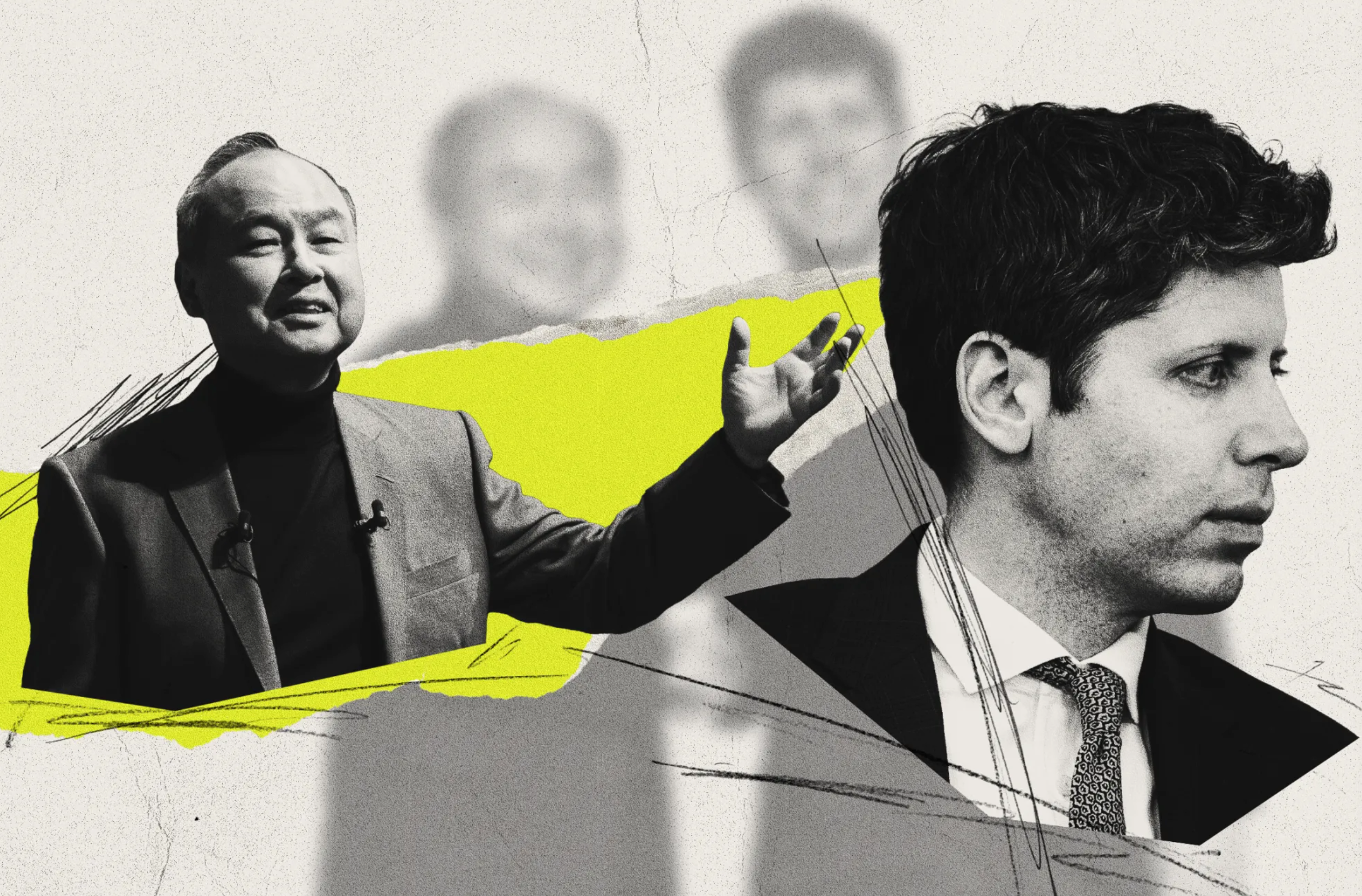
Get insights into the financial risks and internal dynamics of the world's most prominent AI company.
30-Second TL;DR
What Changed
SoftBank's investment commitment to OpenAI exceeds $60 billion.
Why It Matters
This internal conflict highlights the high-stakes nature of AI funding and the risks associated with betting heavily on single-founder-led organizations.
What To Do Next
Monitor OpenAI's governance and funding structure as it impacts the long-term stability of the models and APIs you build upon.
Key Points
- •SoftBank's investment commitment to OpenAI exceeds $60 billion.
- •Internal dissent is growing regarding Masayoshi Son's strategy.
- •Concerns focus on the perceived over-reliance on Sam Altman's leadership.
Deep Insight
Background and context from public sources — not the original article. 36 sources cited.
Enhanced Key Takeaways
- •SoftBank's total investment commitment to OpenAI is projected to give it approximately a 13% ownership stake, marking it as the largest investment in a single private company in SoftBank's history.
- •Masayoshi Son's aggressive AI strategy, including the OpenAI investment, is partly driven by a personal conviction after using ChatGPT and a desire to secure his legacy after missing the earliest wave of the AI boom.
- •SoftBank has been divesting stakes in other major assets, such as Nvidia and T-Mobile, to fund its substantial OpenAI investment, which has led to concerns from credit analysts, with S&P Global Ratings revising SoftBank's outlook to 'negative'.
- •SoftBank and OpenAI have established a joint venture named 'SB OpenAI Japan' to develop and market an enterprise AI system called 'Cristal intelligence,' with SoftBank committing $3 billion annually to deploy it across its group companies.
- •SoftBank, OpenAI, Oracle, and MGX are collaborators in 'The Stargate Project,' a $500 billion initiative aimed at building AI infrastructure in the United States, with Masayoshi Son serving as chairman, though the project has reportedly faced implementation challenges.
Competitor Analysis
- Key Features / Strengths
- Strong ethical alignment and safety, precise instruction following, consistent output, 200K token context window (50% larger than GPT-4 Turbo), natural conversational responses.
- Pricing / Cost Considerations (as of April 2026)
- Haiku 4.5: $1/$5 per 1M tokens (input/output); Sonnet 4.6: $3/$15 per 1M tokens; Opus 4.6: $5/$25 per 1M tokens.
- Key Features / Strengths
- Multimodal capabilities (text, images, audio), deep integration with Google Workspace, powerful research tools, large 1 million token context window (Gemini Pro).
- Pricing / Cost Considerations (as of April 2026)
- Flash: $0.075/$0.30 per 1M tokens (input/output); Pro: $1.25/$5.00 per 1M tokens. Offers a free tier.
- Key Features / Strengths
- Open-source models, strong performance in multilingual and long-context tasks, sparse models for efficiency, Codestral for code generation, supports function calling and JSON output, up to 128k token context windows.
- Pricing / Cost Considerations (as of April 2026)
- Small: $0.10/$0.30 per 1M tokens (input/output); Large: $2/$6 per 1M tokens.
- Key Features / Strengths
- Strong multilingual support (100+ languages), high-quality embedding models for semantic search and clustering, reranking tools for RAG workflows, custom model fine-tuning, enterprise-grade privacy and data security.
- Pricing / Cost Considerations (as of April 2026)
- Pricing and usage tiers not clearly documented.
- Key Features / Strengths
- Ultra-low-cost inference.
- Pricing / Cost Considerations (as of April 2026)
- V3: $0.14/$0.28 per 1M tokens (input/output).
| Competitor | Key Features / Strengths | Pricing / Cost Considerations (as of April 2026) |
|---|---|---|
| Anthropic (Claude API) | Strong ethical alignment and safety, precise instruction following, consistent output, 200K token context window (50% larger than GPT-4 Turbo), natural conversational responses. | Haiku 4.5: $1/$5 per 1M tokens (input/output); Sonnet 4.6: $3/$15 per 1M tokens; Opus 4.6: $5/$25 per 1M tokens. |
| Google (Gemini API) | Multimodal capabilities (text, images, audio), deep integration with Google Workspace, powerful research tools, large 1 million token context window (Gemini Pro). | Flash: $0.075/$0.30 per 1M tokens (input/output); Pro: $1.25/$5.00 per 1M tokens. Offers a free tier. |
| Mistral AI | Open-source models, strong performance in multilingual and long-context tasks, sparse models for efficiency, Codestral for code generation, supports function calling and JSON output, up to 128k token context windows. | Small: $0.10/$0.30 per 1M tokens (input/output); Large: $2/$6 per 1M tokens. |
| Cohere | Strong multilingual support (100+ languages), high-quality embedding models for semantic search and clustering, reranking tools for RAG workflows, custom model fine-tuning, enterprise-grade privacy and data security. | Pricing and usage tiers not clearly documented. |
| DeepSeek | Ultra-low-cost inference. | V3: $0.14/$0.28 per 1M tokens (input/output). |
Technical Deep Dive
- OpenAI's language models, such as ChatGPT, are built upon the Transformer architecture, which revolutionized natural language processing.
- The Transformer architecture utilizes multi-head self-attention mechanisms, allowing the model to focus on different parts of an input sequence and compute relationships in parallel.
- OpenAI has developed a new WebRTC-based architecture for low-latency voice AI at a global scale, replacing a conventional media termination model with a relay-transceiver design optimized for Kubernetes and cloud load balancers.
- For its ChatGPT-based browser, Atlas, OpenAI implemented a new architectural layer called OWL (OpenAI's Web Layer), which runs Chromium's browser process outside the main application process to enable instant startup, responsiveness, and a foundation for agentic use cases.
- OpenAI's core architecture for its systems spans five layers: Interfaces, Services, Middleware, Service_Layer, and Connector_Layer, designed for modularity, flexible workflow orchestration, and robust error handling.
Future ImplicationsAI analysis grounded in cited sources
Timeline
- 2015-12OpenAI founded as a non-profit organization.
- 2017Sam Altman first pitched Masayoshi Son for investment, but was initially rejected.
- 2023-11Sam Altman was briefly ousted and then reinstated as OpenAI CEO, highlighting internal governance challenges.
- 2025-02SoftBank and OpenAI announced a joint venture, SB OpenAI Japan, to develop and market 'Cristal intelligence' for enterprises.
- 2025-03SoftBank led a $40 billion funding round for OpenAI, investing $30 billion.
- 2026-03OpenAI closed a $122 billion funding round at an $852 billion valuation, with SoftBank as a major backer, bringing SoftBank's total commitment past $60 billion and ownership to approximately 13%.
Sources (36)
Factual claims are grounded in the sources below. Forward-looking analysis is AI-generated interpretation.
Weekly AI Recap
Read this week's curated digest of top AI events →
Related Updates
AI-curated news aggregator. All content rights belong to original publishers.
Original source: cnBeta (Full RSS) ↗
This is a summary, not the original. Read the source, or get the weekly briefing.
The weekly digest
One email a week. Unsubscribe anytime.