Smart Contact Lenses Treat Depression via Retinal Stimulation
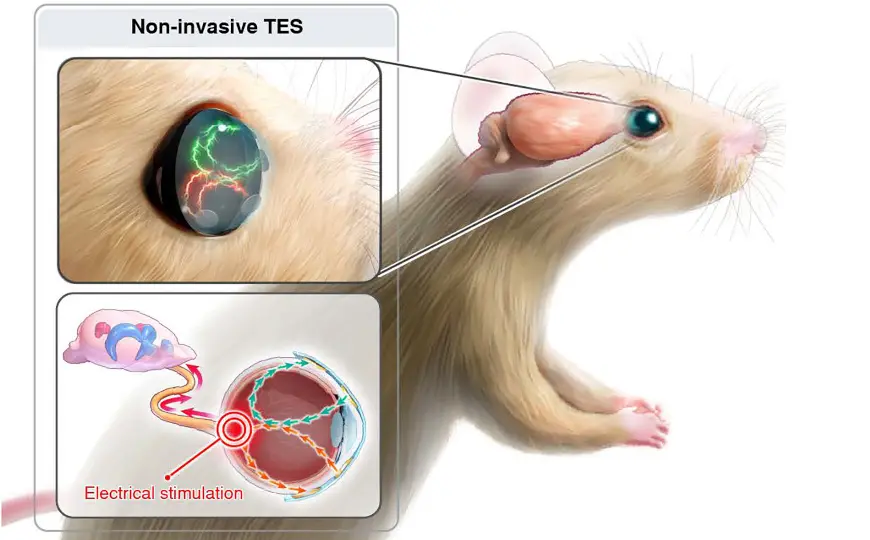
💡A breakthrough in bio-electronic medicine: using smart wearables to treat mental health via retinal stimulation.
⚡ 30-Second TL;DR
What Changed
Smart contact lens stimulates the retina to regulate mood
Why It Matters
This research opens new possibilities for bio-electronic medicine and wearable AI health devices. It demonstrates how hardware-integrated AI can interact directly with biological systems for therapeutic purposes.
What To Do Next
Monitor advancements in bio-electronic interfaces and neural-stimulation hardware for potential integration with future AI health monitoring platforms.
Key Points
- •Smart contact lens stimulates the retina to regulate mood
- •Successful antidepressant effects observed in mouse models
- •Published in Cell Reports Physical Science as a non-invasive medical breakthrough
🧠 Deep Insight
Web-grounded analysis with 17 cited sources.
🔑 Enhanced Key Takeaways
- •The smart contact lens utilizes a novel 'temporal interference' electrical stimulation method, delivering two weak electrical signals (e.g., 2,000 Hz and 2,020 Hz) that converge at the retina to create a low-frequency (20 Hz) therapeutic signal, precisely targeting mood-regulating brain regions without affecting surrounding tissue.
- •The treatment, administered for 30 minutes daily over three weeks in mice, demonstrated antidepressant effects comparable to fluoxetine (Prozac), leading to reduced depressive behaviors, restored connectivity between the hippocampus and prefrontal cortex, decreased inflammation-related substances, a 48% reduction in stress hormone (corticosterone), and a 47% increase in serotonin levels.
- •This research marks the first instance of smart contact lenses being used to actively treat a brain disorder, moving beyond their traditional applications in monitoring ocular conditions like intraocular pressure or glucose levels.
📊 Competitor Analysis▸ Show
While direct competitors using retinal stimulation via contact lenses for depression are not yet established, this technology can be compared to existing and emerging depression treatments:
| Feature/Aspect | Yonsei Smart Contact Lens (Retinal Stimulation) | Fluoxetine (Prozac) / Antidepressant Drugs | Transcranial Magnetic Stimulation (TMS) | Electroconvulsive Therapy (ECT) | Photobiomodulation (PBM) / Light Therapy |
|---|---|---|---|---|---|
| Invasiveness | Non-invasive (wearable contact lens) | Non-invasive (oral medication) | Non-invasive (magnetic coil on scalp) | Invasive (requires anesthesia) | Non-invasive (light exposure) |
| Mechanism | Targeted electrical stimulation of retina via temporal interference, activating mood-related brain circuits. | Modulates neurotransmitters (e.g., serotonin) in the brain. | Uses magnetic fields to induce electrical currents, stimulating specific brain regions (e.g., DLPFC). | Induces controlled seizures in the brain. | Uses light (visible/NIR) to increase energy metabolism in brain cells. |
| Drug-Free | Yes | No | Yes | Yes | Yes |
| Targeting | Precise targeting deep in the retina via signal intersection. | Systemic | Targeted to specific brain regions (e.g., dorsolateral prefrontal cortex). | Broad brain stimulation | Broad brain regions (transcranial). |
| Side Effects | Not fully evaluated in humans; mouse study showed positive biological changes. | Nausea, weight gain, sleepiness, sexual dysfunction. | Mild headaches, scalp discomfort. | Memory loss, confusion, headaches, nausea. | Few potential side effects; eye sensitivity to light in some cases. |
| Treatment Duration (Typical) | 30 mins/day for 3 weeks (mice) | Weeks to months for effects. | 6 weeks or more (standard TMS); 5 days (accelerated TMS). | Multiple sessions over several weeks. | 30 mins/day (light box). |
| Current Status | Preclinical (mouse models) | Widely available, FDA approved | Widely available, FDA approved. | Widely available, FDA approved. | Emerging, some studies show effectiveness. |
🛠️ Technical Deep Dive
- Stimulation Method: Temporal interference-based transcorneal electrical stimulation (TI-TES).
- Electrodes: Ultrathin layers of gallium oxide (for transparency and flexibility) and platinum (for enhanced electrical conductivity).
- Signal Delivery: Two high-frequency electrical signals (e.g., 2,000 Hz and 2,020 Hz) are delivered simultaneously.
- Targeted Stimulation: The two signals intersect precisely at the retina, generating a low-frequency envelope wave (e.g., 20 Hz) that activates retinal ganglion cells (RGCs) and intrinsically photosensitive RGCs (ipRGCs).
- Neural Pathway: The stimulation travels along retinofugal pathways to mood-regulating brain regions, including the hippocampus (HPC) and prefrontal cortex (PFC).
- Lens Characteristics: Soft, transparent, and flexible.
- Experimental Protocol (Mice): 30 minutes of stimulation per day for three weeks.
- Observed Biomarkers: Reduced inflammation-related substances in the brain, 48% decrease in blood corticosterone, 47% increase in serotonin.
🔮 Future ImplicationsAI analysis grounded in cited sources
⏳ Timeline
📎 Sources (17)
Factual claims are grounded in the sources below. Forward-looking analysis is AI-generated interpretation.
Weekly AI Recap
Read this week's curated digest of top AI events →
👉Related Updates

AI-curated news aggregator. All content rights belong to original publishers.
Original source: cnBeta (Full RSS) ↗