Small Chinese Towns Powering 2026 World Cup

💡Insights into global supply chain dynamics that underpin large-scale hardware and infrastructure projects.
⚡ 30-Second TL;DR
What Changed
Specialized industrial clusters in small Chinese towns drive global supply
Why It Matters
Understanding the resilience and scale of Chinese manufacturing clusters is vital for global hardware procurement and logistics planning.
What To Do Next
Analyze your hardware supply chain dependencies to ensure resilience against regional manufacturing shifts.
Key Points
- •Specialized industrial clusters in small Chinese towns drive global supply
- •High efficiency and scale make Chinese manufacturing indispensable for major events
- •Supply chain integration remains a competitive advantage
🧠 Deep Insight
AI-generated analysis for this event — not the original article.
🔑 Enhanced Key Takeaways
- •Yiwu, often called the 'World's Supermarket,' is the primary hub for 2026 World Cup merchandise, producing over 70% of global tournament-related souvenirs including flags, jerseys, and whistles.
- •Specialized manufacturing clusters in towns like Jinjiang have pivoted to high-tech 'smart' sportswear, integrating moisture-wicking fabrics and RFID tracking chips for official match-day apparel.
- •The 2026 World Cup supply chain utilizes the 'Yiwu-Xinjiang-Europe' railway, which has reduced logistics transit times by 40% compared to traditional maritime shipping routes.
- •Local governments in these industrial clusters have implemented 'Digital Factory' subsidies, allowing small-to-medium enterprises to automate production lines specifically for short-cycle, high-volume event orders.
- •Cross-border e-commerce platforms have integrated directly with these town-level factories, enabling real-time inventory synchronization for global retailers during the tournament.
🛠️ Technical Deep Dive
- Implementation of Industrial Internet of Things (IIoT) sensors across production lines to monitor real-time output and quality control for mass-customized merchandise.
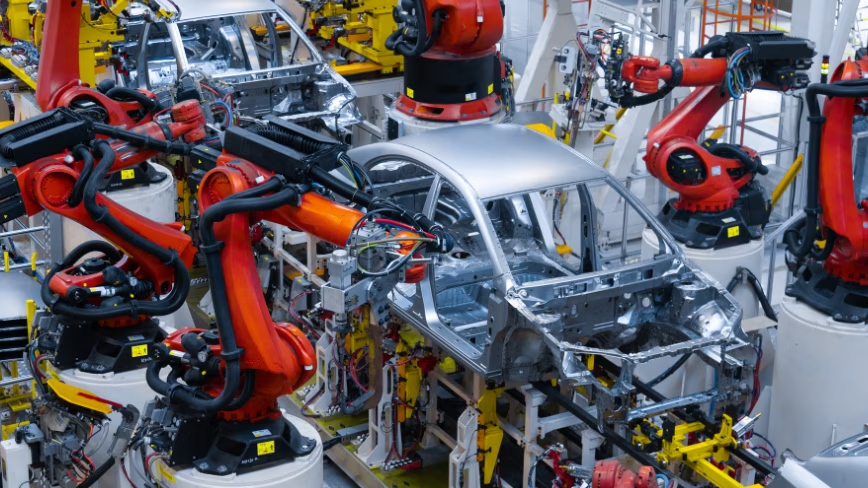
- Utilization of automated cutting and sewing robotics that allow for rapid design changes based on team qualification status.
- Integration of blockchain-based supply chain transparency tools to verify the authenticity of licensed World Cup products from the factory floor to the point of sale.
- Adoption of AI-driven demand forecasting models that analyze social media trends to adjust production volumes for specific national team merchandise in real-time.
🔮 Future ImplicationsAI analysis grounded in cited sources
⏳ Timeline
Weekly AI Recap
Read this week's curated digest of top AI events →
👉Related Updates

AI-curated news aggregator. All content rights belong to original publishers.
Original source: 钛媒体 ↗
This is a summary, not the original. Read the source, or get the weekly briefing.
Weekly AI briefing
One email a week. Unsubscribe anytime.