Slimmer Apple Vision Pro Expected in 2028-2029
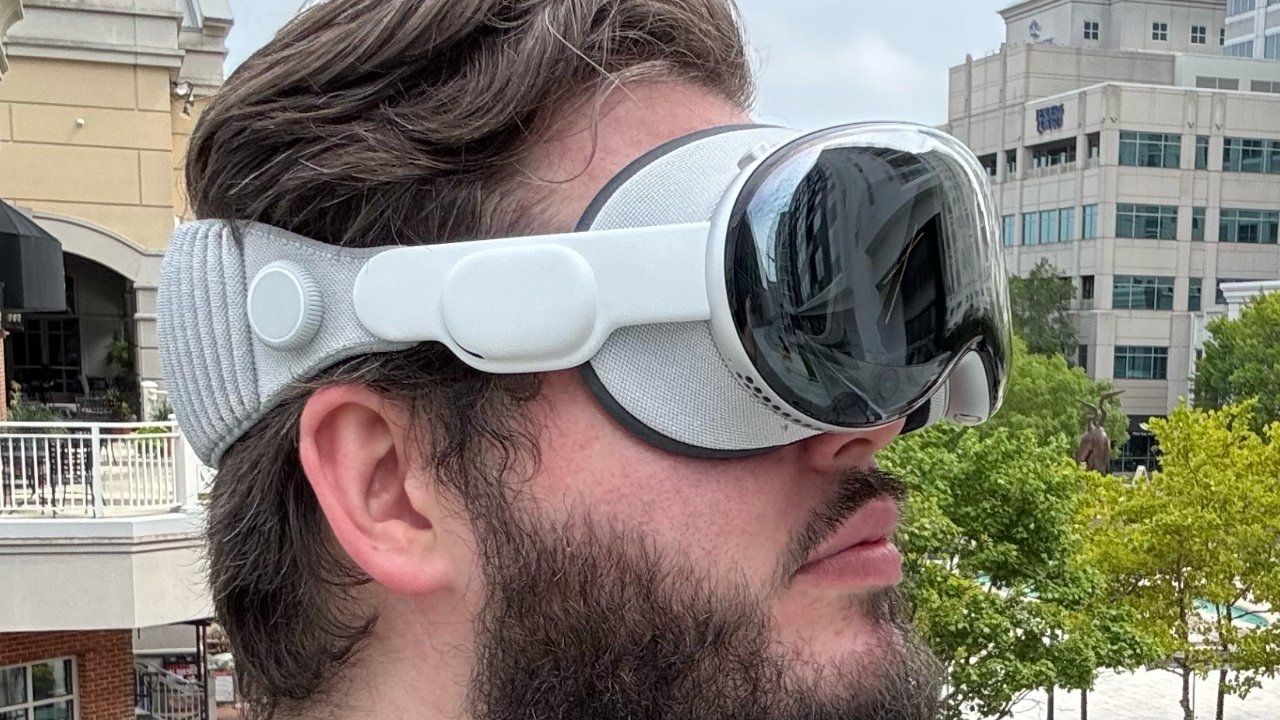
💡Understand the long-term hardware trajectory for spatial computing and Apple's vision for future wearable AI.
⚡ 30-Second TL;DR
What Changed
Apple is working on a 'slimmer' and more cost-effective Vision Pro.
Why It Matters
The delay suggests significant hardware engineering challenges in miniaturizing spatial computing components while maintaining high-performance AI processing.
What To Do Next
Optimize your spatial computing apps for current visionOS constraints, as hardware improvements are still several years away.
Key Points
- •Apple is working on a 'slimmer' and more cost-effective Vision Pro.
- •The project is being developed alongside Apple's smart glasses initiative.
- •Expected launch timeline is pushed to 2028 or 2029.
🧠 Deep Insight
Background and context from public sources — not the original article. 24 sources cited.
🔑 Enhanced Key Takeaways
- •The current Apple Vision Pro's substantial weight (600-650g for the M2 headset, 750-800g for the M5 headset, plus a 353g external battery) and premium price ($3,499+) are primary motivators for developing a lighter, more cost-effective successor.
- •The rumored 'Vision Air' model is projected to be over 40% lighter (under 400g) and more than 50% cheaper (under $1,750) than the current Vision Pro, potentially utilizing a flagship iPhone processor instead of the M-series chips to achieve these reductions.
- •Apple's smart glasses project, internally codenamed N50, has become a significant focus, with a launch anticipated in late 2027, emphasizing AI capabilities, voice interaction, and deep integration with the iPhone ecosystem, with future plans to evolve into a health device and incorporate augmented reality.
- •Despite earlier reports suggesting the 'Vision Air' development was 'on ice' or 'shelved' in favor of smart glasses, recent information indicates Apple is reallocating resources to its development, signaling a renewed commitment to a more consumer-focused mixed-reality headset.
- •Apple's comprehensive AR/VR roadmap reportedly includes at least seven distinct head-mounted devices, comprising three Vision series products and four smart glasses variants, underscoring a long-term strategic vision for spatial computing as the next major trend in consumer electronics.
📊 Competitor Analysis▸ Show
| Feature / Product | Apple Vision Pro (M5) | Meta Quest 3 | Samsung Galaxy XR |
|---|---|---|---|
| Price | $3,499+ | $499 (128GB), $649.99 (512GB) | $1,799.99 |
| Display Resolution | 23 million pixels (approx. 3660x3200 per eye) | 9 million pixels (2064x2208 per eye) | Dual 4K micro-OLED (27+ million pixels total) |
| Headset Weight | 750-800g (excluding 353g external battery) | 515g | ~545g (excluding external battery) |
| Processor | Apple M5 + R1 | Qualcomm Snapdragon XR2 Gen 2 | Qualcomm Snapdragon XR2+ Gen 2 |
| Control | Hand gestures, eye movements, Siri voice commands | Touch controllers, hand tracking | Eye-tracking, hand-tracking, voice commands, gesture support |
| Battery Life | Up to 2.5-3 hours (external battery) | Around 2.2 hours (internal battery) | ~2.5 hours (external battery) |
🛠️ Technical Deep Dive
- Current Apple Vision Pro (M5 variant):
- Processors: Apple M5 chip (with more CPU cores, improved GPU, and 16-core Neural Engine) and a dedicated R1 coprocessor for real-time sensor processing.
- Display: Dual micro-OLED 3D display system with 23 million pixels (approximately 3660x3200 pixels per eye), 7.5-micron pixel pitch, 92% DCI-P3 color gamut, and supported refresh rates of 90Hz, 96Hz, 100Hz, and up to 120Hz.
- Cameras & Sensors: Stereoscopic 3D main camera system (6.5 stereo megapixels, 18mm, ƒ/2.00 aperture), two high-resolution main cameras, six world-facing tracking cameras, four eye-tracking cameras, TrueDepth camera, LiDAR scanner, four inertial measurement units (IMUs), flicker sensor, and ambient light sensor.
- Audio: Dual driver 'audio pods' with Spatial Audio and dynamic head tracking, personalized Spatial Audio, audio ray tracing, and a six-mic array with directional beamforming.
- Authentication: Optic ID (iris-based biometric authentication) with data encrypted and accessible only to the Secure Enclave processor.
- Connectivity: Wi-Fi 6 (802.11ax) and Bluetooth 5.3.
- Weight & Design: Headset weighs 750-800g (M5 variant), with a separate 353g external battery pack connected via a proprietary locking connector. Features an aluminum and glass design.
- Rumored 'Vision Air' (slimmer/cheaper version):
- Weight Reduction: Expected to be over 40% lighter (under 400g) by utilizing fewer sensors, more plastic, less glass, and magnesium alloy instead of titanium alloy.
- Processor: May be powered by a flagship iPhone processor rather than an M-series chip to reduce cost and potentially weight.
🔮 Future ImplicationsAI analysis grounded in cited sources
⏳ Timeline
📎 Sources (24)
Factual claims are grounded in the sources below. Forward-looking analysis is AI-generated interpretation.
- everymac.com
- bechtle.com
- wikipedia.org
- mashable.com
- roadtovr.com
- cnet.com
- 9to5mac.com
- notebookcheck.net
- macrumors.com
- thurrott.com
- appleinsider.com
- macrumors.com
- notebookcheck.net
- medium.com
- craft.me
- markellisreviews.com
- samsung.com
- framesixty.com
- androidcentral.com
- qualcomm.com
- uctoday.com
- apple.com
- apple.com
- designlife-cycle.com
Weekly AI Recap
Read this week's curated digest of top AI events →
👉Related Updates
AI-curated news aggregator. All content rights belong to original publishers.
Original source: cnBeta (Full RSS) ↗
This is a summary, not the original. Read the source, or get the weekly briefing.
The weekly digest
One email a week. Unsubscribe anytime.