Slack Becomes the New IDE for Simple Agents
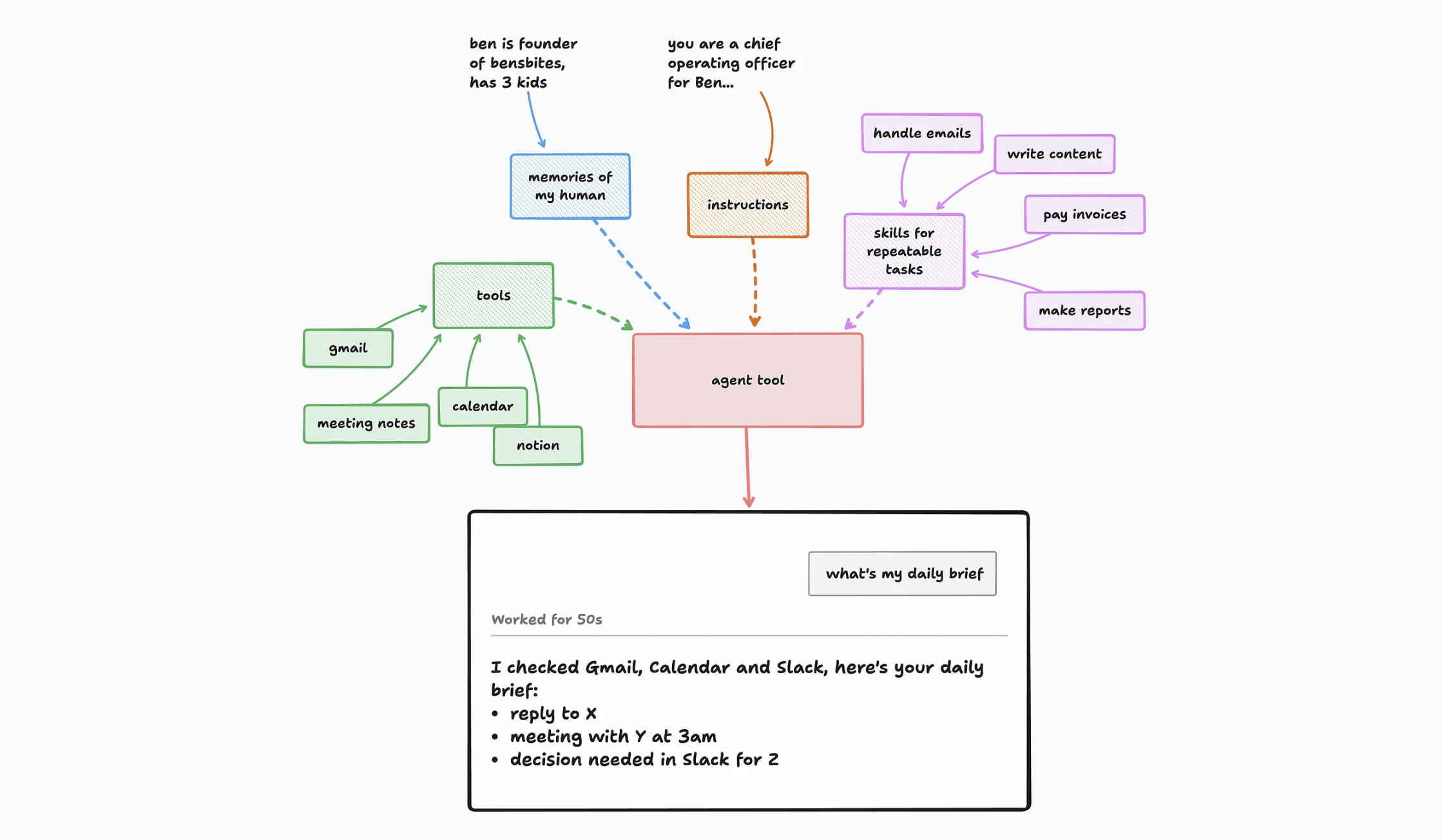
💡Explore why Slack may become the working interface for lightweight AI agents.
⚡ 30-Second TL;DR
What Changed
The central subject is the concept of Simple agents.
Why It Matters
If this direction gains traction, Slack could become a primary interface for creating, coordinating, and monitoring lightweight AI agents. Builders may need to think beyond traditional code editors when designing agent workflows.
What To Do Next
Prototype one Slack-based agent workflow using Slack app commands and a model API, then measure whether it reduces context switching compared with a conventional IDE.
Key Points
- •The central subject is the concept of Simple agents.
- •Slack is characterized as the new IDE for working with these agents.
- •The article provides a high-level perspective without naming APIs, models, or technical implementation details.
🧠 Deep Insight
Background and context from public sources — not the original article. 18 sources cited.
🔑 Enhanced Key Takeaways
- •Slack is actively positioning itself as a 'WorkOS' for the AI era, aiming to integrate AI, agents, applications, data, and human collaboration within a unified conversational interface.
- •The platform offers a streamlined developer experience, including the Slack CLI and Bolt framework, designed to enable rapid deployment of AI agents, with some agents capable of being operational in under 15 minutes.
- •Slack has introduced new technical primitives such as the Real-Time Search (RTS) API and the Model Context Protocol (MCP) server to provide secure, context-aware access to conversational data for AI agents, moving beyond generic responses.
- •AI agents, in the context of Slack, are defined as autonomous, goal-oriented AI applications that can reason, utilize tools, and maintain context across conversations to perform multi-step tasks without constant human intervention.
- •Slack's Agentforce, powered by Salesforce, allows for the integration of customizable AI agents that leverage both Slack conversation data and Salesforce CRM data, offering pre-built templates for various departmental use cases.
- •New features like 'Thinking Steps' and streaming APIs enable AI agents within Slack to display their real-time reasoning process, including tool calls and task execution, enhancing transparency and user trust.
📊 Competitor Analysis▸ Show
While the article focuses on Slack, the broader market for AI agent development and integration within collaboration platforms includes several players. Competitors offer varying degrees of integration, data access, and agent orchestration capabilities.
| Feature/Platform | Slack (Native/Agentforce) | Composio | Relevance AI | Dust | Google Agentspace (Gemini Enterprise) |
|---|---|---|---|---|---|
| Core Integration | Native channels, DMs, threads, Block Kit | Slack, GitHub, Notion, Jira | Slack channels/DMs | Slack, Notion, GitHub, Google Drive, Salesforce, Zendesk | Slack (RTS API), other productivity tools |
| Agent Orchestration | Agentforce for custom agents, Workflow Builder | First-class support for LangChain, CrewAI, OpenAI, Autogen | Multi-agent orchestration, agent hand-offs, human-in-the-loop | Multiplayer AI platform for shared context | Single, secure platform to build, manage, adopt agents at scale |
| Data Sources | Slack conversational data, Salesforce CRM data, enterprise search | Enterprise tools via pre-built connectors | Model-agnostic (OpenAI, Anthropic, Google, Meta), BYO API key | Live knowledge base from various external tools | Live workspace data, organizational knowledge |
| Developer Tools | Slack CLI, Bolt frameworks, Slack Agent Kit, RTS API, MCP server | Open-source, AI-native connectors, managed OAuth | Marketplace of 400+ pre-built templates | Quick setup, plain language instructions | Integrated with Gemini Enterprise |
| Transparency | Thinking Steps, streaming APIs for reasoning | Not explicitly detailed in search results | Real-time status updates, threaded conversations | Not explicitly detailed in search results | Not explicitly detailed in search results |
| Pricing | AI features pricing not published; custom agent dev requires platform/APIs investment | Not published | Paid plans with BYO API key | Not published | Part of Gemini Enterprise |
| Security | Enterprise-grade, granular AI exclusion controls, real-time permission sync, audit logging, Einstein Trust Layer | Not explicitly detailed in search results | Not explicitly detailed in search results | Not explicitly detailed in search results | Secure platform |
| Use Cases | HR, IT, customer service, sales, marketing, legal, product & engineering, supply chain management | Posting messages, searching channels, reacting to messages, managing channels, triggering workflows | Trigger agents/workforces, multi-agent orchestration | Engineering (code examples, docs, troubleshooting), support, sales | Accessing/analyzing live workspace data for insights |
🛠️ Technical Deep Dive
- Slack Platform Evolution: Slack has evolved from an initial LAMP stack (Linux, Apache, MySQL, PHP) to a more modular architecture leveraging Amazon Web Services (AWS) for scalability and reliability.
- Developer Toolkit: The platform provides a comprehensive developer toolkit including the Slack CLI for lifecycle management and the Bolt framework (available in JavaScript, Java, Python) for building interactive Slack applications and agents.
- Context Management APIs: To enable context-aware AI agents, Slack has introduced:
- Real-Time Search (RTS) API: Allows AI apps real-time, secure access to conversational data (discussions, files, channels) within Slack, respecting existing permissions without bulk data download.
- Model Context Protocol (MCP) Server: An open standard that provides AI with a consistent and secure way to discover and utilize external tools and data. Slack offers both an MCP Client (Slackbot) to connect remote MCP servers to Slack and an MCP Server to allow AI apps to perform Slack actions through MCP-compatible clients like Cursor and Claude.
- Agent Interaction Surfaces: Slack offers dedicated surfaces for agents, including a split-view container, top navigation entry points, app threads, text streaming, and suggested prompts.
- UI/UX for Agents: The Block Kit is used to build rich, interactive user interfaces for agent responses, moving beyond plain text to structured elements like cards and data tables.
- Transparency Features: "Thinking Steps" is a new set of Block Kit elements and streaming APIs that allows Slack apps to surface an AI agent's reasoning process, tool calls, and task execution live within the conversation, supporting both 'Plan' and 'Timeline' display modes.
- Agent Kit: A collection of enhanced Bolt frameworks and new CLI commands designed to help developers integrate agents built using any platform or framework into Slack, simplifying complex chat setup.
🔮 Future ImplicationsAI analysis grounded in cited sources
⏳ Timeline
📎 Sources (18)
Factual claims are grounded in the sources below. Forward-looking analysis is AI-generated interpretation.
Weekly AI Recap
Read this week's curated digest of top AI events →
👉Related Updates

AI-curated news aggregator. All content rights belong to original publishers.
Original source: Ben's Bites ↗
This is a summary, not the original. Read the source, or get the weekly briefing.
Weekly AI briefing
One email a week. Unsubscribe anytime.