SK Hynix considers bond investment amid HBM price cooling
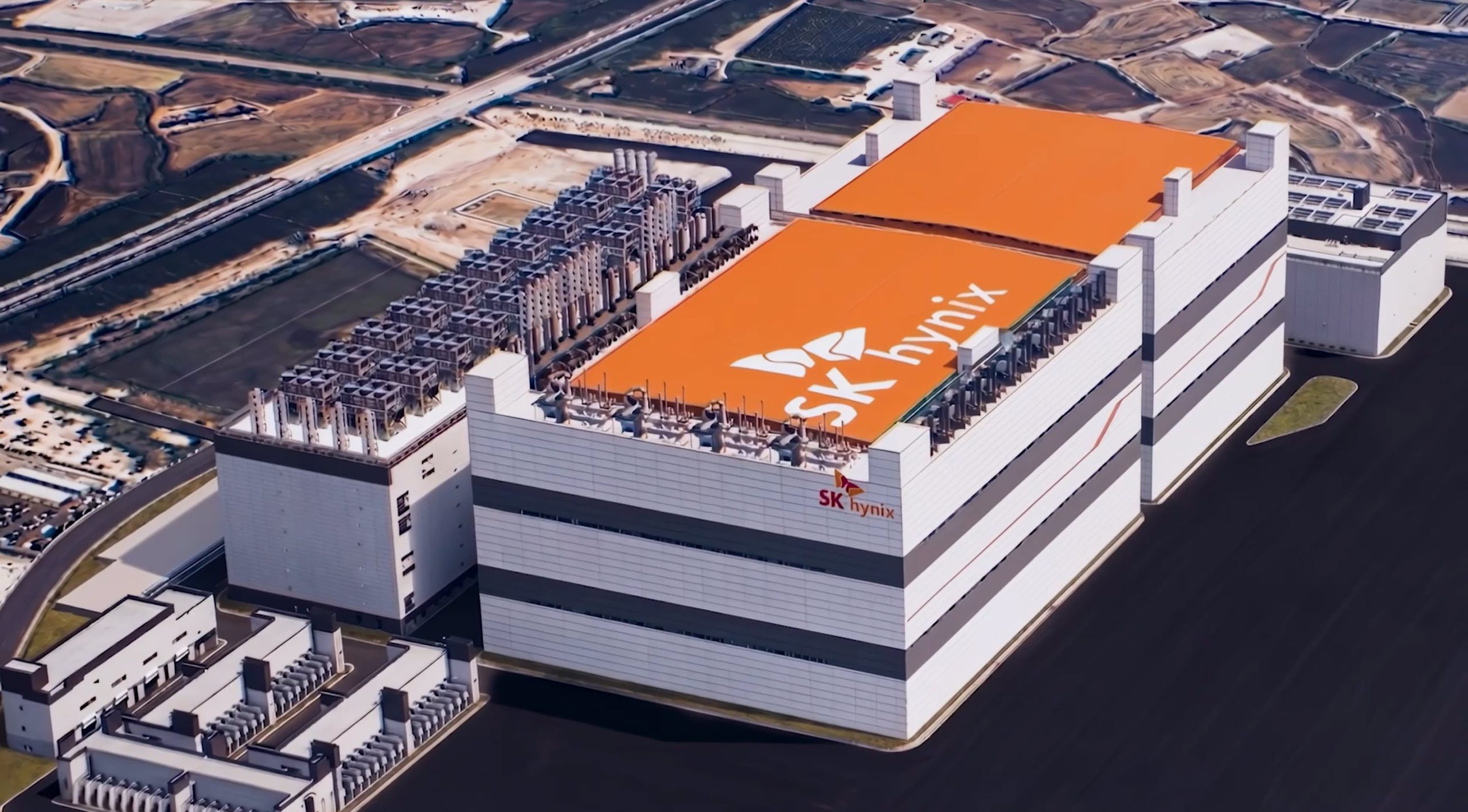
💡HBM price stabilization could significantly lower the cost of building large-scale AI infrastructure.
⚡ 30-Second TL;DR
What Changed
SK Hynix is shifting capital strategy due to HBM market cooling
Why It Matters
A cooling HBM market could lower hardware costs for AI infrastructure providers. This shift may influence future procurement strategies for large-scale GPU clusters.
What To Do Next
Monitor HBM supply chain pricing trends to adjust your budget for upcoming GPU cluster expansion projects.
Key Points
- •SK Hynix is shifting capital strategy due to HBM market cooling
- •Company considering investment in South Korean government bonds
- •Signals potential plateau in the aggressive HBM price rally
🧠 Deep Insight
AI-generated analysis for this event — not the original article.
🔑 Enhanced Key Takeaways
- •SK Hynix's treasury management strategy is pivoting toward short-term liquidity instruments like government bonds to mitigate risks associated with the cyclical nature of the semiconductor industry.
- •The HBM market, which saw explosive growth through 2024 and 2025 due to AI infrastructure demand, is experiencing a supply-demand rebalancing as competitors increase production capacity.
- •Analysts note that while HBM demand remains robust, the 'super-cycle' premium pricing is normalizing as yield rates for HBM3E and next-generation HBM4 products improve across the industry.
- •SK Hynix is maintaining its aggressive R&D expenditure despite the cooling price environment, prioritizing the development of 16-high HBM4 stacks to maintain its technological lead over Samsung and Micron.
- •The shift into government bonds reflects a broader trend among South Korean conglomerates to bolster cash reserves in anticipation of potential macroeconomic volatility and high interest rate environments in 2026.
📊 Competitor Analysis▸ Show
| Feature | SK Hynix | Samsung Electronics | Micron Technology |
|---|---|---|---|
| HBM Market Position | Current Market Leader | Aggressive Capacity Expansion | Niche/Specialized Focus |
| Primary HBM Product | HBM3E (12-high) | HBM3E (8/12-high) | HBM3E (8/12-high) |
| Pricing Strategy | Premium/Market-Setting | Competitive/Volume-Driven | Value/Performance-Oriented |
| R&D Focus | HBM4/4E (Logic Die) | HBM4 (Custom Foundry) | HBM3E/HBM4 (Cost Efficiency) |
🛠️ Technical Deep Dive
- HBM4 Architecture: Transitioning to a 2048-bit wide interface compared to the 1024-bit interface in HBM3E, significantly increasing bandwidth per stack.
- Logic Die Integration: SK Hynix is moving toward utilizing advanced logic process nodes (likely 12nm or 7nm class) for the base die in HBM4 to improve power efficiency and thermal management.
- Thermal Management: Implementation of advanced thermal compression bonding (TCB) techniques to manage heat dissipation in 16-high stacked configurations.
- Through-Silicon Via (TSV) Scaling: Enhanced density of TSV connections to support higher pin counts required for next-generation AI accelerators.
🔮 Future ImplicationsAI analysis grounded in cited sources
⏳ Timeline
Weekly AI Recap
Read this week's curated digest of top AI events →
👉Related Updates
AI-curated news aggregator. All content rights belong to original publishers.
Original source: cnBeta (Full RSS) ↗
This is a summary, not the original. Read the source, or get the weekly briefing.
The weekly digest
One email a week. Unsubscribe anytime.