Siri Finally Gains Personal Context
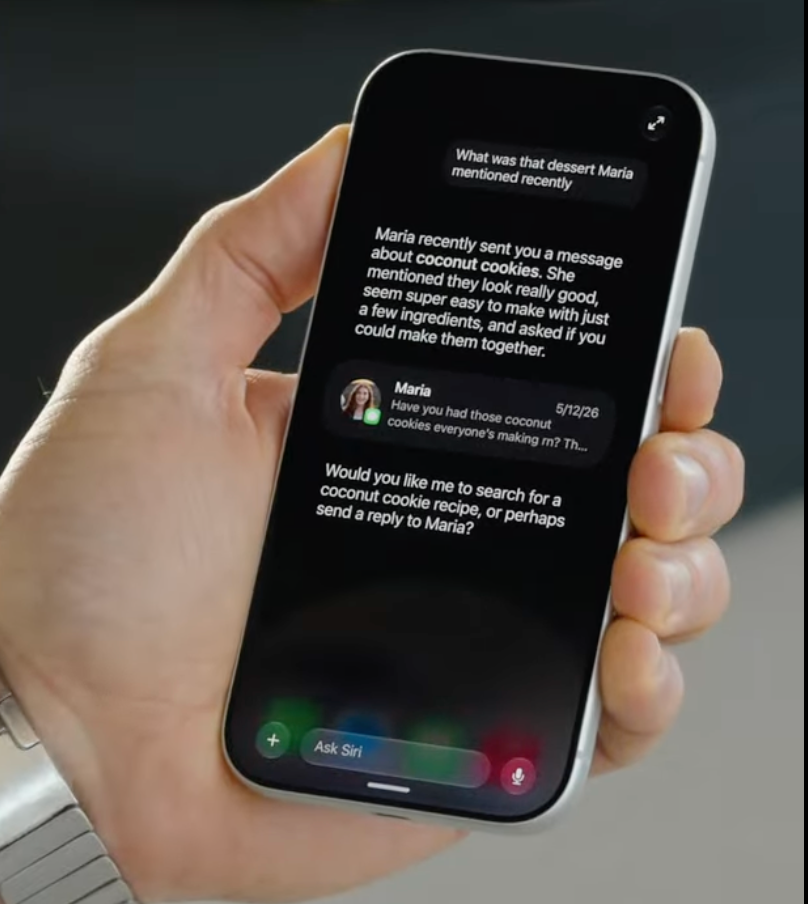
Siri finally adds personal context and iPhone data retrieval—capabilities relevant to context-aware assistant builders.
30-Second TL;DR
What Changed
The upgraded Siri is available in the iOS 27 consumer beta.
Why It Matters
The update closes a major capability gap for Apple’s assistant and could make Siri more useful for context-aware workflows. However, the article suggests the upgrade may feel less transformative than expected despite delivering long-promised functionality.
What To Do Next
Install the iOS 27 beta on a test device and evaluate Siri’s personal-context retrieval for privacy, accuracy, latency, and failure cases before recommending it to users.
Key Points
- •The upgraded Siri is available in the iOS 27 consumer beta.
- •It can interpret a user’s personal context and retrieve relevant iPhone data.
- •Siri can combine personal information access with a broad global knowledge base.
Deep Insight
AI-generated analysis for this event — not the original article.
Enhanced Key Takeaways
- •The iOS 27 update integrates Apple's 'Private Cloud Compute' architecture, ensuring that personal context processing occurs on-device or within secure, verifiable server-side enclaves.
- •Siri's new contextual engine utilizes a hybrid model approach, combining a lightweight on-device transformer for latency-sensitive tasks with a larger, cloud-based LLM for complex reasoning.
- •Apple has introduced 'App Intents' 3.0, which allows third-party developers to expose granular data structures to Siri, enabling the assistant to perform cross-app actions without requiring the user to open specific applications.
- •The update includes a new 'Personal Knowledge Graph' that dynamically indexes user data—such as emails, messages, and calendar events—to reduce hallucinations when answering queries about personal history.
- •Privacy controls have been expanded to include a 'Contextual Transparency' dashboard, allowing users to see exactly which data sources Siri accessed to formulate a specific response.
Competitor Analysis
- Apple Siri (iOS 27)
- Deep OS-level integration
- Google Gemini (Android)
- Cloud-centric indexing
- OpenAI ChatGPT (Advanced Voice)
- Limited to memory/files
- Apple Siri (iOS 27)
- Private Cloud Compute
- Google Gemini (Android)
- Cloud-based processing
- OpenAI ChatGPT (Advanced Voice)
- Cloud-based processing
- Apple Siri (iOS 27)
- High (via App Intents)
- Google Gemini (Android)
- Moderate (via App Actions)
- OpenAI ChatGPT (Advanced Voice)
- Low (API dependent)
- Apple Siri (iOS 27)
- Included in iOS
- Google Gemini (Android)
- Free / Gemini Advanced
- OpenAI ChatGPT (Advanced Voice)
- Free / Plus Subscription
| Feature | Apple Siri (iOS 27) | Google Gemini (Android) | OpenAI ChatGPT (Advanced Voice) |
|---|---|---|---|
| Personal Context | Deep OS-level integration | Cloud-centric indexing | Limited to memory/files |
| Privacy Architecture | Private Cloud Compute | Cloud-based processing | Cloud-based processing |
| Cross-App Control | High (via App Intents) | Moderate (via App Actions) | Low (API dependent) |
| Pricing | Included in iOS | Free / Gemini Advanced | Free / Plus Subscription |
Technical Deep Dive
- Architecture: Utilizes a tiered model strategy where a 3B parameter model handles on-device intent recognition and a 70B+ parameter model handles complex reasoning in Private Cloud Compute.
- Data Handling: Implements differential privacy for all cloud-based queries to prevent individual user identification.
- Latency: On-device processing targets sub-200ms response times for basic commands, while cloud-based reasoning utilizes speculative decoding to accelerate token generation.
- Integration: Leverages a new vector database embedded within the iOS file system to enable semantic search across local user data.
Future ImplicationsAI analysis grounded in cited sources
Timeline
- 2024-06Apple Intelligence announced at WWDC, introducing the foundation for LLM-based Siri.
- 2025-09iOS 26 release focuses on foundational on-device AI performance improvements.
- 2026-07iOS 27 consumer beta launches, featuring the upgraded Siri with personal context capabilities.
Weekly AI Recap
Read this week's curated digest of top AI events →
Related Updates


AI-curated news aggregator. All content rights belong to original publishers.
Original source: cnBeta (Full RSS) ↗
This is a summary, not the original. Read the source, or get the weekly briefing.
The weekly digest
One email a week. Unsubscribe anytime.