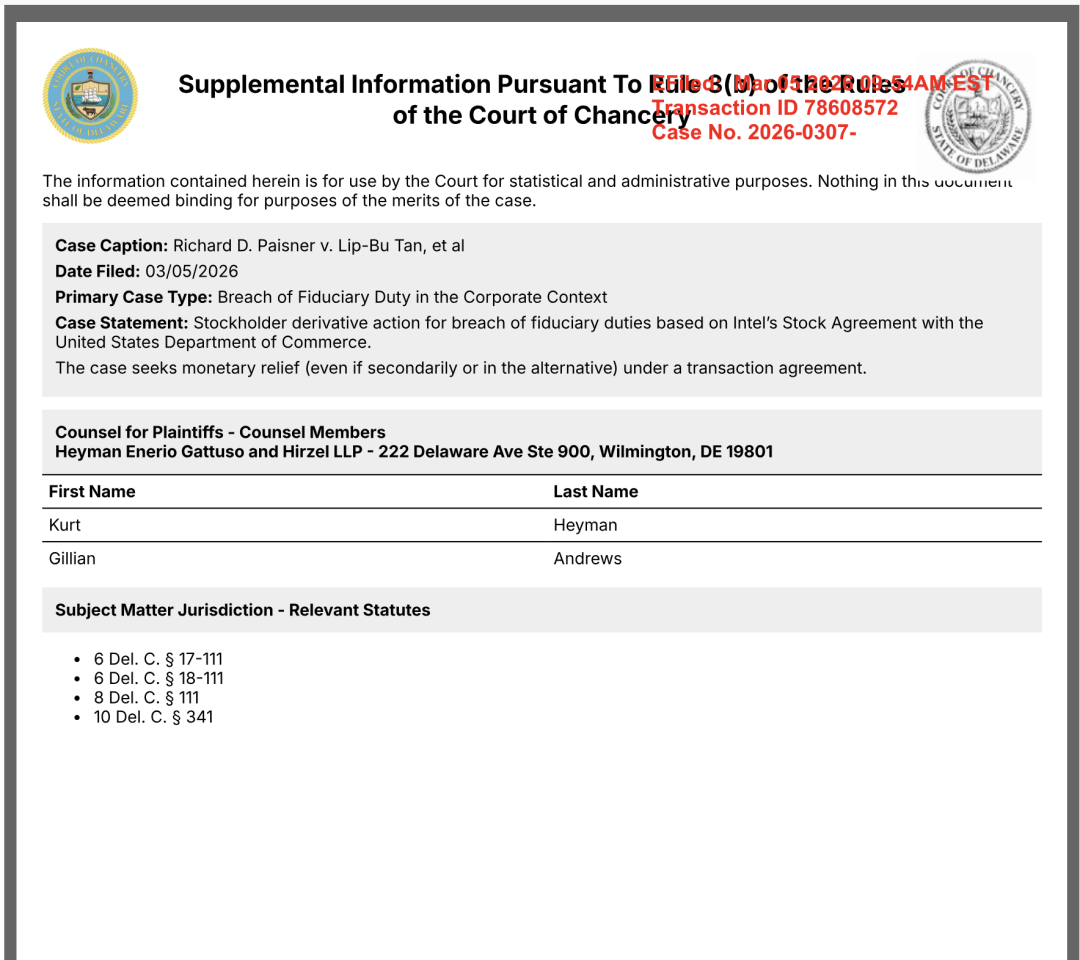
Shareholder Sues Intel CEO Over Gov Stake Deal
💡US gov cheap Intel stake threatens AI chip supply stability
⚡ 30-Second TL;DR
What Changed
Equity sold using owed CHIPS $57B + $32B as 'payment', far below market
Why It Matters
US government stake raises control risks over Intel's AI chip production, potentially distorting supply chains and forcing customer shifts from TSMC, hiking costs for AI firms.
What To Do Next
Assess CHIPS policy shifts in your AI chip supply chain risk model.
Key Points
- •Equity sold using owed CHIPS $57B + $32B as 'payment', far below market
- •Deal removes CHIPS restrictions like no stock buybacks; governance locked
- •Conflicts via advisor ties to Trump admin; impacts chip strategy for AI clients
🧠 Deep Insight
Background and context from public sources — not the original article. 4 sources cited.
🔑 Enhanced Key Takeaways
- •The government's 9.9% stake was acquired at $20.47 per share using $5.7 billion in remaining CHIPS Act grants plus $3.2 billion from the Secure Enclave program, rather than direct cash payment, effectively converting conditional subsidies into equity ownership[2].
- •Intel's prior CHIPS Act obligations regarding fabrication plant construction were substantially discharged under the deal, allowing the company to receive accelerated payments without meeting the full extent of original U.S. manufacturing commitments that the legislation intended to enforce[1].
- •The government holds a five-year warrant to acquire an additional 5% of Intel shares at $20 per share, exercisable only if Intel divests below 51% ownership of its foundry business, creating a contingent control mechanism tied to strategic asset retention[2].
- •A Delaware shareholder lawsuit challenges the equity sale as unfairly entrenching management, suggesting the transaction may face judicial scrutiny regarding fiduciary duty and fair valuation standards[3].
🔮 Future ImplicationsAI analysis grounded in cited sources
⏳ Timeline
📎 Sources (4)
Factual claims are grounded in the sources below. Forward-looking analysis is AI-generated interpretation.
Weekly AI Recap
Read this week's curated digest of top AI events →
👉Related Updates

AI-curated news aggregator. All content rights belong to original publishers.
Original source: 虎嗅 ↗
This is a summary, not the original. Read the source, or get the weekly briefing.
Weekly AI briefing
One email a week. Unsubscribe anytime.