Shanghai clarifies IPO path for AI model developers
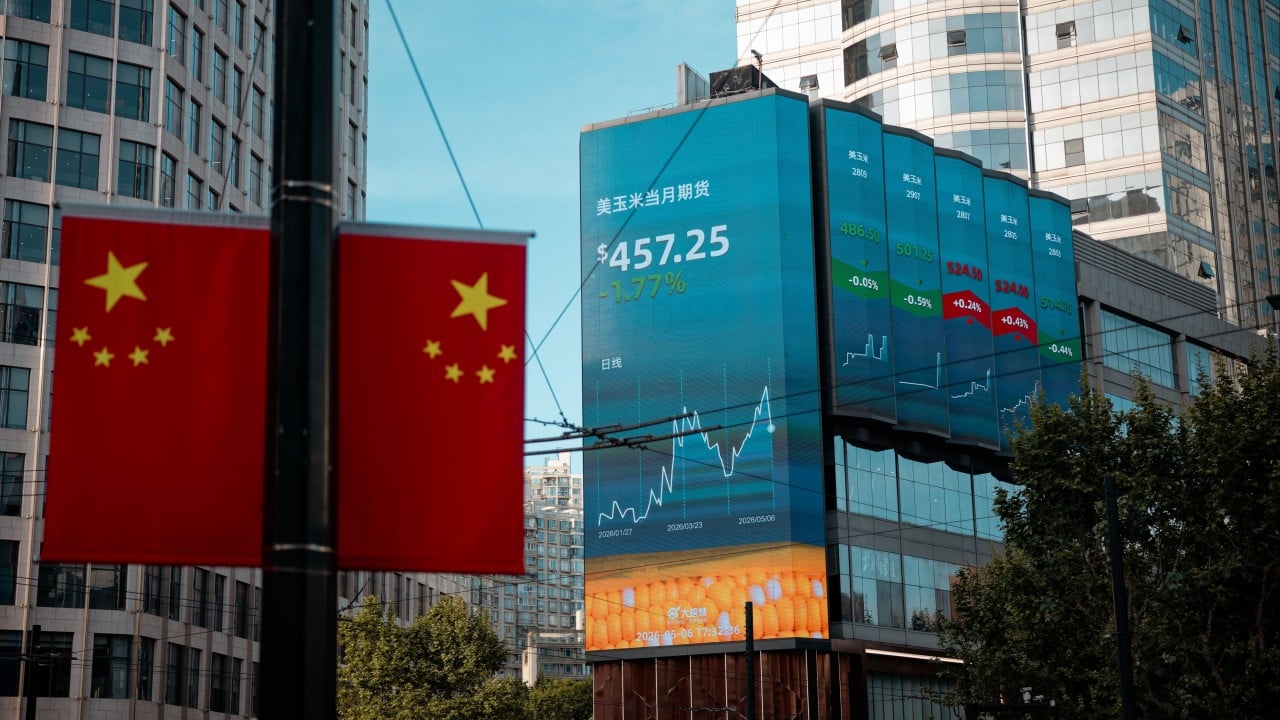
💡New IPO rules for unprofitable AI firms in China could reshape the funding landscape for domestic LLM developers.
⚡ 30-Second TL;DR
What Changed
Star Market listing requires a minimum anticipated market cap of 4 billion yuan (US$591 million).
Why It Matters
This policy shift lowers the barrier to entry for capital-intensive AI startups in China, likely triggering a wave of IPO filings from major domestic LLM players.
What To Do Next
If you are a founder of a Chinese AI startup, review the SSE Star Market listing criteria to determine if your current valuation and growth metrics meet the 4 billion yuan threshold.
Key Points
- •Star Market listing requires a minimum anticipated market cap of 4 billion yuan (US$591 million).
- •New rules specifically accommodate unprofitable AI firms to facilitate capital raising.
- •Regulatory clarity is designed to bolster China's competitive position against US AI labs.
🧠 Deep Insight
Background and context from public sources — not the original article. 28 sources cited.
🔑 Enhanced Key Takeaways
- •The new guidelines are part of a broader strategic initiative by Beijing to channel capital into a range of 'future industries' beyond just AI, including quantum technology, nuclear fusion, robotics, and advanced biotech, aiming for technological self-reliance.
- •The Shanghai Stock Exchange's 'Guidance on the Review of the Fifth Set of Listing Criteria for Large-Scale AI Model Enterprises on the STAR Market' introduces a multi-faceted evaluation framework, assessing corporate value based on technological advancement, demonstrable interim implementation results, compliance credentials, and substantial industry growth prospects, rather than solely on profitability or revenue.
- •This regulatory clarity is designed to attract 'patient capital' into critical 'hard tech' sectors, directly supporting China's goal of high-level self-reliance in science and technology amidst escalating US-China tech competition and export controls.
- •Several prominent Chinese AI firms, such as Zhipu AI and MiniMax, which have already completed initial public offerings in Hong Kong, are actively exploring or pursuing dual listings on the STAR Market to tap into domestic capital.
- •The expansion of the STAR Market's fifth listing standard to include AI model developers signifies a broader application of rules previously tailored primarily for unprofitable biopharmaceutical companies, indicating a strategic shift to accommodate other high-growth, capital-intensive tech sectors.
📊 Competitor Analysis▸ Show
| Feature/Metric | China (STAR Market Focus) | United States (General AI Funding) |
|---|---|---|
| Primary Funding Source | Increasingly government-backed programs and state-directed funds, now expanding public market access for unprofitable firms. | Heavily reliant on private venture capital, hedge funds, and private equity. |
| Market Size (2023 AI Market Value) | ~$60 billion. | ~$87 billion. |
| Total AI Investment (2022) | ~$30 billion (startup funding). | ~$76 billion (startup funding). |
| Government AI Spending | Significant government coordination and state spending (~$15.7 billion in 2025, broadly defined AI-related companies). | US federal government funding for civilian AI likely exceeds Chinese central government funding by several billion USD per year, but total government-led investment including provincial levels may lean in China's favor. |
| Private Funding (Series A) | Lags behind the US, with US companies raising 2.4x more in Series A funding in 2025. | Dominates in private venture capital funding. |
| AI Research Output | Produces more AI papers by volume (41,200 annually in 2025). | Higher citation rates and breakthrough innovation metrics; produces more frontier AI models (40 vs 15 from China in 2025). |
| Talent Migration | Experiences significant talent outflow, with 68% of Chinese AI PhDs relocating to the USA due to salary premiums. | Net gain of top AI researchers due to talent migration. |
| Market Deployment | Leads in implementation scale (e.g., 67% manufacturing AI adoption in 2025). | Dominates enterprise software (e.g., 71% Fortune 500 adoption in 2025). |
| LLM Supremacy (Commercial Market) | Controls a smaller share of the commercial LLM market (e.g., 79.6% MMLU scores in 2025). | Controls 67% of the commercial LLM market with superior benchmark performance (e.g., 84.2% MMLU scores in 2025). |
| AI Capex (2026 Est.) | Chinese cloud service providers estimated ~$105 billion. | Largest US tech companies estimated >$700 billion. |
🔮 Future ImplicationsAI analysis grounded in cited sources
⏳ Timeline
📎 Sources (28)
Factual claims are grounded in the sources below. Forward-looking analysis is AI-generated interpretation.
- scmp.com
- finimize.com
- investing.com
- moomoo.com
- phemex.com
- globaltimes.cn
- thenextweb.com
- techinasia.com
- ainchina.com
- thebambooworks.com
- finimize.com
- sse.com.cn
- patentpc.com
- secondtalent.com
- recordedfuture.com
- medium.com
- scmp.com
- ey.com
- globaltimes.cn
- atlantis-press.com
- csis.org
- worldfinance.com
- lw.com
- startupfortune.com
- newsbytesapp.com
- gate.com
- caixinglobal.com
- binance.com
📰 Event Coverage
Weekly AI Recap
Read this week's curated digest of top AI events →
👉Related Updates



AI-curated news aggregator. All content rights belong to original publishers.
Original source: SCMP Technology ↗
This is a summary, not the original. Read the source, or get the weekly briefing.
Weekly AI briefing
One email a week. Unsubscribe anytime.