Seven Japanese Firms Reveal General-Purpose Robots
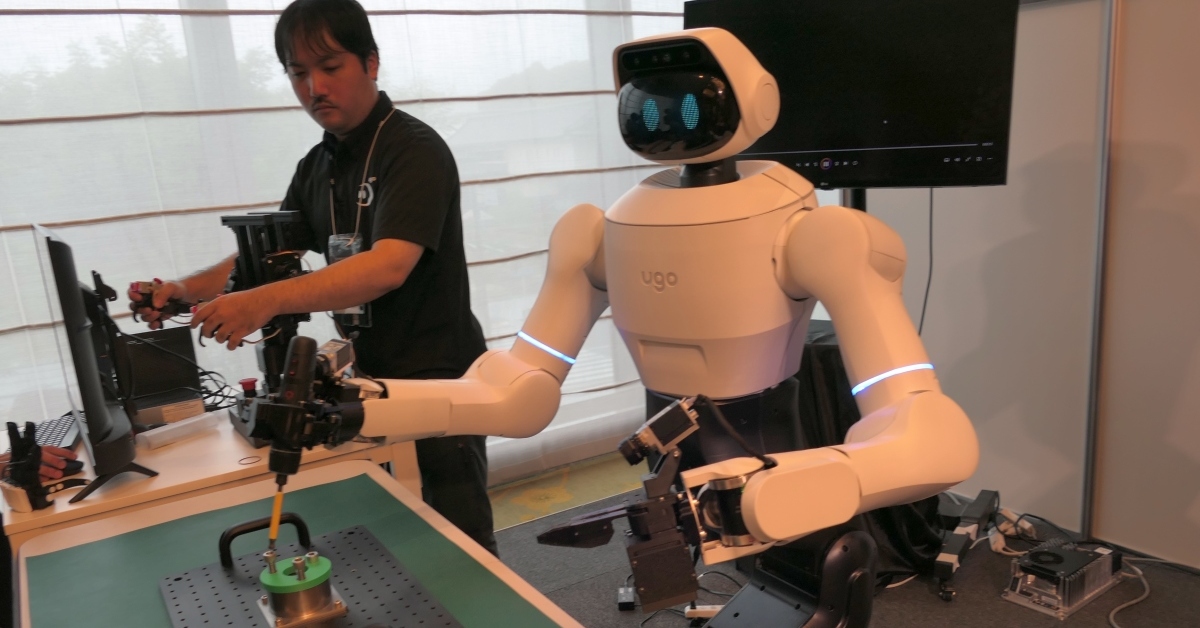
Seven Japanese teams are competing to build the hardware base for physical-AI data.
30-Second TL;DR
What Changed
Seven companies are participating in the domestic general-purpose robot competition.
Why It Matters
More domestic robot platforms could expand the diversity of embodied-AI training data and create alternatives to a small number of leading hardware vendors. The quality and standardization of collected data will determine the program’s practical value.
What To Do Next
Track AIRoA’s competition specifications and prepare a standardized task-and-telemetry schema for future robot-data pilots.
Key Points
- •Seven companies are participating in the domestic general-purpose robot competition.
- •Prototype robots were publicly demonstrated at the Physical AI Summit.
- •The competition is intended to support physical-AI data collection.
Deep Insight
Background and context from public sources — not the original article. 12 sources cited.
Enhanced Key Takeaways
- •AIRoA consolidated its Physical AI hub in Heiwajima, Tokyo, gathering roughly 80,000 hours of teleoperation data across mobile manipulators and dual-arm platforms to train foundation models.
- •Major Japanese robotics leaders Fanuc, Yaskawa Electric, and Kawasaki Heavy Industries allied with Fujitsu and NVIDIA to standardize open Physical AI foundation models across industrial robotics.
- •Domestic implementations are adopting hybrid architectures such as the Forcesteed-LEIVOR controller, which bridges traditional trajectory playback with open Vision-Language-Action (VLA) models like Hugging Face LeRobot.
- •Yaskawa Electric demonstrated edge-agent robotics by pairing its MOTOMAN NEXT platform with Google DeepMind's Gemini Robotics model for autonomous, unprogrammed sorting and pathing.
- •Japanese industry alliances were formed in direct response to foreign competition, notably Chinese high-DOF humanoids like XPeng's IRON and Unitree's platforms, alongside US factory trials by Figure AI and Agility Robotics.
Competitor Analysis
- Japanese Consortium / AIRoA Initiatives
- Hybrid controllers (Forcesteed-LEIVOR) combining VLA models (LeRobot, Gemini) with industrial motion controls
- Chinese Developers (e.g., XPeng, Unitree)
- High-mobility bipedal platforms with custom actuators (XPeng IRON: 76 torso DOFs, 21 hand DOFs)
- US Humanoid Developers (e.g., Figure AI, Agility)
- End-to-end neural network policies and commercial bipedal platforms (e.g., Digit)
- Japanese Consortium / AIRoA Initiatives
- Shared multi-firm data consortiums, SI standardization, and industrial arm/manipulator retrofitting
- Chinese Developers (e.g., XPeng, Unitree)
- Rapid hardware iteration, vertical automotive/consumer integration, aggressive mass-production scaling
- US Humanoid Developers (e.g., Figure AI, Agility)
- Proprietary foundation models, automotive assembly pilots, and commercial logistics automation
- Japanese Consortium / AIRoA Initiatives
- Targeted ¥500B industrial physical AI service ecosystem; living-lab datasets exceeding 80,000 hours
- Chinese Developers (e.g., XPeng, Unitree)
- Active factory assembly pilots (XPeng 2026) targeting commercial market availability by 2027
- US Humanoid Developers (e.g., Figure AI, Agility)
- Commercial pilot deployments in active logistics hubs and automotive plants
| Feature / Attribute | Japanese Consortium / AIRoA Initiatives | Chinese Developers (e.g., XPeng, Unitree) | US Humanoid Developers (e.g., Figure AI, Agility) |
|---|---|---|---|
| Core Architecture | Hybrid controllers (Forcesteed-LEIVOR) combining VLA models (LeRobot, Gemini) with industrial motion controls | High-mobility bipedal platforms with custom actuators (XPeng IRON: 76 torso DOFs, 21 hand DOFs) | End-to-end neural network policies and commercial bipedal platforms (e.g., Digit) |
| Primary Strategy | Shared multi-firm data consortiums, SI standardization, and industrial arm/manipulator retrofitting | Rapid hardware iteration, vertical automotive/consumer integration, aggressive mass-production scaling | Proprietary foundation models, automotive assembly pilots, and commercial logistics automation |
| Commercial Benchmark | Targeted ¥500B industrial physical AI service ecosystem; living-lab datasets exceeding 80,000 hours | Active factory assembly pilots (XPeng 2026) targeting commercial market availability by 2027 | Commercial pilot deployments in active logistics hubs and automotive plants |
Technical Deep Dive
- Data Collection Infrastructure: AIRoA operates an 80,000-hour teleoperation data acquisition pipeline in Tokyo (Heiwajima), using dual-arm platforms and mobile manipulators in living-lab environments to produce multi-modal training sets for physical AI.
- Hybrid VLA Controllers: Deployment of architectures like the Forcesteed-LEIVOR controller, which integrates classic deterministic trajectory execution with open-source Vision-Language-Action foundation models (e.g., Hugging Face LeRobot) for language-guided adaptive actions.
- Edge Multimodal Foundation Models: Integration of Google DeepMind's Gemini Robotics model directly onto Yaskawa's MOTOMAN NEXT industrial platform, translating high-level natural language instructions into real-time trajectory calculation and grasping without waypoint programming.
- Hardware Modifications: Customization of commercial bases (such as GMO's modification of the Unitree G1 platform into "Hitomin") using proprietary thermal management and enhanced motion control to endure continuous high-speed movement.
Future ImplicationsAI analysis grounded in cited sources
Timeline
- 2025-08Seven-firm alliance led by NTT Business Solutions and Kawasaki Heavy Industries launches SI standardization platform
- 2025-10Kyoto Humanoid Association (KyoHA) forms to develop standardized domestic hardware and software specifications
- 2026-05Forcesteed-LEIVOR controller demonstrates hybrid VLA model integration for domestic industrial platforms
- 2026-07Fanuc, Yaskawa, Kawasaki, Fujitsu, and NVIDIA form the open Physical AI alliance
- 2026-08AIRoA expands Heiwajima data center pipeline, logging over 80,000 teleoperation hours
- 2026-09Prototypes from seven domestic manufacturers demonstrated at the Physical AI Summit
Sources (12)
Factual claims are grounded in the sources below. Forward-looking analysis is AI-generated interpretation.
Weekly AI Recap
Read this week's curated digest of top AI events →
AI-curated news aggregator. All content rights belong to original publishers.
Original source: ITmedia AI+ (日本) ↗
This is a summary, not the original. Read the source, or get the weekly briefing.
The weekly digest
One email a week. Unsubscribe anytime.