SETI Confirms 3I/ATLAS is Natural, No Technosignatures Detected
Learn how researchers apply signal processing to distinguish between natural noise and artificial patterns.
30-Second TL;DR
What Changed
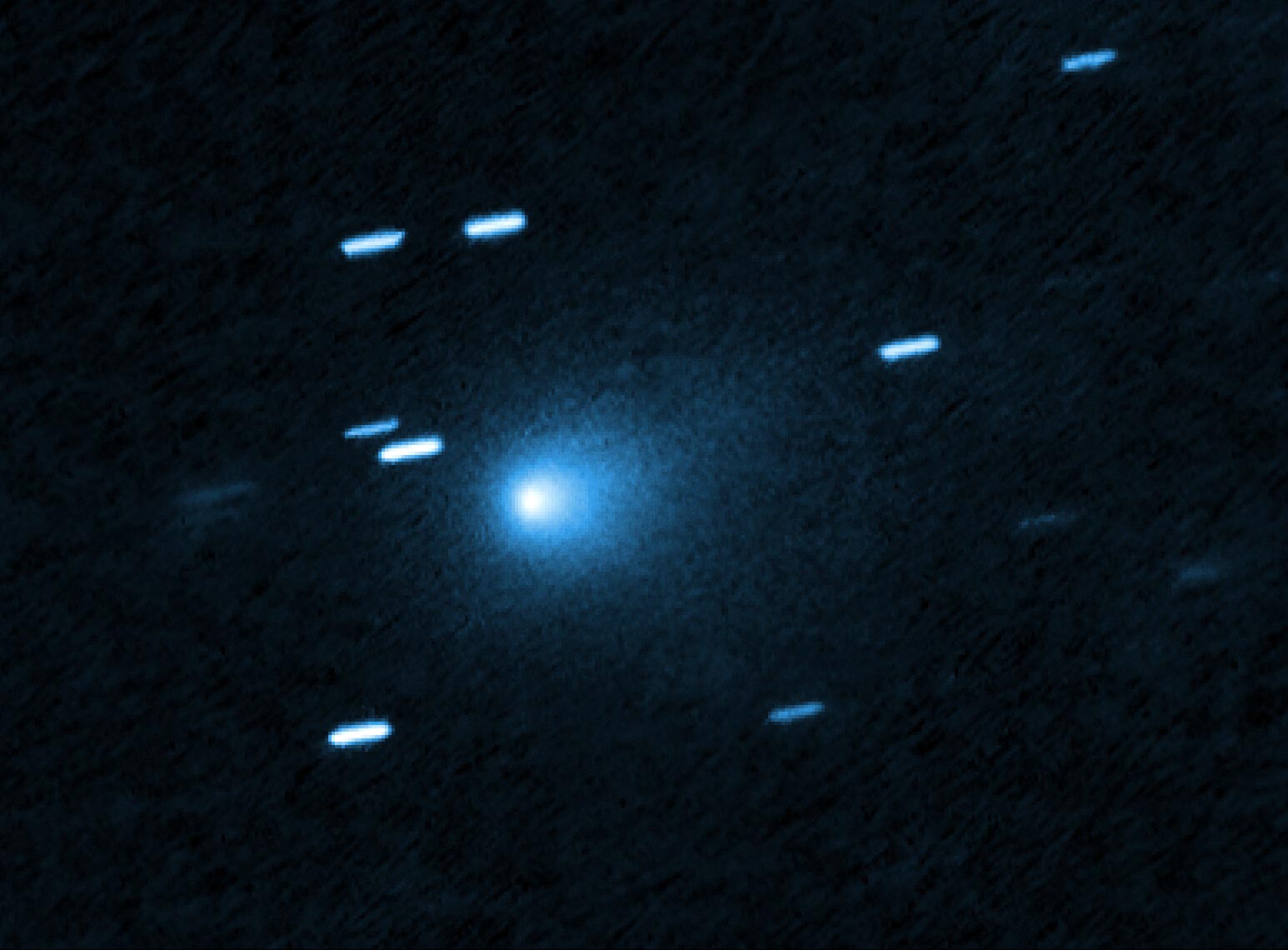
SETI Institute conducted systematic technosignature searches on 3I/ATLAS.
Why It Matters
This study reinforces the baseline for distinguishing natural phenomena from potential anomalies in deep space data analysis.
What To Do Next
Review the SETI Institute's open-source data processing pipelines to understand how they filter noise from signal in large-scale datasets.
Key Points
- •SETI Institute conducted systematic technosignature searches on 3I/ATLAS.
- •Observations utilized the Allen Telescope Array in Northern California.
- •No artificial radio signals were detected, confirming a natural origin.
Deep Insight
AI-generated analysis for this event — not the original article.
Enhanced Key Takeaways
- •3I/ATLAS is the third confirmed interstellar object to pass through our solar system, following 1I/‘Oumuamua and 2I/Borisov.
- •The object was first detected by the Asteroid Terrestrial-impact Last Alert System (ATLAS) in early 2026, triggering immediate follow-up protocols.
- •SETI's analysis focused on a wide frequency range from 1 to 10 GHz, specifically looking for narrowband signals that would indicate non-natural origin.
- •Spectroscopic analysis conducted by ground-based observatories revealed high concentrations of carbon monoxide and water ice, consistent with typical cometary outgassing.
- •The trajectory of 3I/ATLAS indicates it originated from the direction of the constellation Cassiopeia, moving at a hyperbolic velocity that confirms its extrasolar nature.
Technical Deep Dive
- The Allen Telescope Array (ATA) utilized its 42-antenna configuration to perform beamforming observations on the object.
- Data processing involved the use of the SETI Institute's high-speed digital signal processing backend to filter out terrestrial radio frequency interference (RFI).
- The search sensitivity reached a threshold of approximately 10^15 Watts per square meter, allowing for the detection of even low-power transmitters at interstellar distances.
- Analysis of the object's light curve showed no anomalous brightness fluctuations, further supporting the conclusion that the object is a rotating, non-reflective natural body.
Future ImplicationsAI analysis grounded in cited sources
Timeline
- 2026-02ATLAS survey telescope detects the object 3I/ATLAS entering the solar system.
- 2026-03International Astronomical Union (IAU) officially designates the object as 3I/ATLAS.
- 2026-04SETI Institute initiates systematic radio monitoring using the Allen Telescope Array.
- 2026-06SETI concludes observations and releases findings confirming natural origin.
Weekly AI Recap
Read this week's curated digest of top AI events →
Related Updates

AI-curated news aggregator. All content rights belong to original publishers.
Original source: cnBeta (Full RSS) ↗
This is a summary, not the original. Read the source, or get the weekly briefing.
The weekly digest
One email a week. Unsubscribe anytime.