Senators Probe Nvidia's $20B Groq Deal
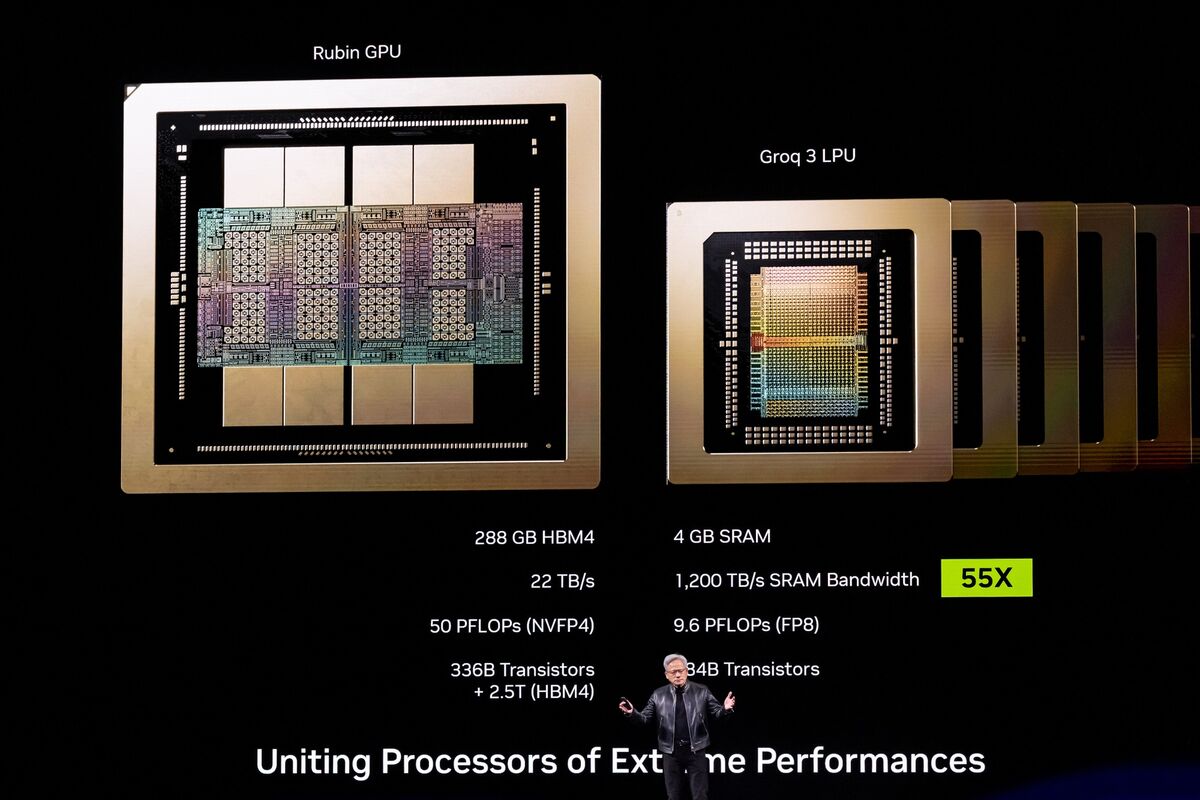
💡Antitrust probe on Nvidia $20B Groq deal could disrupt AI chip supply chains.
⚡ 30-Second TL;DR
What Changed
Democratic senators Warren and Blumenthal launch probe into Nvidia-Groq deal.
Why It Matters
This scrutiny could result in regulatory blocks or modifications to the deal, potentially curbing Nvidia's AI hardware dominance and fostering competition in inference chips. AI practitioners reliant on Nvidia ecosystem may face supply chain disruptions or new compliance requirements.
What To Do Next
Evaluate alternatives to Groq inference chips in case of deal blockage from antitrust probe.
Key Points
- •Democratic senators Warren and Blumenthal launch probe into Nvidia-Groq deal.
- •Deal valued at $20 billion involves licensing for AI computing.
- •Concerns focus on antitrust evasion via licensing instead of merger and market consolidation.
🧠 Deep Insight
AI-generated analysis for this event — not the original article.
🔑 Enhanced Key Takeaways
- •The deal utilizes a 'synthetic acquisition' structure similar to Microsoft’s 2024 deal with Inflection AI, where Nvidia pays a massive licensing fee and hires key personnel without technically purchasing the company's equity.
- •Regulators are specifically investigating the 'exclusivity clauses' within the agreement that reportedly prevent Groq from providing its LPU (Language Processing Unit) technology to rival cloud providers like AWS or Google.
- •The $20 billion valuation is tied to Groq's proprietary 'Deterministic Scheduling' compiler technology, which allows for ultra-low latency LLM inference that Nvidia's current Blackwell architecture struggles to match in specific real-time applications.
- •Internal documents suggest the deal was accelerated after Groq demonstrated a 10x performance-per-watt advantage over Nvidia’s H200 chips in Llama-3 70B inference benchmarks.
📊 Competitor Analysis▸ Show
| Feature | Nvidia (Blackwell B200) | Groq (LPU / TSP) | Cerebras (CS-3) | SambaNova (SN40L) |
|---|---|---|---|---|
| Architecture | GPU (SIMT) | LPU (Deterministic TSP) | Wafer-Scale Engine | Reconfigurable Dataflow |
| Memory Type | HBM3e | SRAM (On-chip) | SRAM (On-chip) | HBM + DDR5 |
| Inference Latency | Moderate (Batch dependent) | Ultra-Low (Real-time) | Low | Moderate |
| Programming | CUDA | GroqWare (Software-defined) | CSL (Cerebras Software) | SambaFlow |
| Primary Use Case | Training & General Inference | High-speed LLM Inference | Large-scale Training | Enterprise RAG / Inference |
🛠️ Technical Deep Dive
- •Groq LPU Architecture: Utilizes a Tensor Streaming Processor (TSP) design that eliminates the need for complex hardware features like branch predictors, caches, and out-of-order execution units.
- •Deterministic Execution: The hardware is entirely software-controlled; the compiler manages the exact timing of every instruction, ensuring predictable latency and eliminating 'tail latency' issues common in GPUs.
- •Memory Bandwidth: Features approximately 230MB of on-chip SRAM per chip, delivering up to 80TB/s of local memory bandwidth, which bypasses the HBM bottlenecks found in traditional GPU architectures.
- •Interconnect: Uses a proprietary C2C (Chip-to-Chip) interconnect that allows thousands of LPUs to function as a single logical processor without the overhead of traditional networking protocols.
- •Nvidia Integration: The licensing deal reportedly focuses on porting Groq’s deterministic compiler to Nvidia’s NVLink Switch system to optimize multi-node inference synchronization.
🔮 Future ImplicationsAI analysis grounded in cited sources
⏳ Timeline
Weekly AI Recap
Read this week's curated digest of top AI events →
👉Related Updates
AI-curated news aggregator. All content rights belong to original publishers.
Original source: Bloomberg Technology ↗
This is a summary, not the original. Read the source, or get the weekly briefing.
The weekly digest
One email a week. Unsubscribe anytime.