Security Analysis of Android Digital Car Keys
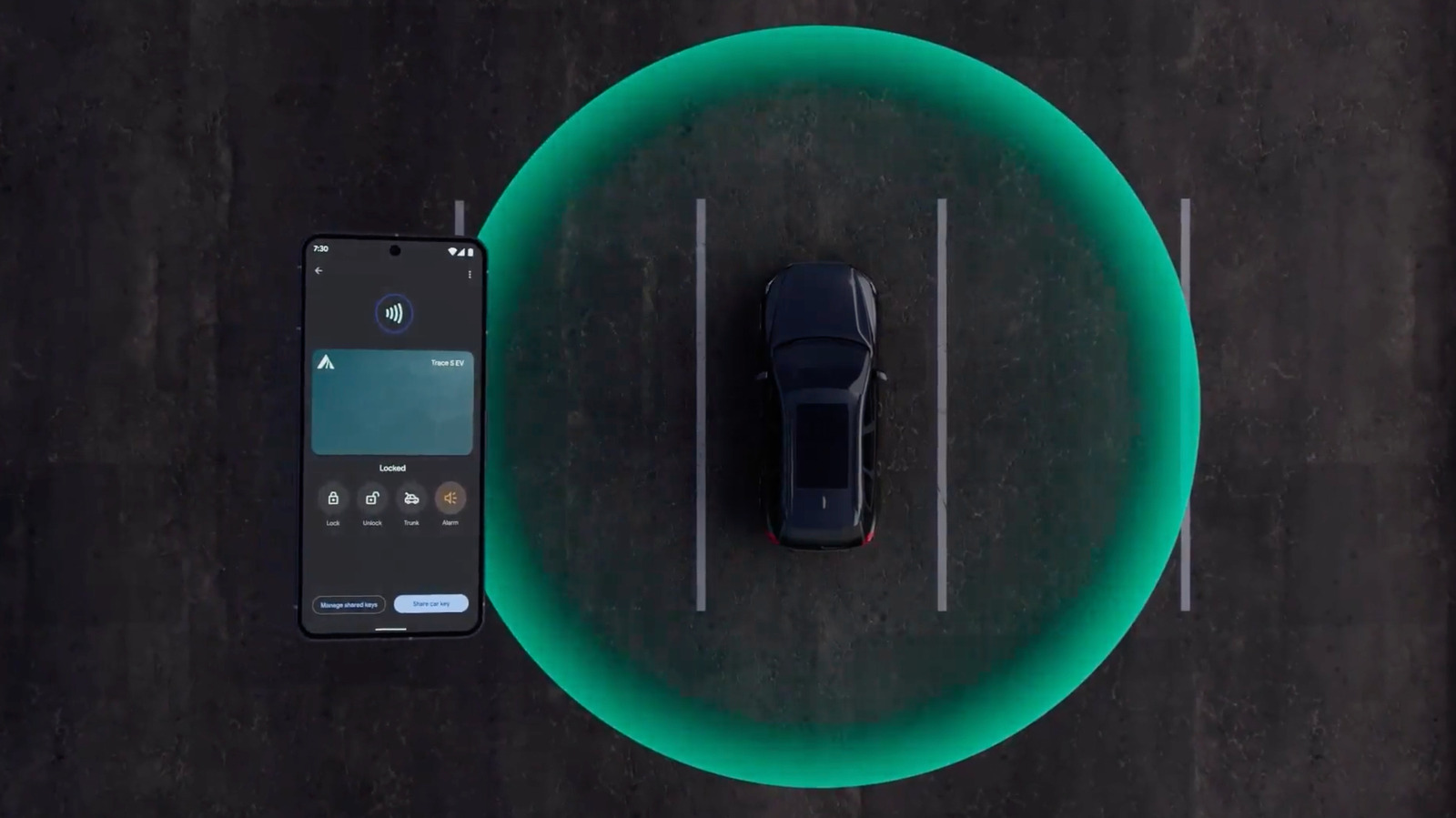
💡Learn how Android handles secure hardware-backed authentication, a critical pattern for mobile security developers.
⚡ 30-Second TL;DR
What Changed
Utilization of hardware-backed security modules for key storage
Why It Matters
As mobile-based authentication becomes standard, developers must understand the intersection of hardware security and mobile OS permissions.
What To Do Next
Review the Android Keystore system documentation to understand how to implement secure credential storage in your own applications.
Key Points
- •Utilization of hardware-backed security modules for key storage
- •Integration of UWB and NFC protocols for secure proximity authentication
- •Analysis of threat vectors and mitigation strategies for mobile-based access
🧠 Deep Insight
Background and context from public sources — not the original article. 29 sources cited.
🔑 Enhanced Key Takeaways
- •The Car Connectivity Consortium (CCC) Digital Key standard, which Android digital car keys adhere to, has evolved through several releases (2.0, 3.0, 4.0), progressively integrating NFC, Bluetooth Low Energy (BLE), and Ultra-Wideband (UWB) to enhance security, convenience, and cross-platform interoperability.
- •Digital car keys leverage UWB's precise time-of-flight (ToF) measurements for secure ranging, making them highly resistant to relay attacks, a common vulnerability in traditional key fobs. This UWB-based distance bounding, combined with cryptographic security, ensures the vehicle unlocks only when the authenticated device is physically nearby.
- •Modern digital car key implementations, such as those in Google Wallet, offer granular key sharing capabilities, allowing owners to grant different levels of access (e.g., co-owner, guest, service) with specific permissions, which can be remotely revoked or suspended, providing superior control compared to physical keys.
- •Secure Elements (SEs) in both smartphones and vehicles are fundamental to the security architecture, isolating cryptographic keys and protecting them from tampering, cloning, and side-channel attacks, ensuring a high level of protection for digital key credentials.
- •The CCC Digital Key framework establishes a secure communication channel between the mobile device and the vehicle, utilizing public key protocols and end-to-end encryption, with the owner device signing the friend device's digital key and obtaining necessary OEM server approvals for secure sharing.
📊 Competitor Analysis▸ Show
markdown
| Feature/Aspect | Android Digital Key (Google Wallet) | Apple CarKey | Samsung Digital Key (Samsung Wallet) |
|---|---|---|---|
| Supported Protocols | NFC, UWB, BLE | NFC, UWB, BLE | NFC, UWB |
| Key Storage | Hardware-backed Secure Element | Secure Element (NFC/ApplePay chip) | Integrated Secure Element, Samsung Knox |
| Key Sharing | Yes, with granular permission levels (co-owner, guest, service) | Yes, via Messages.app with customizable access levels | Yes, with identity verification (fingerprint) |
| Offline Functionality | Yes, for payments, transit, hotel, and car keys | Yes, including Power Reserve mode for low battery | Yes, NFC for low battery |
| Relay Attack Mitigation | UWB with Time-of-Flight (ToF) measurements | UWB with cryptographic timestamps | UWB proximity detection |
| Device Compatibility | Pixel 6+, Samsung Galaxy S21+, select Android 12+ devices | iPhone XR+, Apple Watch Series 5+ | Galaxy S20 series (excluding S20 FE), Note20 series, S21+, Z Flip/Fold series (Android 13+ for new features) |
| Data Collection | Google collects usage info, crash logs, personal/device identifiers (encrypted in transit) | Apple states no data is sent to Apple when using CarKey | Not explicitly detailed, but keys are securely stored locally |
🛠️ Technical Deep Dive
- Secure Element (SE) Integration: Digital keys are stored in a hardware-backed Secure Element within the mobile device, providing a tamper-resistant environment for cryptographic keys. This protects against hardware and software-based attacks, including tampering, cloning, and side-channel attacks.
- Multi-Protocol Authentication: The system utilizes a combination of wireless technologies:
- Bluetooth Low Energy (BLE): Used for initial discovery and establishing a secure connection between the vehicle and the smartphone.
- Ultra-Wideband (UWB): Provides highly accurate distance measurement (centimeter-level precision) using Time-of-Flight (ToF) measurements. This is crucial for preventing relay attacks by verifying the true proximity of the device to the vehicle. UWB signals can also determine direction.
- Near Field Communication (NFC): Serves as a secure backup method, especially for low-battery situations, requiring the device to be tapped close to the car's reader due to its very short operational range, which inherently reduces relay attack risk.
- Cryptographic Standards: Elliptic Curve Cryptography (ECC) is used for key pair generation and public key infrastructure (PKI), while Advanced Encryption Standard (AES) is employed for encrypting communications between the smartphone and the vehicle.
- Secure Ranging: UWB implements secure ranging through Scrambled Timestamp Sequences (STS) and encrypts data with AES to prevent spoofing of timestamps, ensuring the vehicle accurately calculates the distance to the digital key.
- Key Lifecycle Management: The system supports secure key creation, provisioning, revocation, and expiration, often managed through a secure channel with the vehicle OEM server. Shared keys can be instantly revoked or temporarily suspended.
- Offline Operation: Digital keys are designed to function even without a network connection, with NFC often enabling access when the smartphone's battery is critically low.
🔮 Future ImplicationsAI analysis grounded in cited sources
⏳ Timeline
📎 Sources (29)
Factual claims are grounded in the sources below. Forward-looking analysis is AI-generated interpretation.
- vicone.com
- carconnectivity.org
- carconnectivity.org
- nextgen-technology.com
- android.com
- nxp.com
- helpnetsecurity.com
- qorvo.com
- firaconsortium.org
- androidpolice.com
- androidauthority.com
- android.com
- commoncriteriaportal.org
- samsung.com
- autoevolution.com
- carconnectivity.org
- apple.com
- applemagazine.com
- samsung.com
- wwdcnotes.com
- samsung.com
- samsung.com
- bgr.com
- google.com
- mobokey.com
- wirelesscar.com
- samsungmobilepress.com
- carconnectivity.org
- transparencymarketresearch.com
Weekly AI Recap
Read this week's curated digest of top AI events →
👉Related Updates

AI-curated news aggregator. All content rights belong to original publishers.
Original source: Engadget ↗
This is a summary, not the original. Read the source, or get the weekly briefing.
The weekly digest
One email a week. Unsubscribe anytime.